Tell me about corruption... I'll tell you about FIFA
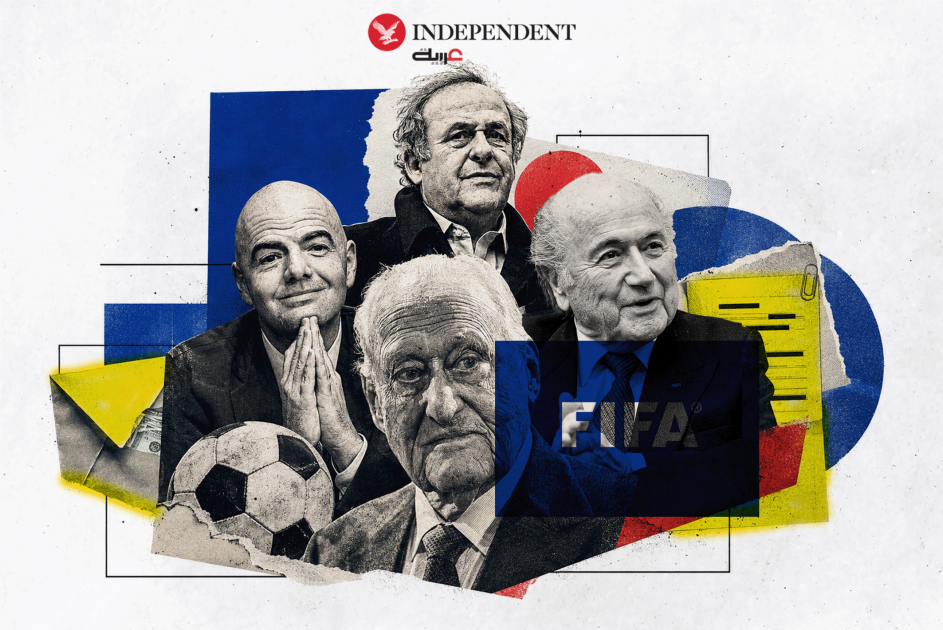
A look at FIFA's long history of corruption through two incidents in the 2026 World Cup: a controversial goal disallowance against Egypt and a red card rescinded for US player Folarin Balogun after White House intervention. The article traces the organization's scandals from the 2015 arrests to the ISL bribery case, questioning the integrity and power dynamics within football's governing body.
Summary: Decisions that today seem exceptional—a card revoked by a phone call, a goal disallowed by a controversial review—are not anomalies in the institution's history, but rather a direct continuation of it.
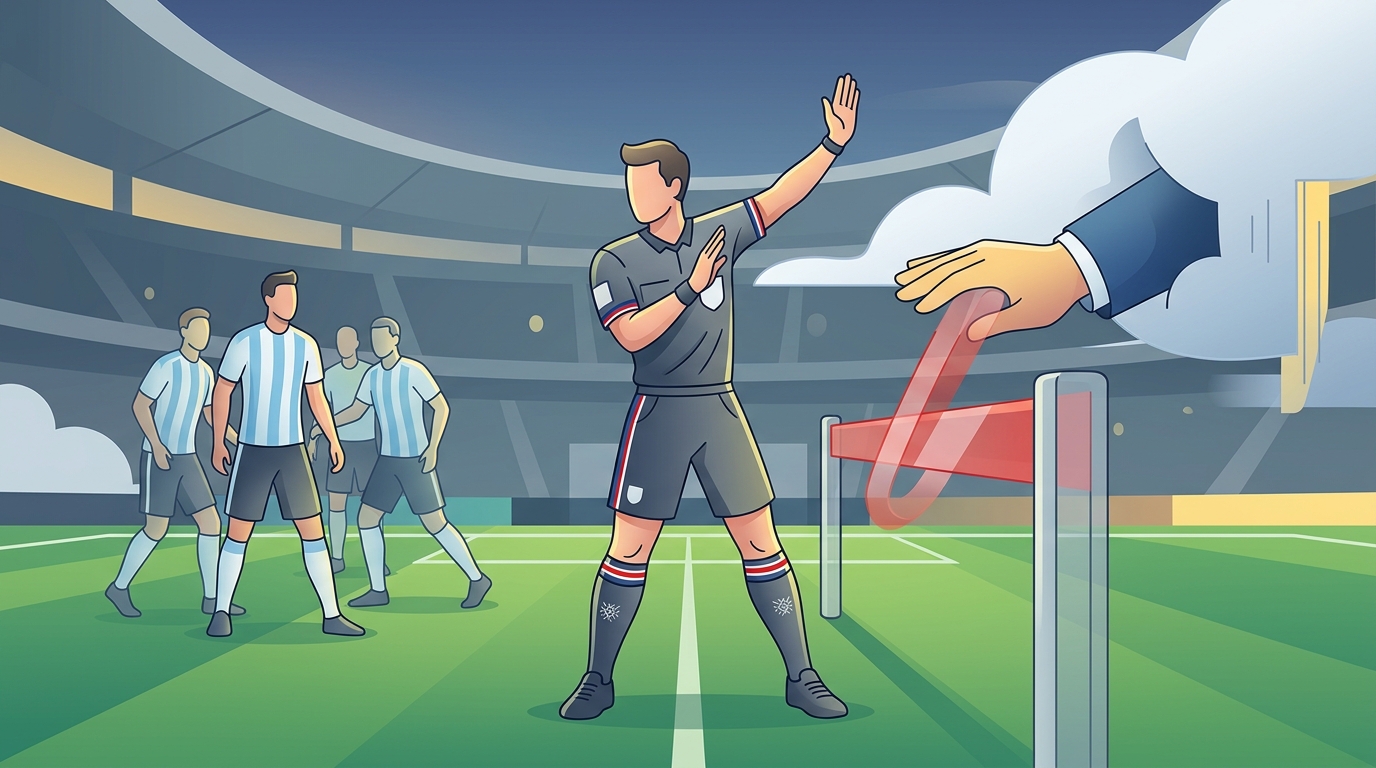
In the 58th minute of the Egypt vs. Argentina match in the round of 16 of the 2026 World Cup, Mostafa Ziko slots the ball into Emiliano Martínez's net, and the Egyptian stands erupt in joy as a goal gives the Pharaohs a lead befitting a team facing the world champion.
The joy lasted only minutes. The video assistant referee calls François Letexier to the monitor, and the French referee returns to disallow the goal due to a foul by Marwan Attia at the start of the attack, three full touches before the ball reached the goal scorer.
Half an hour later, with an Argentine third goal sealing the match, Egyptian players appealed for a penalty that was not awarded, and later even Roy Keane spoke about Mohamed Salah's suspicious fall inside the box without VAR reviewing the incident.
Coach Hossam Hassan left the press conference repeating one phrase: 'No fair play, no respect.' The next day, Egyptian Football Association President Hani Abou Rida filed an official complaint to FIFA, demanding an investigation into the entire refereeing crew, describing the referee as applying double standards. Meanwhile, Jamie Carragher stated live that the same incident would have been a valid goal without question in another league. In response, FIFA's Referees Committee Chairman Pierluigi Collina defended the French referee and his team.
He said: 'Overall, we are satisfied with the level of officiating, but with such a large number of matches in a short period, it is natural that not everything always goes as expected. When that happens, the referees are more prepared to work harder to be in their best shape for the next match.'
Collina emphasized that the integrity of referees must not be questioned: 'No one has the right to doubt the integrity of World Cup match officials. When that happens, it may lead to reactions that threaten referees and their families, and that is unacceptable.'
Just a few pitches away in the same tournament, another name resonated with similar intensity: Folarin Balogun, the American striker who was sent off with a straight red card against Bosnia, then regained eligibility within 24 hours after the White House personally called Gianni Infantino. Donald Trump tweeted thanking FIFA for correcting the injustice, as if the World Cup were just another file on his desk.
Gianni Infantino (Getty)
Two incidents different in form but identical in essence, representing only the tip of a much older and darker iceberg. FIFA is an institution run for half a century by men who turned the gap between sports power and money into a standalone profession, and the opacity around who actually decides into a complete governance system.
Decisions that today seem exceptional—a card revoked by a phone call, a goal disallowed by a controversial review—are not anomalies in the institution's history, but rather a direct continuation of it.
Pressure needs no brown envelope
In the Balogun case, there was no talk of cash envelopes or secret accounts, but of something no less dangerous: a precedent decided by a single phone call. FIFA's disciplinary committee suspended the automatic suspension based on a vague article in its disciplinary code, even though another article in the same regulations clearly states that a red card automatically suspends the player for the next match—a rule applied without exception to every other player sent off during the tournament.
The Belgian federation officially protested, UEFA described the decision as crossing a red line, and newspapers like The Guardian and The Athletic reported a direct call from the White House to Infantino hours before the decision.
Not a single legal report was published explaining why this particular player deserved an exception that no one else received. And when the rule bends before the most powerful figure in the world, the question about corruption is no longer just about money, but about who holds the real decision when law clashes with power.
As for what happened with Egypt against Argentina, no one has yet produced a document proving premeditation in that specific match, and that must be stated clearly. But it is enough to place the facts side by side: a goal disallowed three touches after the alleged foul, a clear penalty claim by Egypt without sufficient VAR review, an official complaint from the federation president accusing the refereeing team of double standards, and impartial testimonies from former stars like Carragher and Keane confirming that the same incidents would have been decided in favor of another team—so that the reader themselves begins to ask the question we do not need to answer on their behalf.
João Havelange (social media)
The earthquake that was not the first
On May 27, 2015, Swiss police raided the luxurious Baur au Lac hotel in Zurich, days before FIFA's presidential election, and arrested seven of its top officials at the request of the US Department of Justice, in a scene more fitting for the pursuit of an organized crime syndicate than a sports body.
The federal prosecutor's office in Brooklyn indicted 14 individuals on 47 counts, including fraud, money laundering, and extortion, in a corruption network spanning more than 24 years involving bribes estimated at $150 million, mostly related to the sale of broadcast and marketing rights for South and Central American tournaments, including the Copa América itself.
That was followed by a second wave of arrests in December of the same year, and successive guilty pleas from officials and businessmen who could no longer deny the evidence. The immediate result was the resignation of Joseph Blatter from the presidency of the organization he ruled as an undisputed emperor since 1998, and the rise of Gianni Infantino as his successor—a man who would later prove to have inherited the system rather than reformed it.
Read more
FIFA president confronts Europeans who attacked Qatar World Cup
'The big final' brings Italy and Argentina together and faces FIFA's plans
What did Infantino do to counter the criminal investigations targeting him?
But even that earthquake was merely the latest chapter in a much older history. During the 1990s, when the sports marketing company ISL almost monopolized World Cup television rights, it paid bribes totaling about $100 million directly into the pockets of those who were supposed to protect the game, not sell it—most notably João Havelange, FIFA's former president and architect of its transformation from a modest European club into a transcontinental financial empire, and his son-in-law Ricardo Teixeira.
The company went bankrupt in 2001 amid a huge financial scandal that exposed decades of cover-ups, and Blatter—then general secretary and the man who sat close to every decision—faced until the end of his career one question that no one answered convincingly: how did these millions flow for two whole decades under his watch without his knowledge?
Qatar and Russia: the biggest file
Original source: Independent Arabia


Comments (0)
Be the first to comment.