England Faces Deeper Questions After Latest World Cup Failure
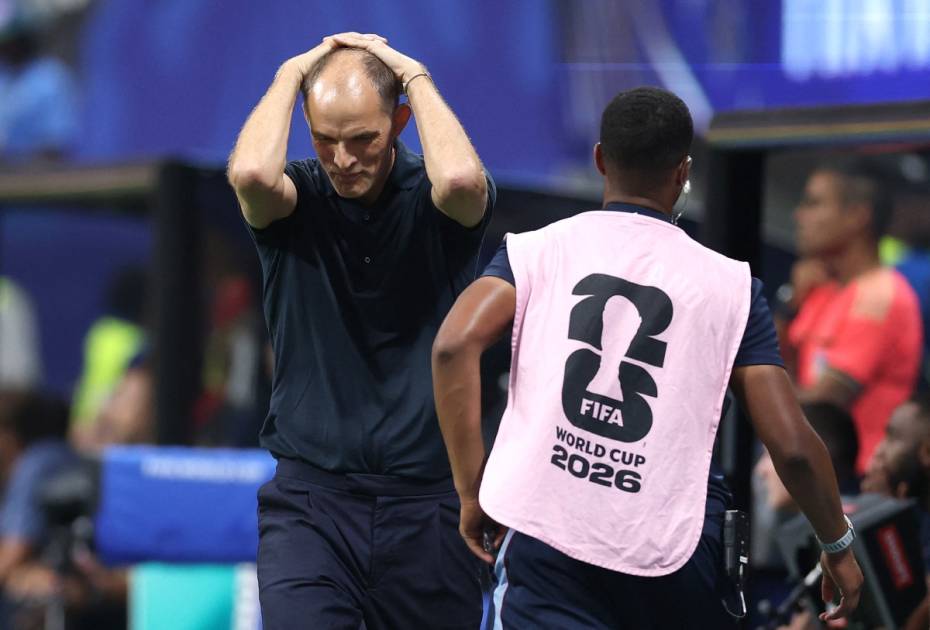
Summary: England's failure in the 2026 World Cup revealed a crisis deeper than match results, as the English FA lacks a clear vision and football identity, while money or big-name coaches are not enough to build a team capable of winning titles.
Perhaps England bid farewell to the World Cup with a performance that would have prompted football associations in other countries to conduct a comprehensive and deep review, but nothing of the sort came from the English FA.
After a brief and dull statement asserting that 'the players and Thomas gave their all,' signals from behind the scenes strongly confirmed that any change, or even serious review, is not up for discussion.
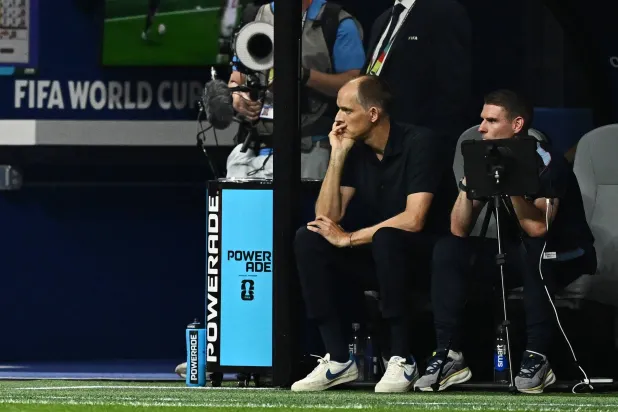
The FA's bet remains fully on Thomas Tuchel, with a greater conviction that he is the coach finally capable of leading England to the Euro 2028 title on home soil.
Postponing the Deeper Discussions
Deeper discussions about the future may be left for another time, but even at this precise moment, a real risk looms: Tuchel's relationship with the players being damaged.
He was specifically hired for his reputation as a tactical genius and a 'winning coach,' skilled at leading teams through decisive moments. Yet England here appeared with the simplest tactical ideas possible, depriving the players of a chance to make history, amid implicit criticism regarding their 'belief' in themselves.
It is not hard to imagine how things could turn for the worse.
Vast Sums Without a Complete Football Project
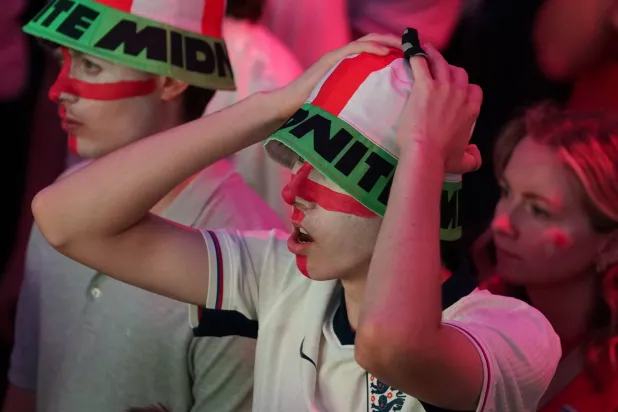
At present, those around the England national team camp can only lament what happened in this edition of the World Cup. Some have even begun to feel a sense of cosmic injustice, as if victory will never be England's lot, and as if the wait for a major title will extend to at least 62 years.
That failure resembles a reverse alchemy, turning value into its opposite, especially after the FA pumped in vast sums. Yet, for that very reason, there seems to be a measure of football justice in this outcome.
Many England fans may find this hard to accept, but some, especially within the FA, need to hear it.
It is probably good for international football that one of the richest associations in the world, which already enjoys many privileges, does not win just because it can hire the most expensive coach available.
What message would that send? What lesson would be learned? Is wealth alone enough? Can you simply buy a 'winning coach' if you have enough money?
This approach has become too common in club football. It is positive that it does not transfer to international football in the same way, because success here requires deeper ideas. In fact, it would also be better for the FA if it were forced to think seriously about this issue.
But will it? All indications so far suggest otherwise. More frustratingly, the FA has already done most of the required work.
English football has invested its immense wealth in building a talent production system that is admired by most countries. There is a steady flow of players, especially in certain positions. The 'Elite Player Performance Plan' project has proven its success. But it remains a plan lacking integration into a broader vision.
The Absent Identity of the England National Team
It is precisely here that Tuchel's appointment becomes the focus of a broader discussion, and for this reason, it can be said that the FA's failure, so far, seems deserved.
What the FA truly should consider is the image it wants the England national team to project, and what the national team's identity is.
And what football characteristics linked to English culture does it wish to develop and reinforce, within a coaching framework that aligns with modern football requirements?
The only person who seemed, for his part, preoccupied with this idea was Tuchel himself. He spoke convincingly about wanting England to play 'in the style of the Premier League,' i.e., with the pace and power that already align with some of English football's greatest strengths.
But reality was completely different, and this repeats to some extent with Tuchel. He may be good at talking, but except for 15 minutes against Croatia, he did not deliver a performance reflecting that.
Instead of delivering football resembling the Premier League style, the mere hiring of him embodied another model of the Premier League mentality.
If you face a problem, buy a solution for it. And don't think deeply about it.
It is condemnable, though perhaps expected, that the FA adopts the same approach at the very time when it has gained institutional independence from the Premier League.
A Tactical Crisis Repeating Across Generations
And to be fair to Tuchel, it is hard not to link some of the team's performances to these broader issues.
England remains unable to produce a midfielder capable of controlling the tempo, and this may be related to the argument that the team still lacks confidence, and that there is a tactical deficiency in the football intelligence of English teams.
And it is truly striking that we have returned to the same point, as if we are in 2016, 2010, or 1998, when England was unable to impose its control on the match and lost to the first strong team it faced.
Read more
This section contains related articles placed in (Related Nodes field)
This assessment may seem harsh, especially since the team was on the verge of reaching a major tournament final for the second consecutive time, and the third in the last four tournaments, but this is precisely where the difference between success and failure lies.
English football has enough wealth to produce a large number of talented players capable of taking you to the later stages. But going all the way? That truly requires something deeper.
Spain Offers a Model and Clear Identity
Similarly, England was about to face Spain for the fourth consecutive time in a major tournament final: the Women's World Cup final, the men's European Championship final, the women's European Championship final, and then — in the end it did not happen — the men's World Cup final.
Although some may object to combining women's and men's football in this context, it is highly relevant here because it reflects the football culture in both countries.
The three matches followed exactly the same script, and this hypothetical World Cup final would have gone the same way: Spain imposing its control, while England struggled on the flanks and tried to mount any response.
England won one of those matches under Sarina Wiegman, but that was largely due to her coaching acumen, a bit of luck, and the strength of the bench.
And again, that does not say much about England's playing style as a coherent idea.
The Right Coach Starts from the Country's Culture
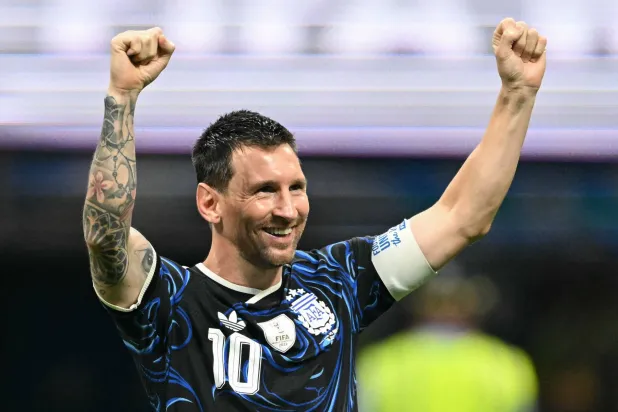
In contrast, look at the two coaches who knocked England out of the last two major men's tournaments, who also happened to be the finalists: Lionel Scaloni and Luis de la Fuente.
They are classic examples of national association coaches. In other words, they are the kind of coaches the English FA would not consider hiring. After all, where is each one's record in the Champions League?
Original source: Independent Arabia



Comments (0)
Be the first to comment.