World Cup Final Returns Pelé to the Forefront of Historical Debate
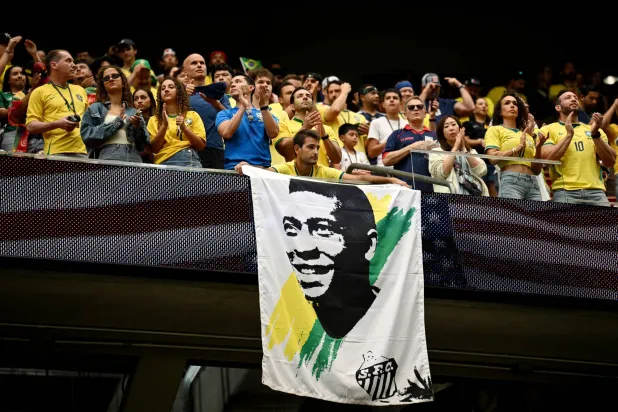
Is Argentine Lionel Messi the greatest player in history, ahead of Brazilian Pelé? As with the debate in the NBA between Michael Jordan and LeBron James, this argument has occupied the football world during the World Cup, but his loss in the final provided a negative answer.
While comparing two different eras may be futile, reaching his third final at age 39, after his triumph in 2022 already at the end of his extraordinary career, confirms an amazing consistency at the highest level, granting the Argentine a unique status.
Pelé remains the only player to have won the World Cup three times.
In 1958, the world discovered in awe the genius of the 17-year-old who scored a hat-trick in the semifinal against France (5-2) and a brace in the final against Sweden (5-2).
In 1962, Brazil retained the title, but almost without him; he only played one and a half matches before being injured.
Pelé, who was said to be in decline at age 29, then considered advanced for footballers, returned to the top in 1970 when he led one of the most beautiful teams in history to a victory over Italy in the final (4-1).
Messi, meanwhile, also played three finals, losing the first in 2014 to Germany (0-1 after extra time).
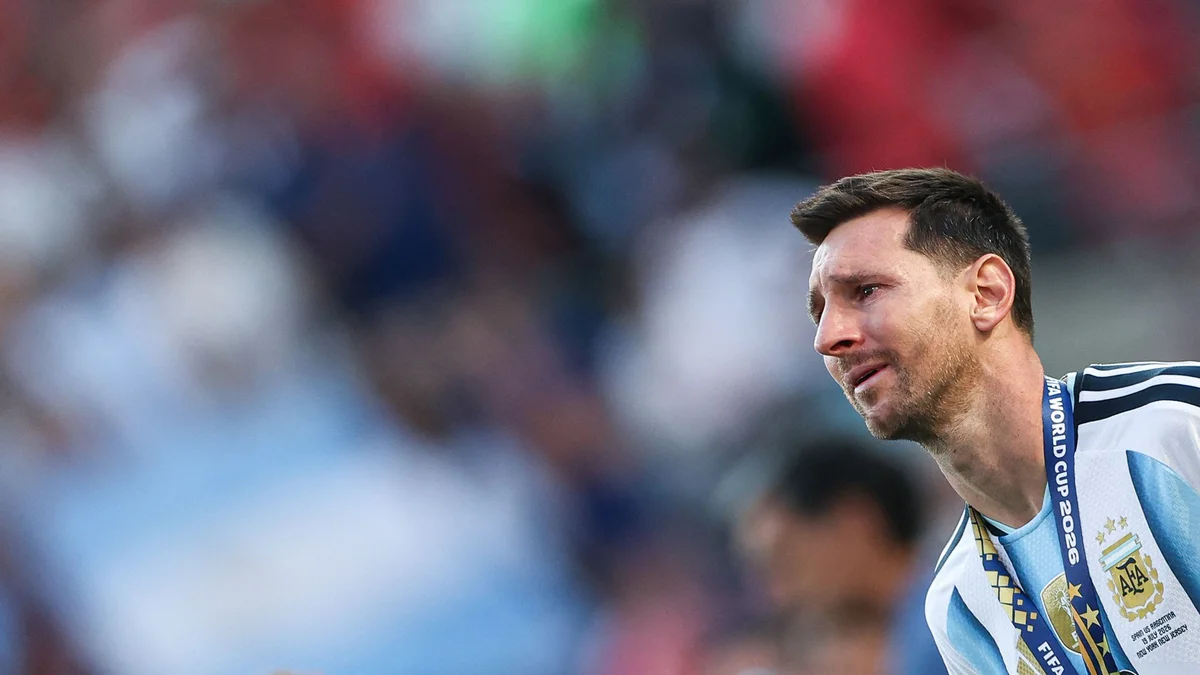
And while he was decisive in 2022 to bring down France, scoring a brace and then converting his penalty in the decisive shootout (3-3 after extra time, 4-2 on penalties), four years later he appeared as a ghost in the final against Spain, which denied him a second personal star.
Messi became the first player to appear in six World Cups, before being joined by Portuguese Cristiano Ronaldo, and he also broke several individual records, though they did not last long.
Thanks to scoring eight goals in this tournament, he temporarily became the World Cup's all-time top scorer with a total of 21 goals, before eventually being surpassed by Frenchman Kylian Mbappé (22 goals), who scored ten this year.
Messi also has 12 assists, a number no other player has achieved.
As for Pelé, in the four editions he played, he could not break records, but he remains to this day the youngest player to win a World Cup, at 17 years and 249 days.
Would Brazil have won without Pelé in 1958 and 1970? Possibly.
They won the title in 1962 almost without him. And although the Brazilian genius was decisive in the other two campaigns, he was surrounded by artists like Garrincha, Vavá, Rivelino, and Tostão, who are inseparable from the 'Seleção's' successes.
Would Argentina have won in 2022 and reached the final in 2026 without Messi? Probably not.
His numerical contribution and his role as captain and mentor, like a spiritual guide for a group that owes him so much, show how much the team relies on him.
What Messi's longevity tells is that it does not mean decline at all; he succeeded in imposing his destiny in a tournament that had long eluded him at a time when many no longer believed he could.
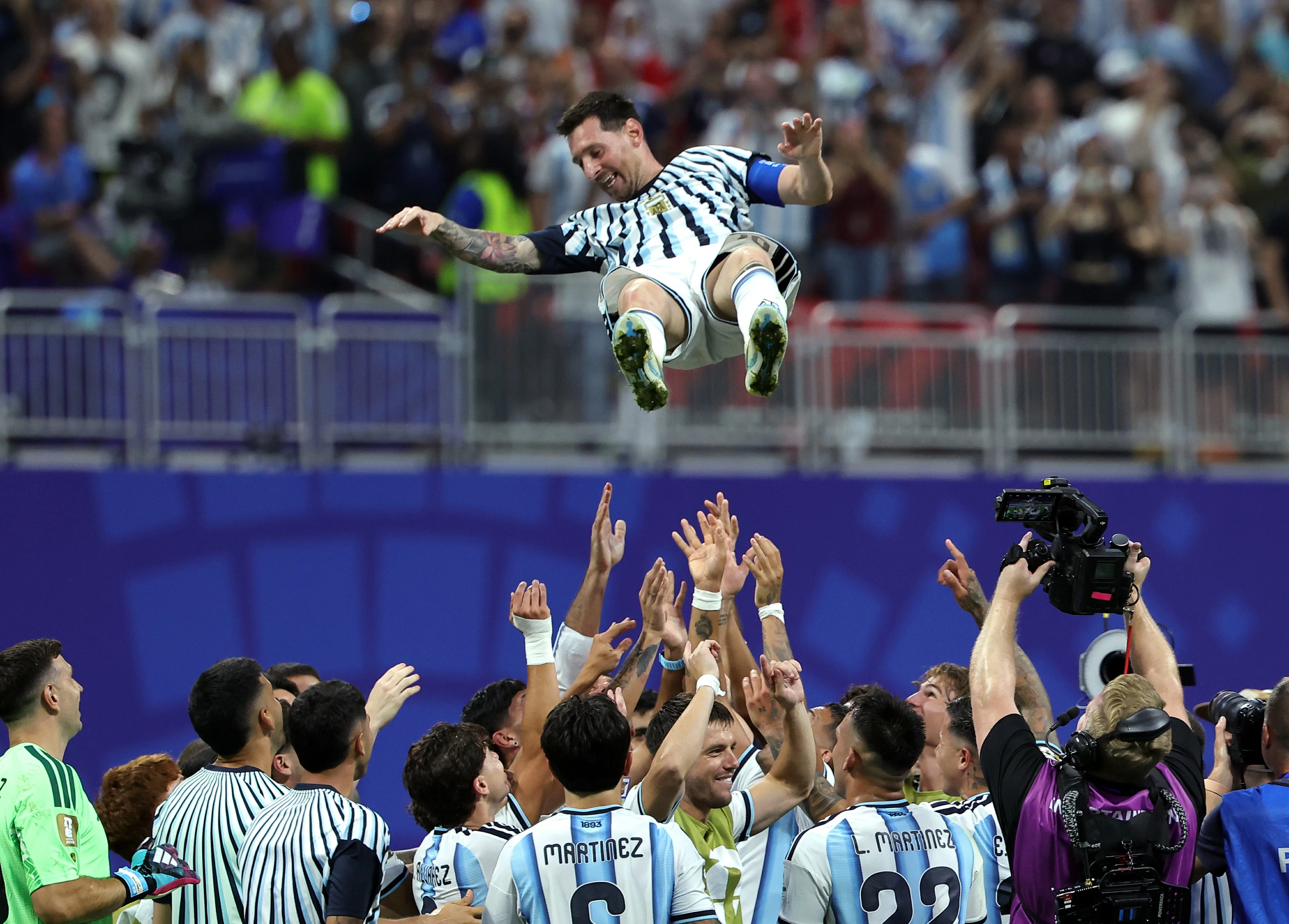
He waited until age 35 to score in the round of 16 of the 2022 World Cup his first ever goals in a knockout match of the World Cup, a transformative moment that changed him completely and led him to glory three matches later.
His journey in 2026 was even more linked to Messi's imprint, as miracles repeated themselves at the end of fluctuating matches thanks to his left foot. But in the final, Spain succeeded in completely neutralizing his impact.
When his star rose before the world, Pelé embodied modernity in football and became the first true global star of the game.
With his technical skills, creativity, and goal-scoring instinct, he almost single-handedly represented the Brazilian style that became a reference for 'the beautiful game' (Jogo Bonito) for decades, before turning into an image of the past.
Ronaldo, Neymar, Ronaldinho, and many others were introduced in their early days as the 'new Pelé'.
As for Messi, he lived under the heavy shadow of Diego Maradona, and it took him a long time to break free from it wearing the 'Albiceleste' shirt; because he first became the best player of his era with Spanish club Barcelona.
Alongside the immense talent they share, what also connects Messi, Pelé, and Maradona is their relatively short stature: 1.70m, 1.64m, and 1.73m. Nevertheless, the 'Flea' succeeded in imposing his dominance in an era where physicality has become much more important in football.
His speed of execution and clarity in the final touch made him a model for an entire generation of talents, led by Spaniard Lamine Yamal.
Original source: Asharq Al-Awsat




Comments (0)
Be the first to comment.