Collina Justifies Referee Decisions in Egypt-Argentina Match and Explains Ziko and Salah Incidents

Pierluigi Collina defends the refereeing decisions in the Egypt-Argentina World Cup match, rejecting allegations of bias and explaining the VAR interventions involving Ziko and Salah.
Pierluigi Collina, head of the referees committee at FIFA, stressed that "no one can question the integrity of World Cup referees," in response to "unfounded allegations" made after Egypt's 3-2 loss to Argentina, and affirmed the correctness of the referee's decisions in the match.
The Egyptian Football Association had asked FIFA to remove the officiating crew from the tournament and demanded an investigation into "double standards" in refereeing after two second-half fouls were called against Egypt, which helped Argentina overturn a 2-0 deficit late in the match.
Collina responded: "Of course, constructive debate about decisions will always be part of football, but unfounded allegations have no place in our sport."
He added: "No one can question the integrity of World Cup referees. When that happens, it can lead to reactions that escalate into threats against them and their families. That is unacceptable."
Egypt coach Hossam Hassan had said after the match that Egypt "was treated unfairly" and "suffered from refereeing injustice." He added: "Maybe they wanted to keep the world champion in the competition. Maybe they wanted Messi to stay in the race."
Collina commented: "Similarly, no one can claim that FIFA referees can be influenced by anyone, not even Gianni Infantino, the FIFA president."
He said: "He has always shown full support for the referee team, trusting us to work with complete independence. Referees make fair decisions, and like players and coaches, they always try to give their best."
Decisions in the Egypt-Argentina match
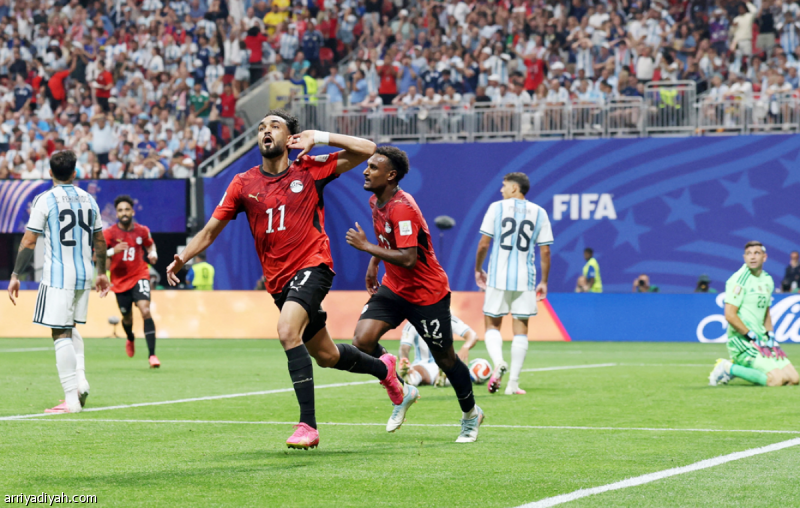
With Egypt leading 1-0 in the second half against Argentina, the Video Assistant Referee (VAR) disallowed a goal scored by Mostafa Ziko after a foul was called on midfielder Marwan Attia for stepping on Leandro Martinez's foot at the start of the attack. Also, a potential penalty for Mohamed Salah inside Argentina's box was ignored, seconds before the defending champions scored the winning goal in stoppage time.
Although he usually does not comment on "specific incidents" during major tournaments, Collina supported both decisions. He said: "After every goal, the video referee reviews the attacking phase. If a foul is detected in the build-up and is deemed to have an effect on the goal, the video referee recommends an on-field review."
He added: "There is no specific limit either in terms of distance from goal or time elapsed between the foul and the goal. An example of that came in the Argentina-Egypt match, where Egypt's number 19, Marwan Attia, clearly stepped on the foot of Argentina's number 6, Leandro Martinez."
He continued: "We believe in the principle that a foul is a foul. Regardless of whether the foul is obvious or not, if the on-field referee did not see it, the video referee has the right to intervene. Similarly, if no foul is detected in the build-up to a goal, the video referee informs the referee accordingly. Stepping on an opponent's foot is a foul, whereas a defender who touches the ball first and then has natural contact in football has not committed a foul."
The fate of French referee Francois Letexier will be determined based on the evaluation of the referees committee for his performance, in addition to the journey of the French national team in the tournament.
If France qualifies at the expense of Morocco, French referees will stay away from managing remaining matches as a standard procedure. pic.twitter.com/SUmfZSiUF4
— العربية رياضة (@AlArabiyaSports) July 8, 2026
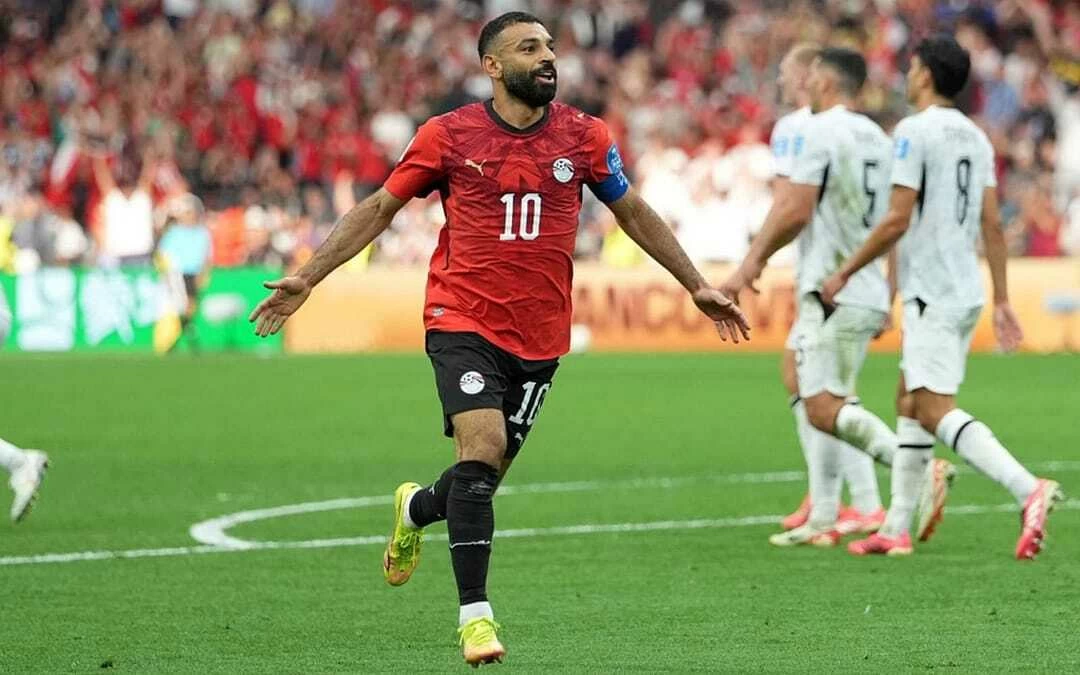
He added: "Another example of that came at the end of the same match. The referee and the video referee saw that what happened was natural football contact between Egypt's number 10, Mohamed Salah, and Argentina's number 9, Julian Alvarez."
Collina concluded: "Of course, there will always be an element of subjectivity in some decisions, but we are satisfied with the way this principle has been applied throughout the tournament."
Advertising material
Advertising material
Original source: Al Arabiya
Comments (0)
Be the first to comment.