Collina comments on Egypt's disallowed goal and Salah's penalty claim

Pierluigi Collina, chairman of the FIFA Referees Committee, commented on Egypt's disallowed goal against Argentina and the demand for a penalty for Mohamed Salah at the end of the match between the two teams in the World Cup round of 16 on Tuesday.
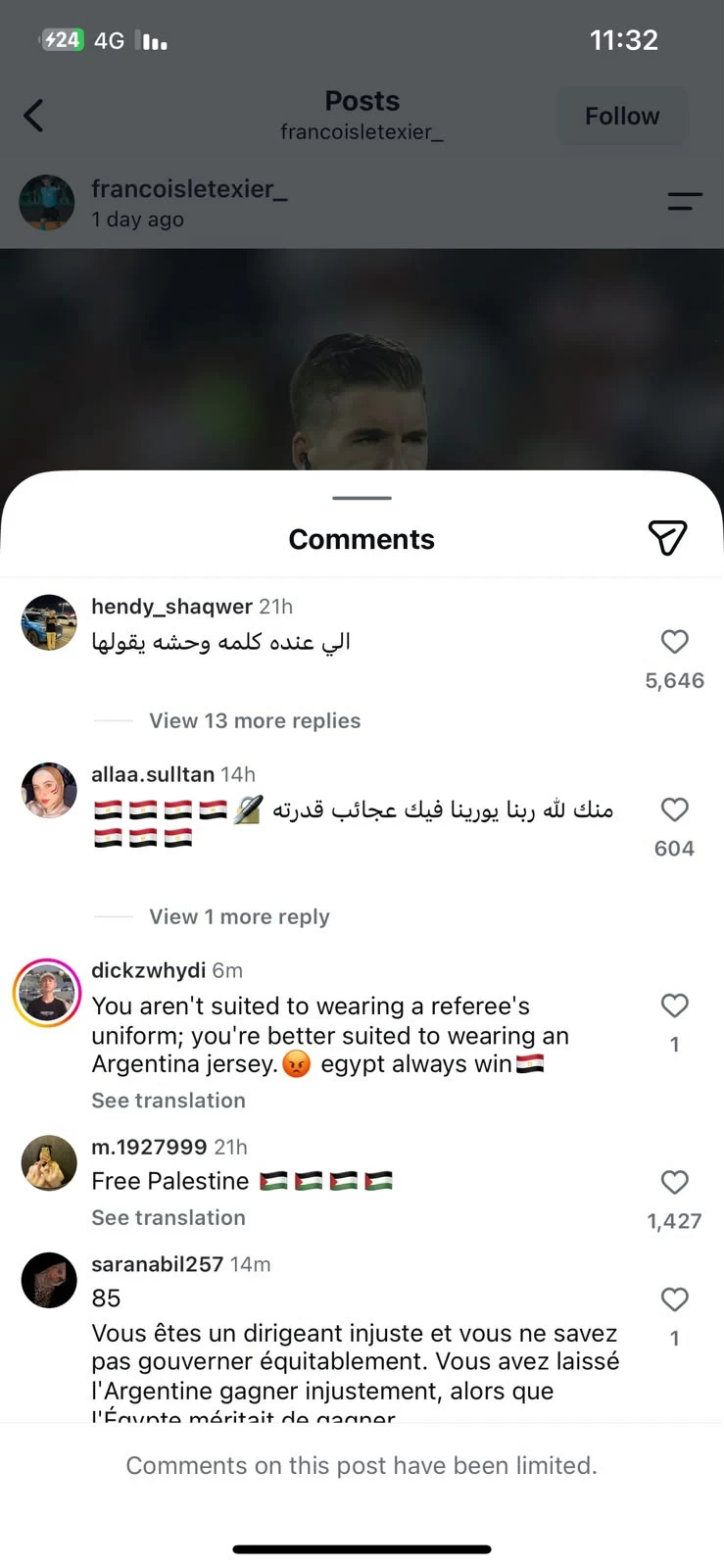
The match, which ended with Argentina winning 3-2, witnessed controversial refereeing decisions, amid Egyptian accusations that the French referee was biased towards the South American team.
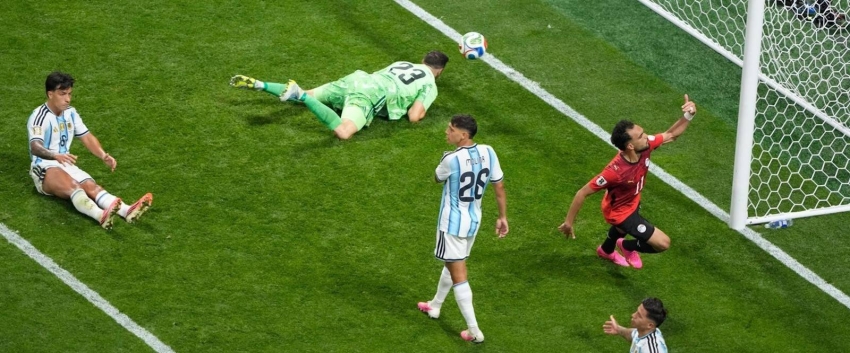
The disallowed goal for Egypt, scored by Mustafa Ziko in the second half, due to a foul at the start of the attack, was one of the most prominent incidents that the Pharaohs' players objected to.
Commenting on this incident, Collina said: 'After every goal, the Video Assistant Referee (VAR) system checks the attacking phase, and if an infringement is detected in the build-up phase and considered to have impacted the goal, the VAR system recommends an on-field review.'
He explained in statements to the FIFA website that 'there is no specific time limit for the distance from the goal, or for the time between the infringement and the goal.'
Messi leads Argentina to dramatic victory over Egypt
0 seconds of 0 secondsVolume 90%
Press shift question mark to access a list of keyboard shortcuts
00:00
00:00
00:00
unmute
Messi leads Argentina to dramatic victory over Egypt
The former Italian referee, who is considered the most prominent in football history, continued: 'An example of this is what happened in the Argentina vs. Egypt match, where Egyptian player No. 19 Marwan Attia clearly stepped on the foot of Argentine player No. 6 Lisandro Martinez.'
Collina added: 'We believe that a foul is a foul, regardless of whether it seems obvious or not. If the referee on the field does not see it, the video assistant technology can intervene.'
He added: 'Similarly, if no infringement is noticed at the start of the attack that led to a goal, the VAR technology will inform the referee of that.'
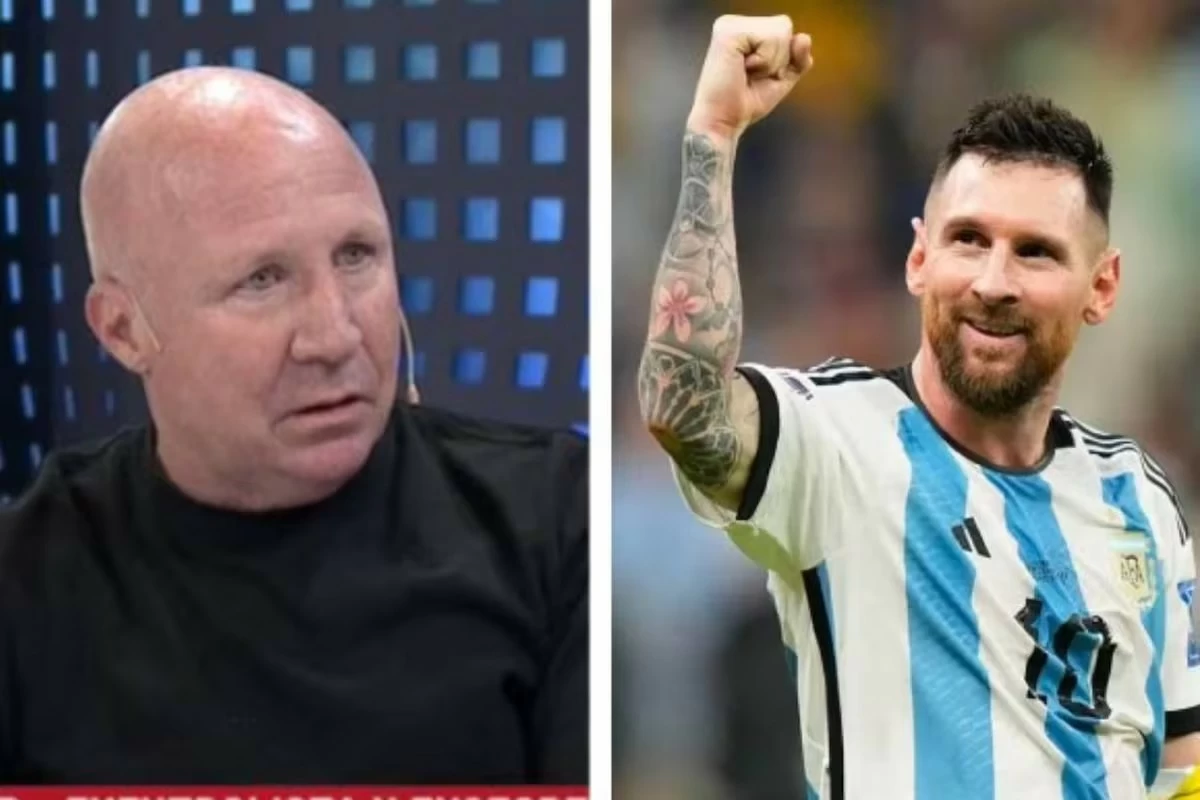
Regarding the demands for a penalty for Salah in the final minutes of the match, he said: 'Stepping on an opponent's foot is an infringement, while touching the ball first and then making natural contact is not an infringement. An example of this is what happened at the end of the same match, where the referee and VAR technology deemed the contact between Egyptian player Mohamed Salah, No. 10, and Argentine player Julian Alvarez, No. 10, as natural contact.'
Related news
Collina did not comment on another incident where Egyptians demanded a penalty for Hamdy Fathy after an obvious pull of the shirt inside the penalty area, when the score was tied at 2-2.
He said: 'In general, we are satisfied. However, with such a large number of matches played in a relatively short period of time, it is natural that some things do not go as expected. When that happens, the referees are fully prepared to work harder to ensure their full readiness for the next match.'
Collina rejected 'casting doubt on the integrity of World Cup match referees,' explaining: 'That can provoke reactions that amount to threats against them and their families, and this is unacceptable.'
He added: 'Similarly, no one can claim that FIFA's refereeing is influenced by any party, not even the FIFA president (Gianni Infantino), who has always shown his full support for the team, confident in our ability to work with complete independence.'
Original source: Sky News Arabia

Comments (0)
Be the first to comment.