De la Fuente: From Unemployment to Sitting on the Throne of the World!
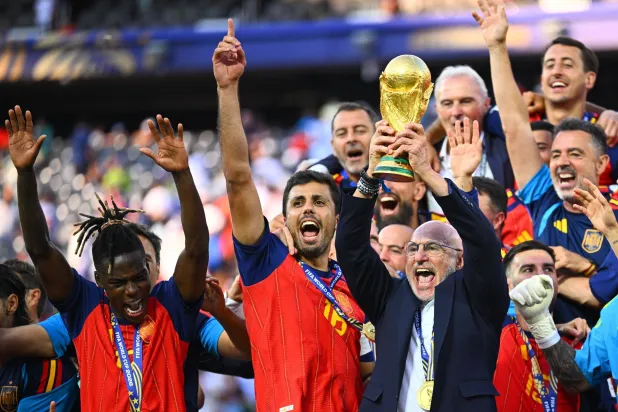
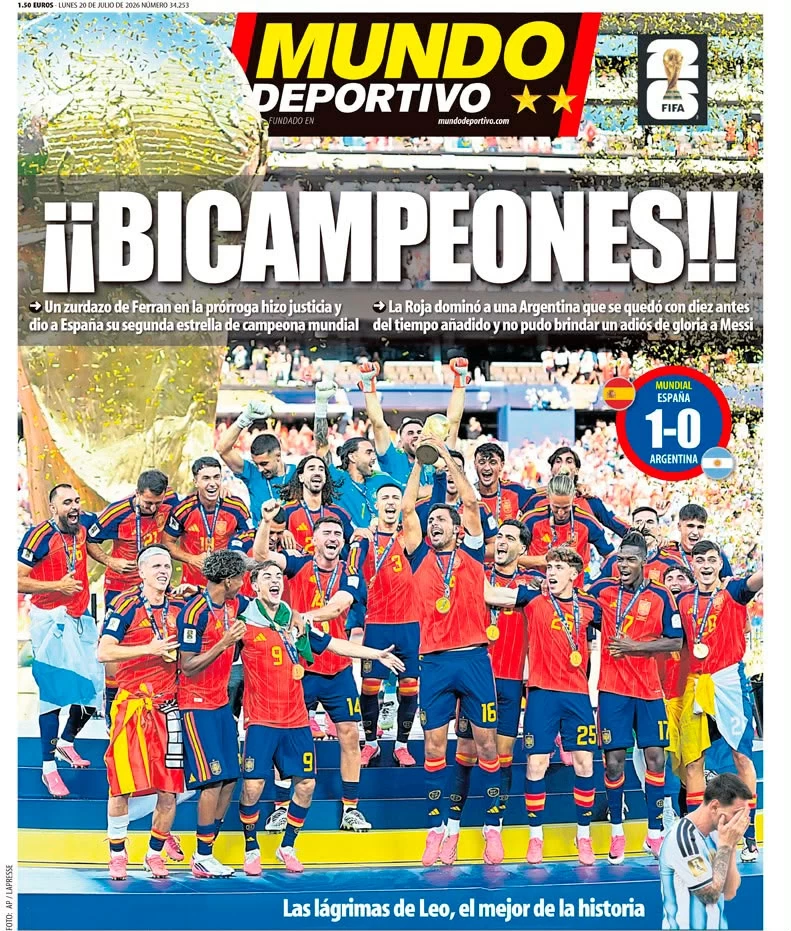
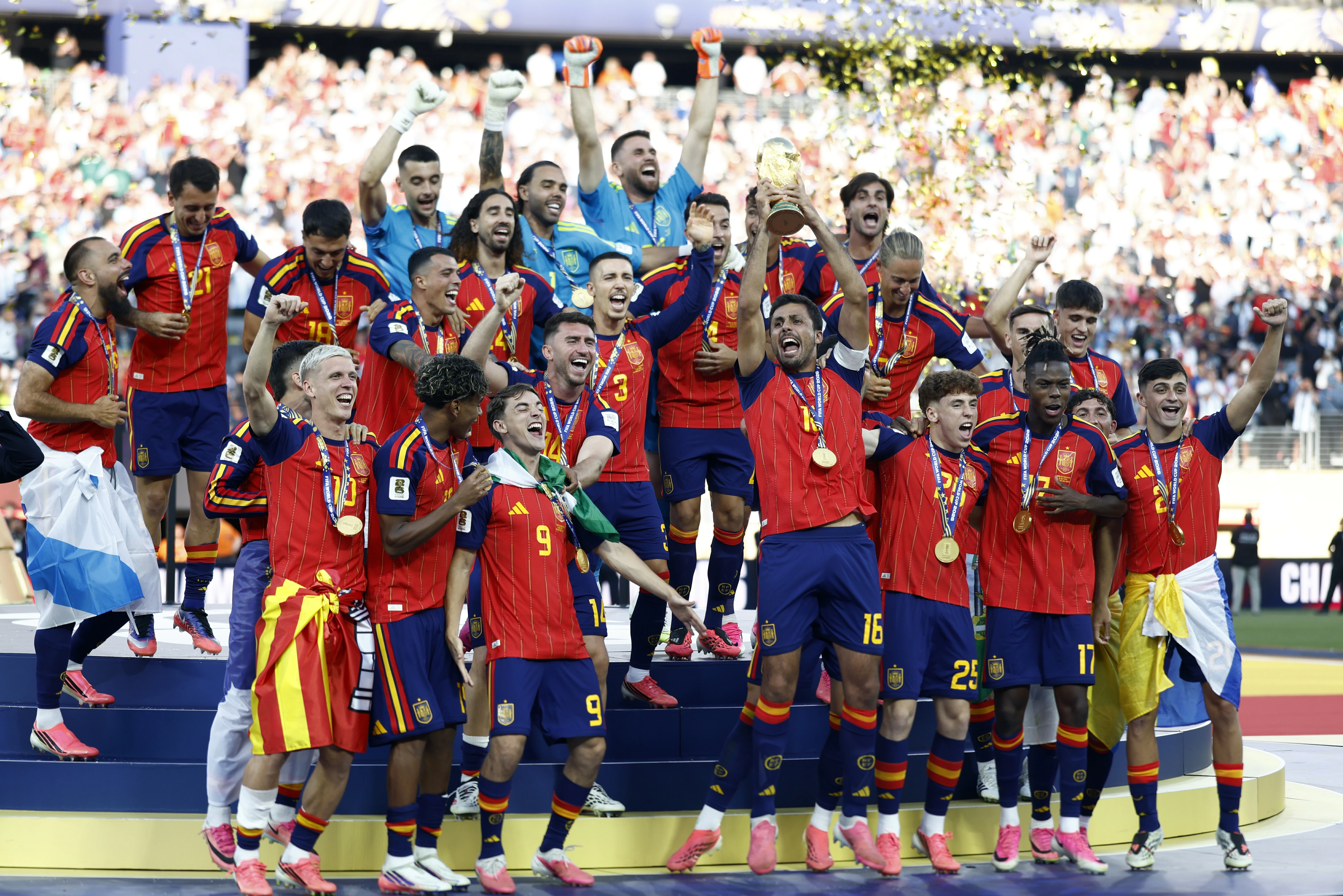
Luis de la Fuente lifted the World Cup above his head on the evening of Sunday, 19 July 2026, after leading Spain to a 1-0 victory over Argentina after extra time in the final, giving his country its second world title after its first in 2010.
The Spanish victory was achieved by a goal scored by substitute Ferran Torres in the second half of extra time, after Nico Williams came off the bench and provided the decisive assist. Argentina had played part of the match with ten men after Enzo Fernández was sent off, before Spain sealed the final and ended the journey of the 2022 champions.
According to Spanish media, the story of the man who sat on the throne of the world did not begin with a huge contract or a call from a top football official; rather, it began with a newspaper he read every morning during a harsh period of unemployment, and a very small piece of news announcing that the Spanish federation was looking for a coach to work with youth teams.
Before reaching that morning, de la Fuente endured long months of waiting and anxiety. He was sacked by Deportivo Alavés on 16 October 2011, after only 11 matches, in which he achieved 4 wins, three draws, and 4 defeats. He believed a new offer would come quickly, but he waited day after day without his phone ringing.
Days turned into weeks, then the unemployment extended to about 18 months. De la Fuente had turned 50, had a family and three children, while income stopped and fears grew of being away from the football circle and losing the chance to return to coaching.
Spain coach shakes hands with Gianni Infantino, President of FIFA (Reuters)
Antón Meana recounted, during the program 'El Larguero' on Cadena SER radio, that de la Fuente's life during that period became like a fixed routine: he went to the same café, sat at the same table, ordered the same coffee, then read the same newspaper waiting for an offer from a club, but no one called him.
One of those days, he found inside the newspaper a small piece of news stating that the Royal Spanish Football Federation was looking for a coach for the under-19 national team. What he read was described as a very small announcement, but the unemployed coach saw it as the door that could bring him back to the profession.
De la Fuente did not just read the news and wait for a call from the federation; he took the initiative to pick up the phone and contact Iñaki Sáez, his former coach at Athletic Bilbao, who was linked to the Spanish federation at the time.
De la Fuente asked him if he thought he was suitable for the position, and Sáez replied by asking him to send his CV, to present it to those responsible for the selection process. Afterwards, the coach received a call, underwent several interviews, before he was chosen for the job.
The story of the man who sat on the throne of the world did not begin with a huge contract or a call from a top football official (Reuters)
Another account published by Spanish media explains that what de la Fuente saw was not a traditional job advertisement in the direct sense; rather, it was a brief piece of news about the federation's search for a new coach for the youth categories. But the difference did not matter to him; he treated the few words published in the newspaper as an opportunity not to be missed.
Ginés Meléndez, the official in charge of the youth categories and the coaching school at the federation, was looking for a new face to lead the under-19 team. The position was initially offered to former international striker Fernando Morientes, but he preferred to continue at Real Madrid's academy, thus opening the way for de la Fuente after a recommendation from Iñaki Sáez.
In May 2013, the long months of unemployment ended with de la Fuente joining the Royal Spanish Football Federation. He did not get a long-term contract to secure his future; rather, he was given an initial opportunity for only 3 months, during which his task was to lead the under-19 team and qualify it for the European Championship.
Although the contract was temporary, de la Fuente acted from the first day as if he had come to stay. He stayed at the federation's headquarters in Las Rozas and began looking for a home in Madrid, believing he could turn the three months into a long-term project.
The Spanish national team under his leadership succeeded in passing the qualifying round and reaching the European Under-19 Championship in Lithuania. In July 2013, de la Fuente was talking about developing players and preparing them to reach professional football and the senior team, without knowing that some of the ideas he was applying with the young players would lead him years later to lead the senior team itself.
The period of unemployment was not entirely wasted time for de la Fuente. He continued watching matches, visited various clubs, attended training sessions, and got close to the methods of several coaches, most notably Argentine Marcelo Bielsa during his time with Athletic Bilbao.
He feared being excluded from the football circle and losing his name and presence, so he maintained his connection to the fields, training courses, and technical meetings. With his financial resources dwindling and his future uncertain, he tried to turn the waiting into a phase of learning and preparation for the next opportunity.
From a three-month contract began a journey that lasted more than a decade inside the Spanish federation. De la Fuente led the youth teams, won the European Under-19 Championship in 2015, then the European Under-21 Championship in 2019, and led the Olympic team to the silver medal at the Tokyo Olympics.
In December 2022, he took over the senior Spanish national team as successor to Luis Enrique. The decision faced a wave of doubts and criticism, especially since his name was not among the world's most prominent coaching names, but his deep knowledge of the players who had passed through the youth teams helped him build a new group.
From a three-month contract began a journey that lasted more than a decade inside the Spanish federation (Reuters)
De la Fuente led Spain to the UEFA Nations League title in 2023, then to the European Championship title in 2024, before the scene was completed on 19 July 2026 with his crowning of the World Cup.
Spain entered the final with a clear collective identity based on possession, patience, and confidence in the ball, and managed to impose its control with a possession rate of about 65 percent, also made 12 shots on goal, and completed a number of passes far exceeding Argentina's.
Spain did not rely on a single player or individual star in its path to the title. That was evident in the final itself, when the goal came from two substitutes; Nico Williams created the chance, and Ferran Torres scored it, in a play that summarized de la Fuente's philosophy based on the value of the team ahead of the individual.
Spain ended the tournament having conceded only one goal, and extended their unbeaten run to 38 matches in various competitions. De la Fuente, aged 65, also became the oldest coach to win the World Cup.
Spain's players collected a number of individual awards after the triumph; Rodri won the best player of the tournament award, while Pau Cubarsí won the best young player award, in a new confirmation of the success of the mix that the coach created between experience and emerging talents.
Original source: Asharq Al-Awsat


Comments (0)
Be the first to comment.