Did Switzerland reveal the recipe for England to stop Messi?

Argentina's qualification for the 2026 World Cup semi-finals at the expense of Switzerland was not so much proof of dominance as it was a warning that revealed some weaknesses that England might try to exploit.
Argentina's qualification for the 2026 World Cup semi-finals after beating Switzerland was not evidence of their absolute strength, but rather carried warnings that revealed gaps that England could exploit in the next match. Despite the defending champion's 3-1 win after extra time, many analysts noted that Lionel Scaloni's side performed below their usual level, and their opponent managed to disrupt their most dangerous weapons, especially Lionel Messi, for long periods.
All eyes are on the anticipated clash between Argentina and England, with the latter seeking to implement a plan similar to the one Switzerland used to stop Messi.
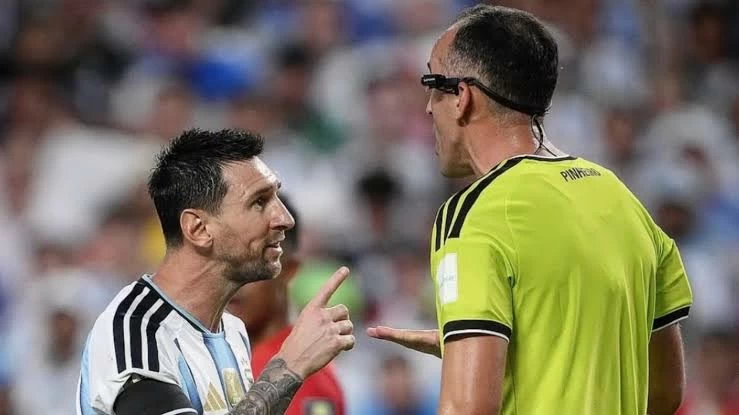
According to The Guardian, Switzerland applied a plan that seemed simple but was highly effective, consisting of closing spaces in midfield and intensifying the marking on Messi, which prevented him from receiving the ball in the areas he prefers between the lines. The Argentina captain could not find his usual angles for through balls or shooting with his left foot, and was forced on several occasions to run into the red defensive wall instead of heading towards goal.
Among the most notable scenes missing from the match was the move that has long characterized Messi throughout his career, when he exchanges a short pass with a teammate on the edge of the penalty area before creating the space needed to shoot. This time the idea did not work; the Swiss marking was enough to close the outlets, and Messi only showed his usual danger in limited moments, most notably the corner from which he created Alexis Mac Allister's goal, and then the pass that preceded Julián Álvarez's goal in extra time.
Lionel Messi failed to score against Switzerland for the first time in this tournament (AFP).
Although talk of 'stopping Messi' is repeated before every major tournament, most teams have failed to accomplish this task on the ground. But what Switzerland provided gave the English coaching staff valuable material to study, especially since Thomas Tuchel has players capable of executing intense pressure in depth, led by Declan Rice and Jude Bellingham, who possess great physical abilities that allow them to close spaces and quickly transition to attack.
In contrast, the match revealed another weakness for Argentina on the right flank, where Nahuel Molina had a difficult night against Dan Ndoye, who beat him repeatedly, created the equalizer, and almost caused other goals. Scaloni was forced to substitute Molina before extra time, and later explained that the player entered the tournament injured, and that his replacement Gonzalo Montiel also suffers from the same problem, requiring careful management of their playing minutes.
The problem does not stop at the full-backs; Rodrigo De Paul no longer provides the same defensive cover on the flank, which doubles the burden on the right side. Moreover, the midfield's lack of players skilled in covering the flanks leaves the full-backs in direct confrontation with the opponents' wingers, which could give players like Anthony Gordon or Marcus Rashford the opportunity to exploit spaces and run behind the defense.
Therefore, the upcoming match looks different from Argentina's previous games. If Switzerland succeeded in limiting Messi's impact and exposed the fragility of the right flank, England possesses the physical and speed capabilities to build on those observations. The question remains: Will Tuchel succeed in turning these indicators into an advantage on the pitch, or will Messi find, as he always has, a new way to escape the marking and make the difference?
Despite all the observations surrounding Argentina's performance against Switzerland, the team defending its world title still possesses the weapon that any opponent finds difficult to prepare for: the ability to decide matches with a single moment of creativity. The team does not impose its absolute dominance as it did in some periods of the tournament, nor does it always succeed in imposing its rhythm, but it has a group of players capable of changing everything in a matter of seconds.
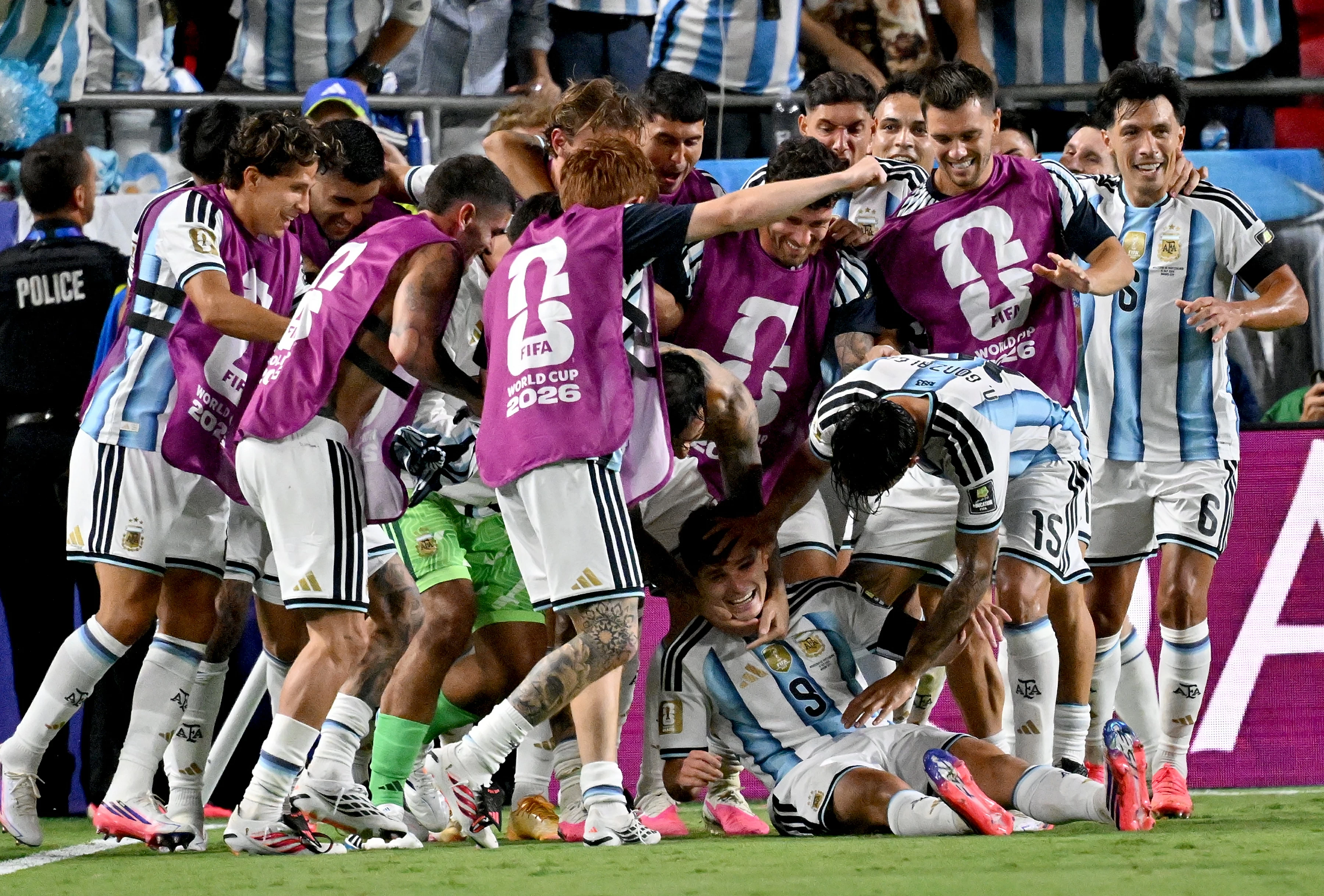
This is what happened in the knockout rounds. In the match against Egypt, Lionel Messi saved his country when it was on the verge of bidding farewell to the tournament, before Lautaro Martínez sent a precise cross that Enzo Fernández converted into the winning goal. Against Switzerland, while the Swiss defense seemed resilient, Julián Álvarez emerged with a stunning strike that decided the match, a moment many considered one of the tournament's most beautiful goals. That is why Lionel Scaloni believes his team does not need absolute control, but rather a player who makes the difference when solutions run out, as he expressed by saying his team 'always finds solutions in the end'.
But this ability to decide hides another problem: the decline in physical effectiveness of the midfield. Unlike most top teams, no Argentine player ranks high in sprint rates during the tournament, which has caused the team to lose control in some matches when opponents increased the tempo. Despite the offensive importance of both Enzo Fernández and Alexis Mac Allister, the duo suffered repeated penetrations when losing the ball, and Rodrigo De Paul, aged 32, appeared less able to cover spaces compared to previous years, while Leandro Paredes looked exhausted after the great effort he put in recent matches.
Analysts believe that this point could give England a clear advantage, if Declan Rice plays at full readiness alongside Jude Bellingham, who has established himself as one of the tournament's top players thanks to his immense physical presence and ability to run throughout the match. Moreover, Rice's runs from deep could put the Argentine midfield under constant pressure, which may force Scaloni to adjust his defensive balance.
Physical battles are no less important than the tactical struggle. Scaloni admitted after the Switzerland match that his team struggled in direct duels, and could not keep the ball for long periods or build consecutive passing sequences. This aspect seems worrying before facing an English team that relies on physical strength and duels, whether in midfield or inside the penalty areas.
Attention also turns to the anticipated duel between Harry Kane and the Argentine center-backs, especially Cristian Romero, who returned from a knee injury but has not shown his usual level, and endured several strong challenges before leaving in the final minutes against Switzerland. If Kane succeeds in imposing his presence inside the penalty area, the Argentine defense may face its toughest test since the start of the tournament.
Nevertheless, underestimating the defending champion remains a risky gamble. Argentina may appear less convincing than their rivals, and may go through long periods without real danger, but they possess what many teams do not: the ability to turn a fleeting moment into a goal, and a goal into a ticket through. Therefore, England's task is not limited to stopping Messi, but extends to preventing the entire Argentine team from reaching that moment when they are accustomed to turning matches around, no matter how far they seem from their best.
Original source: Asharq Al-Awsat



Comments (0)
Be the first to comment.