England: From the Cradle of the Game to World Cup Dream
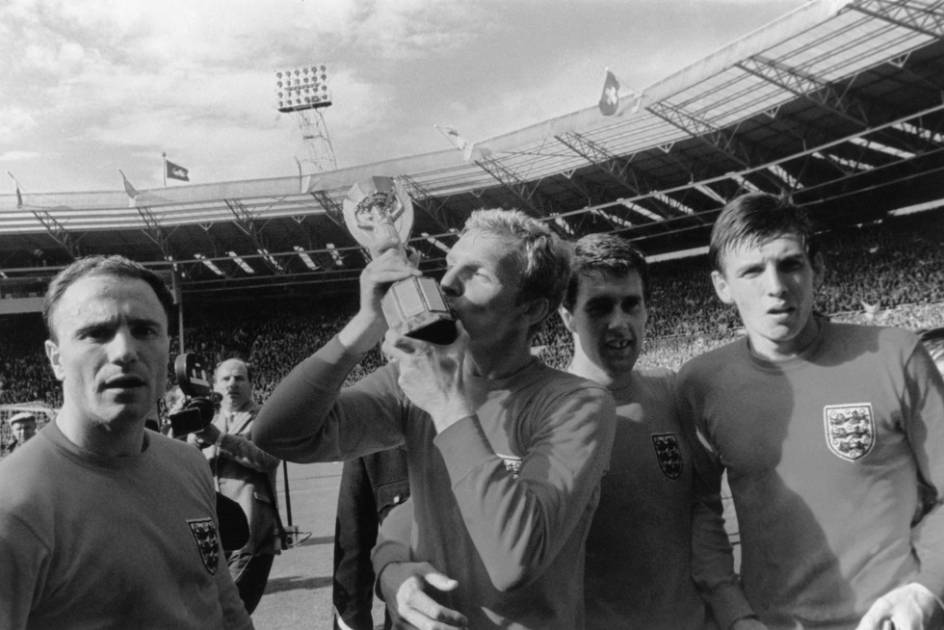
England's journey from football's birthplace to the 2026 World Cup semi-finals, with hopes of ending a 60-year title drought.
Summary: Since England established the rules of modern football over a century and a half ago, the dream of recapturing the glory of 1966 has haunted generations of Three Lions fans. Today, the England team has reached the semi-finals of the 2026 World Cup under captain Harry Kane and coach Thomas Tuchel, amidst optimism that this summer may end a 60-year wait, in a journey shaped by pioneers and stars from Bobby Moore to David Beckham to Kane.
Before delving into the details of this journey, it must be clarified that what is popularly known as 'British football' is not represented by a single national team. Instead, England, Scotland, Wales, and Northern Ireland each field independent teams in international competitions, a historical privilege granted by international federations as the birthplace of the game. Therefore, discussions about competing for the 2026 World Cup effectively refer to the England team, the most prominent and successful of the British teams.
The roots of modern football trace back to England in the mid-19th century, when the Football Association was founded in London in 1863 and established the first unified rules of the game, moving football from schoolyards and universities to organized pitches. In 1872, England and Scotland played the first official international match in history, ending in a goalless draw. England then launched the world's first domestic cup competition (the FA Cup) and the first organized league in 1888, before spreading the game worldwide through British sailors, merchants, and engineers.
England stayed away from the early World Cups due to disputes with FIFA and only participated starting from the 1950 tournament, which saw a shocking defeat to the United States. But the golden moment came in 1966 when they hosted the tournament and won their only title to date, a dramatic 4-2 victory over West Germany at Wembley, led by captain Bobby Moore and a historic hat-trick from Geoff Hurst—still the only hat-trick in a World Cup final—alongside the brilliance of playmaker Bobby Charlton.
Read more
Gareth Southgate pleased with Three Lions response after England's win over Switzerland in UEFA Nations League playoff
England's midfield maestro ready to show what the Three Lions have been missing
French 'Roosters' knock out 'Three Lions' and reach semi-finals
After 1966, England entered a long tunnel of failures and disappointments, most notably elimination by West Germany in the 1970 quarter-finals, missing the 1974 and 1978 tournaments, then Diego Maradona's infamous 'Hand of God' in the 1986 quarter-finals. The team reached the World Cup semi-finals in 1990 in Italy before losing on penalties to Germany in a night marked by Paul Gascoigne's tears, and the penalty shootout tragedy repeated at Euro 1996 on home soil. England did not return to the World Cup semi-finals until 2018 in Russia, then lost the Euro 2020 final to Italy and Euro 2024 final to Spain, cementing the image of a team that always comes close to glory but never grasps it.
Over those decades, England produced a constellation of the game's greatest stars, from legendary winger Stanley Matthews, the first Ballon d'Or winner in 1956, to Bobby Charlton and Bobby Moore of the title-winning generation, through Kevin Keegan and Gary Lineker, the 1986 World Cup top scorer, then Alan Shearer, the Premier League's all-time top scorer, and the 'golden generation' of the early 2000s that included Steven Gerrard, Frank Lampard, Paul Scholes, Wayne Rooney, and David Beckham, leading to the current generation led by Harry Kane, Jude Bellingham, and Bukayo Saka.
David Beckham deserves special attention as the most globally famous English footballer in modern history. He was team captain from 2000 to 2006 and earned 115 caps. His name is associated with unforgettable moments, most notably his decisive free kick against Greece in 2001 that sent England to the 2002 World Cup, after he had become a national 'pariah' following his red card against Argentina in the 1998 World Cup, before redeeming himself with exceptional character.
Harry Kane and Jude Bellingham are the most prominent England players in the 2026 World Cup (Getty)
The relationship between Beckham and Kane is one of legacy and succession rather than teammates, as Beckham retired from international duty before Kane began his England career in 2015. Kane grew up in a football academy established by Beckham, and there is a photo of a young Kane with his mentor, alongside a young girl also playing ball. Fate would have it that the girl became Kane's wife and the mother of his four children years later.
Kane inherited the captain's armband once worn by Beckham, surpassed his number of caps to become the second most-capped England player after goalkeeper Peter Shilton, broke historical goal-scoring records to become the team's all-time top scorer surpassing Wayne Rooney, and then became England's top scorer in World Cup history, exceeding Gary Lineker during the current 2026 World Cup. Beckham has often publicly praised Kane and his leadership, and has supported the team from the stands at major tournaments, a scene that symbolizes the passing of the torch between two generations of Three Lions captains.
England entered the 2026 World Cup under German coach Thomas Tuchel, opening with an exciting 4-2 win over Croatia with two goals from Kane, followed by a disappointing goalless draw with Ghana, then a 2-0 win over Panama to top their group. In the knockout stages, they overcame the Democratic Republic of Congo 2-1 with two late goals from Kane, then produced one of their greatest matches, beating hosts Mexico 3-2 in an epic at the Azteca Stadium despite being a man down after Jarrell Quansah's red card, with a brace from Jude Bellingham and a penalty from Kane. Thanks also to Bellingham, England won the quarter-final against Norway led by Erling Haaland.
England's chances this summer appear among the best in decades. The team has shown good mental resilience in crucial matches, but the road to the final is fraught with obstacles. In the semi-final, they face defending champions Argentina, while the other half of the draw features European giants France and continental champion Spain, who defeated England in the 2024 final. The question that has haunted the English for six decades remains hanging until July 19: will the ball finally come home?
Original source: Independent Arabia



Comments (0)
Be the first to comment.