FIFA World Cup 2026 sees major increase in goals from outside the box

A trend of teams defending deep has enticed forwards to take shots from outside the penalty area, Jurgen Klinsmann says.

By Ali Harb
First published on 19 Jul 202619 Jul 2026.
The 2026 World Cup has showcased a significant tactical evolution in how goals are scored.
According to FIFA, the share of goals netted from beyond the penalty area has doubled at the North American World Cup compared to the previous edition in Qatar.
Sixteen percent of the goals scored in this World Cup came from outside the penalty area, versus 8 percent in 2022, FIFA’s Technical Study Group (TSG) revealed on Saturday.
Recommended Stories
list of 3 items
- list 1 of 3Kylian Mbappe breaks all-time World Cup scoring record with 22nd goal
- list 2 of 3Saka hat-trick helps England down France to win World Cup Bronze Final
- list 3 of 3Netanyahu declares support for Argentina ahead of World Cup final
end of list
Football analysts attribute the rise to a defensive trend where teams pack the box, forcing opponents to shoot from distance.
Jurgen Klinsmann, a member of FIFA’s TSG, said the large number of players in and around the box also makes it more difficult for goalkeepers to track the ball from afar.
“There’s no space – eight, nine players are in the box or outside the box, so it is definitely a recipe for shots from the outside,” the former US national team manager told reporters.
“It’s something fun for us coaches to watch … We saw some beautiful goals that way.”
Arsene Wenger, FIFA’s chief of football development, also paid tribute to the quality of the shots being taken.
“The balls look fast. Shots – they delivered rockets from outside the box, really. The ball – boom, the quality of the shots was great in this tournament,” he told reporters.
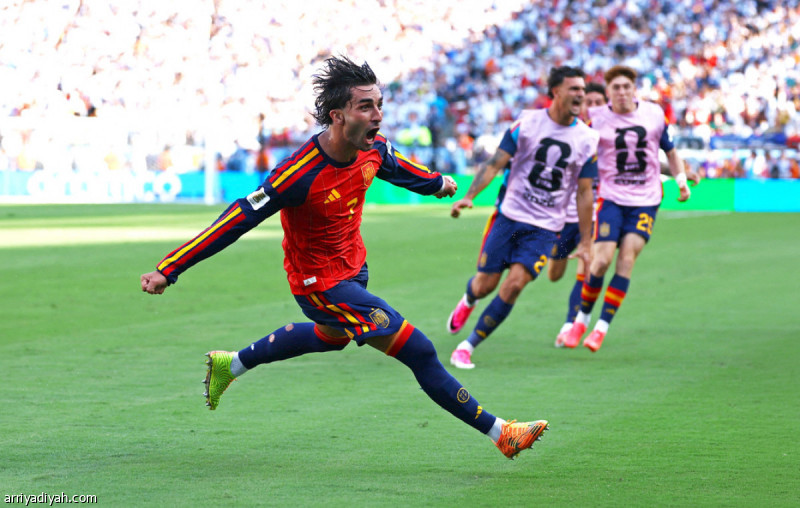
Argentina, in particular, have relied on long-range shots while trailing to break down sides sitting deep.
The team has scored five goals from outside the box, including the screamer from Enzo Fernandez that brought them back into the match in the 85th minute of the semifinal against England.
Julian Alvarez also hit a spectacular curler from 22 yards out against 10-man Switzerland in extra time to help book Argentina’s place in the semifinal.
In the third-place match on Saturday, English midfielder Declan Rice found the bottom corner from outside the box in the third minute in what turned out to be one of the wildest encounters of the World Cup, with France losing 6-4.
Argentina, in particular, have depended on long-range efforts to break down deep-lying defences when trailing. This approach reflects a broader trend where teams with technical quality exploit space outside the box. The increase in such goals could influence future defensive strategies in international football.
Original source: Al Jazeera





Comments (0)
Be the first to comment.