France ready to compete with Spain in midfield battle in World Cup semi-final
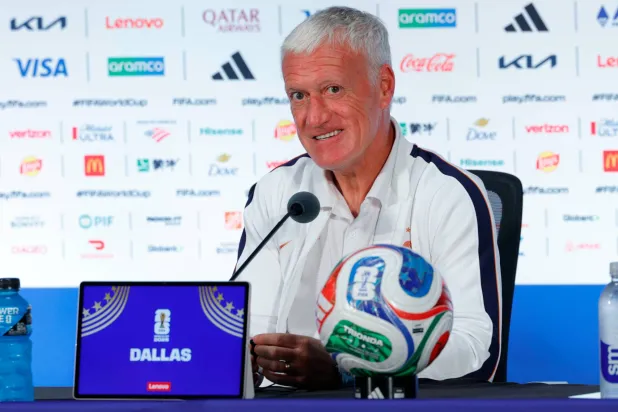
Didier Deschamps, the coach of France, said that his team will not voluntarily concede possession to Spain in the World Cup semi-final clash.
In every World Cup, a number of outstanding emerging players stand out; in 2010, stars like Alexis Sánchez, Mesut Özil, and Luis Suárez shone. In 2014, James Rodríguez became a household name after leading Colombia to the World Cup quarterfinals for the first time in their history.
The last two tournaments saw the emergence of Benjamin Pavard (France), Hirving Lozano (Mexico), Enzo Fernández (Argentina), and Azzedine Ounahi (Morocco), among others. However, a breakout star during the World Cup does not necessarily guarantee future success. Lozano and Ounahi are prime examples of players who delivered impressive performances in the World Cup and continued their careers successfully, but did not capture the spotlight this time as they did in 2018 and 2022 respectively.
The same applies to Rodríguez, who had a brilliant first season with Real Madrid in 2014-2015, but his subsequent career was heavily affected by injuries and inconsistent form. And of course, there is also a player like Luis Suárez, who later became one of the best players of the last decade at Liverpool and then Barcelona.
Perhaps the 2026 World Cup did not witness as many dazzling performances from emerging stars as in previous tournaments. Instead, the most prominent feature was the brilliance of already established superstars - Lionel Messi, Kylian Mbappé, and Erling Haaland - who are playing at very high levels. Nevertheless, according to ESPN, we saw some talents that surprised some with what they offered:
Diomande showed his potential to become a top-class striker (Reuters)
Yan Diomande: Left winger for RB Leipzig (Ivory Coast)
Some may think he is not suitable to be on this list; in the 2025-2026 season, when he was 18, he scored 20 goals and provided 20 assists in the German Bundesliga with Leipzig, who finished third in the league. Even in a league that allows attacking talents to shine, young emerging players rarely deliver such impressive performances, and he fully deserved his World Cup participation amid great anticipation for what he would do in the tournament. However, for those who saw Diomande for the first time, he showed his potential to become a top-class striker. His most important characteristics are that he may already be one of the most exciting dribblers in European football, and he possesses explosive bursts, immense physical strength, despite being only 19 years old. Add to that his proficiency with both feet, which means he is a tough opponent for any defender.
According to analysts at statistics company Opta, French star Kylian Mbappé is the only player who created more chances than Diomande in the World Cup through dribbling (9 chances for Mbappé vs 8 for Diomande), noting that the French star played 3 additional matches. The best example of Diomande's abilities was in Ivory Coast's opening group stage match against Ecuador in Philadelphia, where we saw his brilliant dribbling and chance creation, including his wonderful pass to Elye Wahi in the first half. When Diomande was positioned on the right wing, he exhausted Arsenal defender Piero Hincapié with constant changes of pace. Later in the second half, he moved to the left wing to become more aggressive in shooting. Diomande's performance in subsequent matches before Ivory Coast's elimination by Norway in the Round of 32 did not reach the level of his stunning debut, although he showed some exceptional glimpses. But it is not surprising that a big club like Paris Saint-Germain is seeking to sign him this summer. Given his continuous development, it would not be surprising if by 2030, Diomande is regarded as one of the best players in the world.
American Alex Freeman's header shakes the Australian net (AP)
Alex Freeman: Defender for Villarreal (United States)
During his first four matches in the 2026 World Cup, the US team performed at a good level without any notable gaps. They achieved convincing victories over Paraguay and Australia in the group stage, before defeating Bosnia and Herzegovina 2-0 in the Round of 32. Even considering the strength of the opponents, it could be said that this was the best run of matches the US team has played. What made the US team look better than expected was its optimal use of its strengths; Sergiño Dest and Antonee Robinson occupied advanced positions as overlapping full-backs to pose a threat to the opponent. The US also focused on direct attack through runs from Weston McKennie and Malik Tillman through midfield. These two factors helped them successfully break through the opponent's defense in midfield.
To make this strategy successful, the US team needed a defender capable of playing in multiple positions, able to provide the necessary support in different areas, and Freeman was the ideal choice for that. He often played as a third center-back on the right side of the defense, but he had the flexibility to move forward when the US had possession in the final third. One of the great passes we saw throughout the US team's World Cup campaign was Freeman's pass to McKinnie as he sprinted down the right side into space. Freeman topped the list of defenders with the most forward passes with 28.
Freeman is also the type of defender who covers large areas of the pitch, which helps correct mistakes in various parts of the field. This included covering spaces on the flanks and defending one-on-one when needed. It also required him in some situations to make decisive interventions to clear clear-cut chances. Of course, these good performances for the US team did not continue, as they suffered a heavy 4-1 defeat against Belgium. This loss (especially since the current Belgium team was the weakest in over a decade) sparked a debate about the strength of the US team, including the lack of enough rising stars. But if there is one player who can hold his head high despite this result, it is Freeman. True, the chances of him becoming one of the stars the US team needs by 2030 are slim, but he showed in this tournament signs of being a top-class all-round defender.
Johan Manzambi: Playmaker for Freiburg (Switzerland)
Original source: Asharq Al-Awsat


Comments (0)
Be the first to comment.