Hassan Overcame the Crisis.. And the Question Remains: 'Where Are You, Messi?'
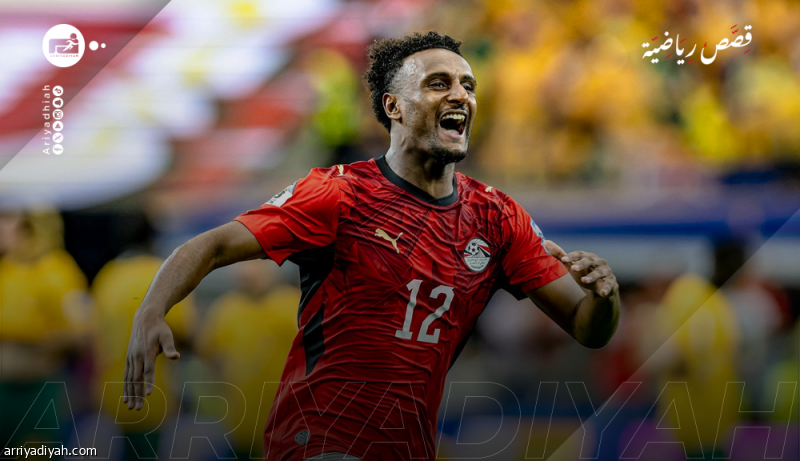
Haytham Hassan faced the world's press in Dallas on Friday, speaking fluent French. Born in Paris to an Egyptian father and Tunisian mother, he embodies a divided identity. Egypt's national football team achieved a historic milestone by reaching the World Cup round of 16. Now they face Argentina, the defending champions. Hassan, who hadn't played a minute in the group stage, finally appeared as a substitute against Australia, sparking questions about his role. After years of deliberation, he chose to represent Egypt. With his performance, Egyptians see him as Mohamed Salah's successor. After the match, he said, 'We made our dream come true and made 120 million Egyptians happy.' Now the question lingers: 'Where are you, Messi?'
Haytham Hassan stood before the world's press cameras in Dallas, USA, on Friday, speaking French more fluently than Arabic, the language of his Egyptian father and Tunisian mother, both immigrants. He was born in Paris in 2002, in a small apartment filled with the aroma of Egyptian koshari and Tunisian couscous. An Egyptian father dreaming of his homeland, and a Tunisian mother carrying the nostalgia of exile in her eyes. His smile is calm, but his eyes hold a mysterious spark—the spark of someone who has lived a life divided between two identities, between dreams intersecting with hope and frustration. The Egyptian national football team took a historic, unprecedented step: qualifying for the round of 16 in the World Cup. Now, the Pharaohs face Argentina, the world champions, on Tuesday, in a match that feels like a dream bordering on madness. Hassan had not played a single minute in the group stage; he sat on the bench, tall and silent, his absences sparking sharp questions. Coach Hossam Hassan responded with cryptic brevity: 'There are some internal matters.' After the match against Iran, Egyptians woke up to shocking news: Hassan had deleted all photos from his Instagram account. Rumors spread like wildfire: anger, rebellion, a hidden conflict. But inside the team's room, the picture was different. Ibrahim Hassan, the team manager, calmly replied to journalists with the poise of an elder: 'Hassan is a great addition... His time will come when the coaching staff deems it appropriate.' In the background, his father, Yousri Hassan, assured the cameras that his son is a true professional, respecting technical decisions as he respects his parents. The match against Australia in the round of 32 came; Hassan entered as a substitute and ran onto the field like someone reclaiming himself after a long absence. His performance was brilliant, full of boldness and agility, sparking new questions: Is it time for him to start against Messi and his men? He began his football career at age 16 with French club Châteauroux, then moved to Villarreal in Spain, spending four seasons filled with learning and loans before settling at Real Oviedo and contributing to their promotion to the first division. A talented player, but divided in identity; he represented France at the U17 and U18 levels, then the big debate began. Egypt and Tunisia competed for his allegiance. He hesitated for a long time, studied the offers, listened to his father, and then made his decision in March: he would be a Pharaoh. He debuted in a friendly against Saudi Arabia in Jeddah. Despite all the rumors about his papers, FIFA confirmed everything was fine—no registration crisis, no legal issues. Now, after his performance against Australia, Egyptians see him as the anticipated 'successor to Mohamed Salah'—a calm, respectful young man carrying 120 million dreams in his heart. After the match, he told FIFA's website with a tired but happy smile: 'We achieved our dream and made 120 million Egyptians happy... Our fans' support led us to this round... We'll celebrate for one day, then start preparing for the next match... We made history and we are overjoyed.' That night in Dallas, as the city lights glittered outside the hotel window, Hassan sat alone for moments, looking at the jersey hanging before him with the name 'Hassan' embroidered in gold thread. He felt the weight of history on his shoulders and the lightness of the dream in his heart, while his mind repeated: 'Where are you, Messi?'
Original source: Arriyadiyah




Comments (0)
Be the first to comment.