Did the 2026 World Cup events harm FIFA's credibility?
Did the 2026 World Cup events harm FIFA's credibility?
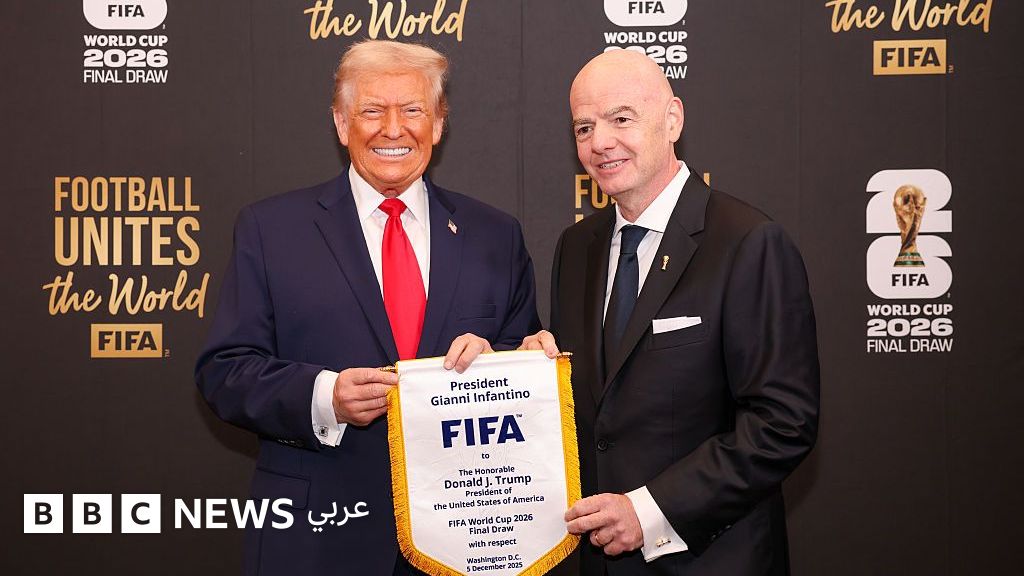
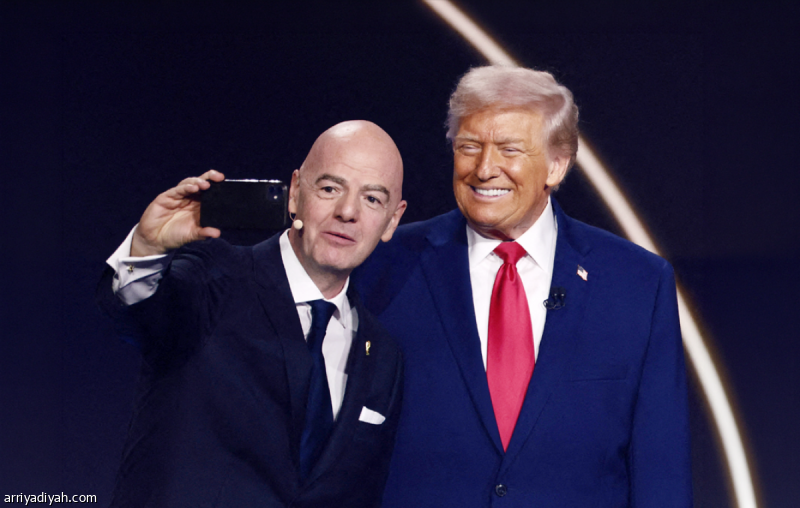
Image caption: FIFA President Gianni Infantino with US President Donald Trump ahead of the official draw for the 2026 World Cup
Published July 7, 2026
Last updated 8 hours ago
Reading time: 4 minutes
The 2026 World Cup continues to raise many questions and criticisms on several levels, including organization, refereeing, treatment of fans, and several participating teams.
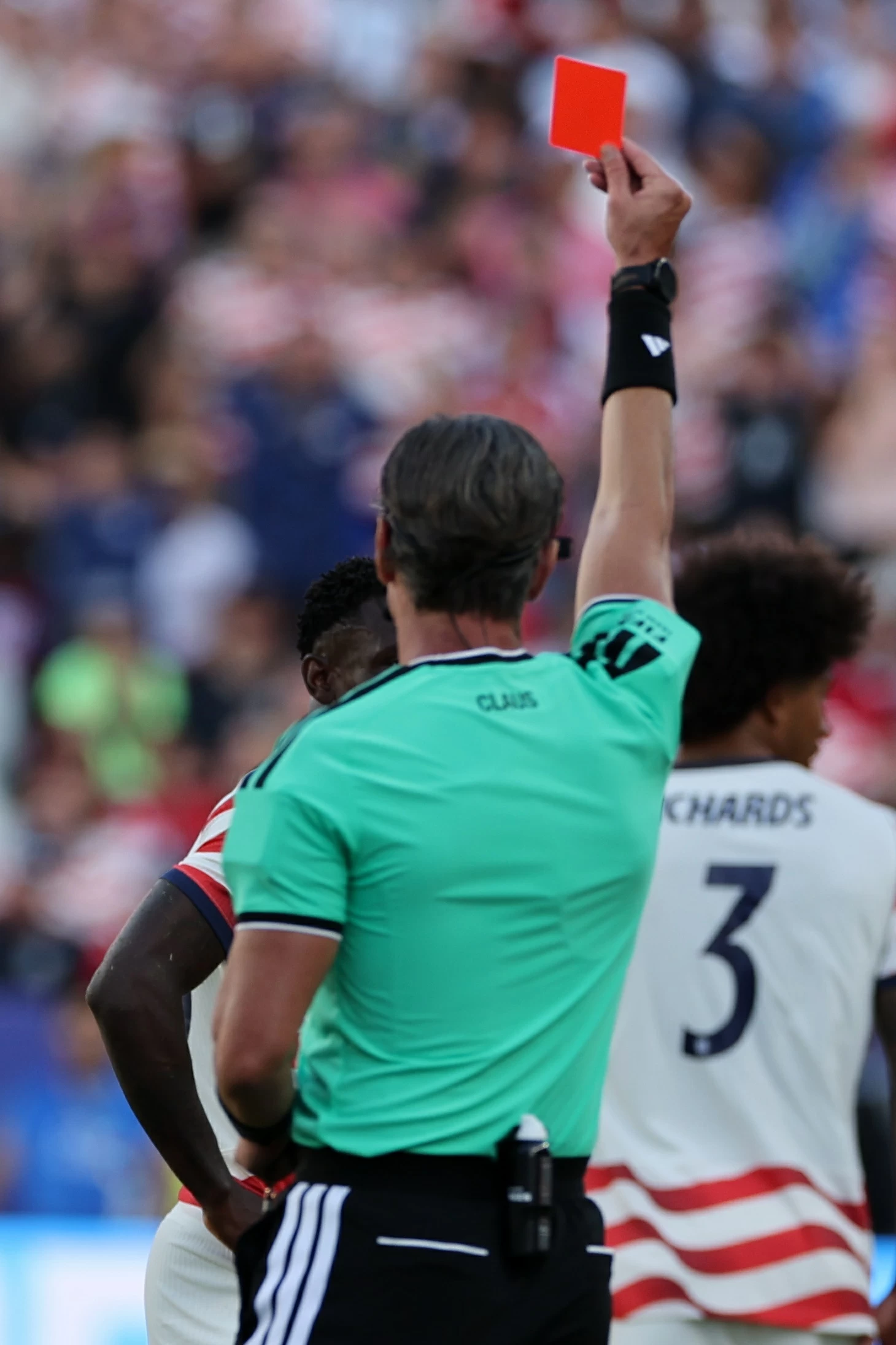
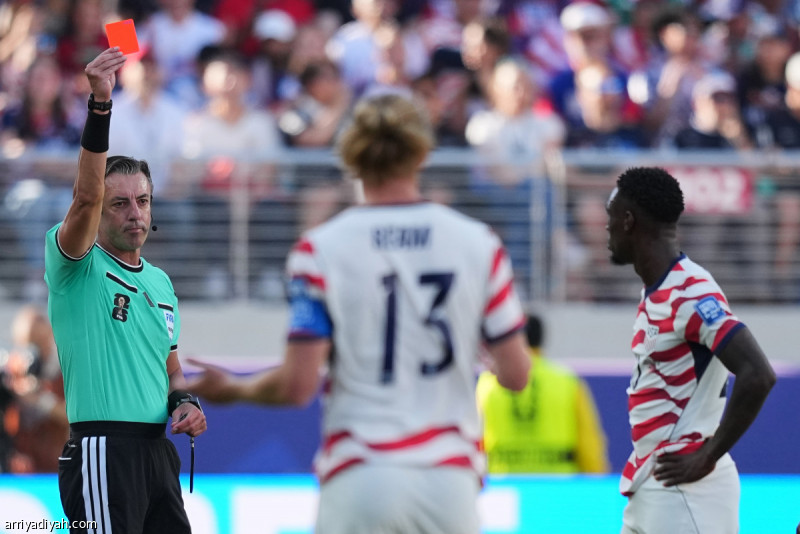
The most shadow-casting incident that put the credibility and independence of the International Federation of Association Football (FIFA) at stake was the incident involving the cancellation of the red card received by American striker Folarin Balogun during his team's match against Bosnia, held on July 2, 2026, as part of the 2026 World Cup, which ended with the United States winning 2-0.
But what stirred up a storm was that the cancellation of that penalty against an American player was not done by FIFA's will alone, but came at the direct request of the US head of state, Donald Trump, who called FIFA President Gianni Infantino by phone, demanding he review the decision, and the latter immediately responded to the request.
The talk initially came as leaks and speculation, but US President Donald Trump cut off all that by directly confirming that he had indeed spoken to Infantino and requested that, while Infantino also confirmed the conversation.
In remarks to reporters at the White House, Trump said: "I asked for a review because I didn't think it was a foul; I thought it was two great players colliding. It's not like someone punched the other in the face." Trump also wrote on his platform Truth Social thanking FIFA for its decision, saying: "Thank you to FIFA for doing what is right and correcting a great injustice."
Storm of criticism
However, aside from Trump's welcome of FIFA's decision, the decision sparked a storm of criticism worldwide targeting the credibility of the international sports organization, which is supposed to be the primary guardian of the values of justice and fair play, at a time when the decision led to accusations that FIFA has become a symbol of double standards and prioritizes interests over fairness.
The Union of European Football Associations (UEFA) was among the strong critics of FIFA's decision, stating in a statement that the automatic one-match suspension "is not subject to personal discretion" and is considered "a principle stipulated in the regulations." The statement added: "Such a decision creates a precedent in the current tournament (2026 World Cup), where similar cases will now require equal treatment, and this is negative."
Skip most read and continue reading
"Scandal" or "correct decisions": Refereeing controversy after Egypt's dramatic exit from the World Cup
Resignation "to relieve the government of embarrassment" raises the question: How are ministers chosen in Egypt?
Trump says the latest escalation with Iran will end 'quickly'
Approval to release Fadel Shaker: How did the story begin and where did it go?
Skip podcast and continue reading
Worth attention
In-depth explanation of the most prominent events and topics to help you understand the most important changes around you and their impact on your life
Episodes
End of podcast
On the BBC website, football correspondent Dale Johnson commented on the incident, saying that the red card system appears to be in chaos because of the decision by Trump, FIFA, and Balogun. Johnson said it is a given, well-known in the world of football, that if a player is sent off in the World Cup, he will miss the next match, with no room for debate or appeal.
Johnson pointed out that, given the close and established relationship between the White House and FIFA, questions will be raised about this unusual decision, which was made in favor of the host nation, adding that FIFA's statement regarding the incident did not provide any reason or explanation for suspending Balogun's ban, but merely referred to "Article 27 of the Disciplinary Code," which allows "suspension of the execution of the disciplinary measure in whole or in part."
Trump and Infantino
Within the debate opened by the recent incident over FIFA's credibility and integrity, several points were raised about the relationship developed by FIFA President Gianni Infantino with US President Donald Trump, amid an ethical complaint against Infantino alleging that he violated FIFA's laws on political neutrality after awarding Trump the Peace Award.
Infantino often describes himself as a friend of the US president, and he appears alongside him on many occasions, having attended with him the Gaza Peace Summit held in Sharm El-Sheikh, Egypt, in October of last year.
Egypt vs. Argentina match
The controversy over the Egypt-Argentina match is the latest regarding the refereeing file in this tournament, which has faced criticism since its start, especially what was known as "lenient refereeing," in addition to controversial VAR decisions, and administrative and logistical problems represented by the absence of some referees and changes to time-wasting rules.
This tournament saw encouragement for a new approach regarding continuous play and lenient refereeing, which calls for avoiding whistles for minor fouls and collisions to increase actual playing time. Despite speeding up the pace of matches, specialists warned that this approach increased the ferocity of physical challenges and raised questions about fairness of competition.
Social media in the Arab world teemed with voices doubting the result of the Egypt-Argentina match, accusing the French referee François Letexier of injustice. Several hashtags topped X and Facebook, most notably #Replay_Egypt_Argentina_Match, #Bribed_Referee, and #Farce_of_Egypt_Argentina_Referee.
These hashtags were launched by Egyptian and Arab fans expressing their anger at the refereeing performance of the French referee and his assistants in VAR, considering that the overturned decisions directly caused the Pharaohs' loss 3-2 after they had been leading 2-0.
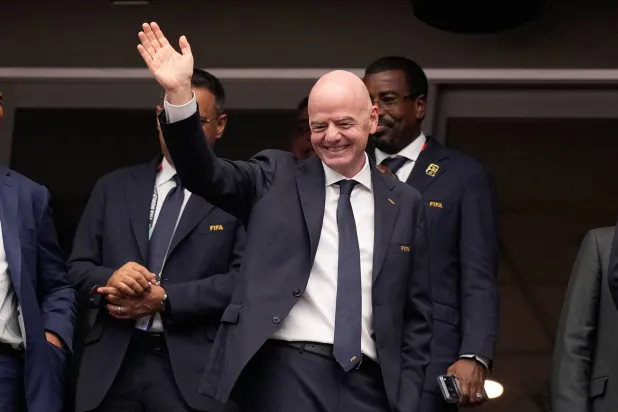
Notably, FIFA President Gianni Infantino raised the Egyptian flag in the stands of BC Place stadium while attending the Switzerland-Colombia match later, with commentators saying the move aimed to absorb the widespread anger and protests from Egyptian fans and media after the controversial exit of the 'Pharaohs' team.
In your opinion
Has FIFA's credibility been harmed after it responded to Trump's request?
What do you think of the claim that this represents political interference in a sports matter?
Do you believe FIFA's decision was a fair application of the rules or an unjustified exception?
How do you think it will affect similar cases in the current World Cup?
Does the decision open the door to questioning FIFA's impartiality in the future?
How did you see FIFA's response to the incident, and should the federation have provided a more transparent explanation for the basis of its decision?
Could such decisions become a precedent exploited in future tournaments?
What do you think of the controversy over the result of the Egypt-Argentina match?
Original source: BBC Arabic

Comments (0)
Be the first to comment.