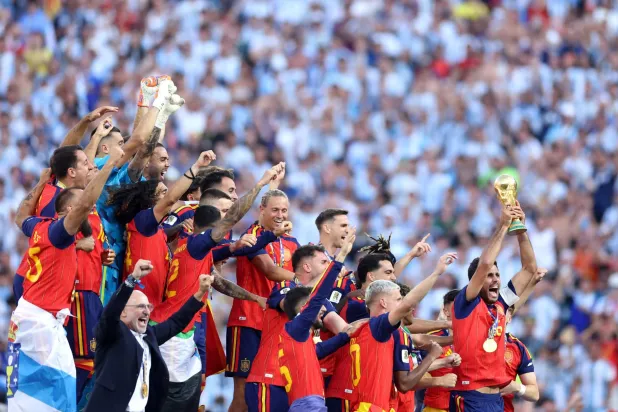
Jubilation in Spain as La Roja beat Argentina to win second World Cup title

Fans in Spanish city on Mediterranean cheer on both sides as Spain defeat Argentina 1-0 in extra time.

Published on 20 Jul 2026.
Spain's second World Cup triumph underscores the country's enduring football pedigree and the emotional weight of the victory for its supporters.
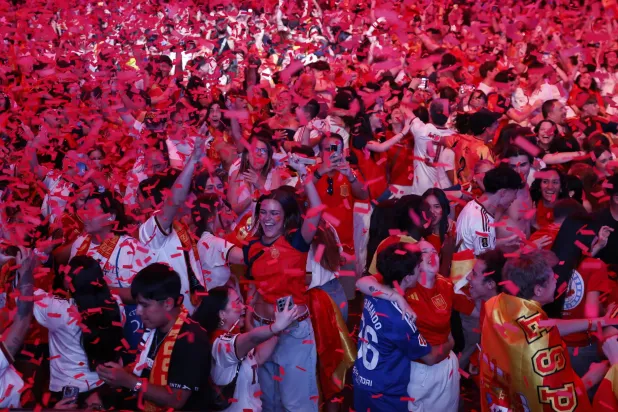
Waving Spanish flags, fans filled the streets of Castelldefels, setting off fireworks and embracing as Spain defeated Argentina 1-0 in the World Cup final early Monday.
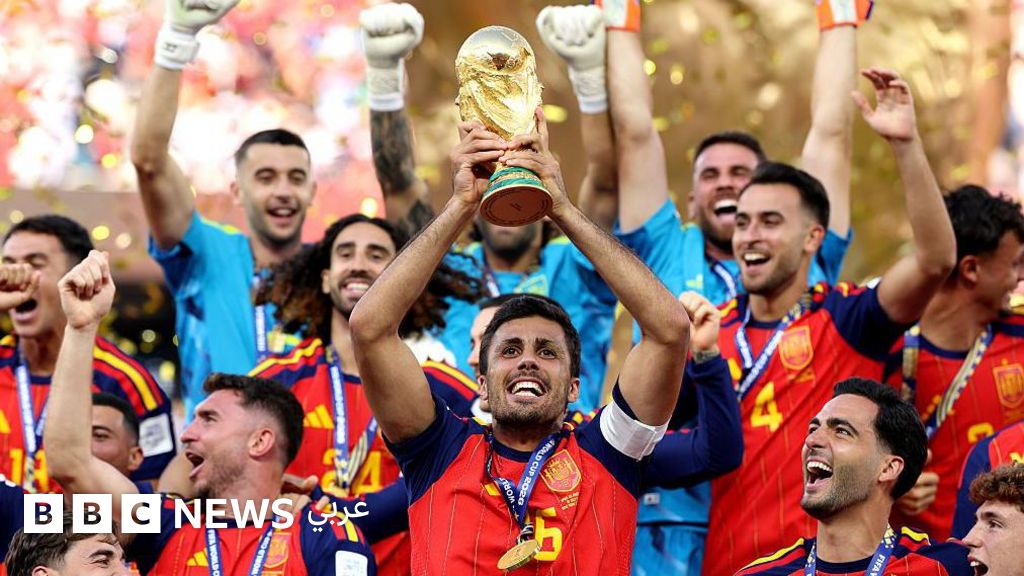
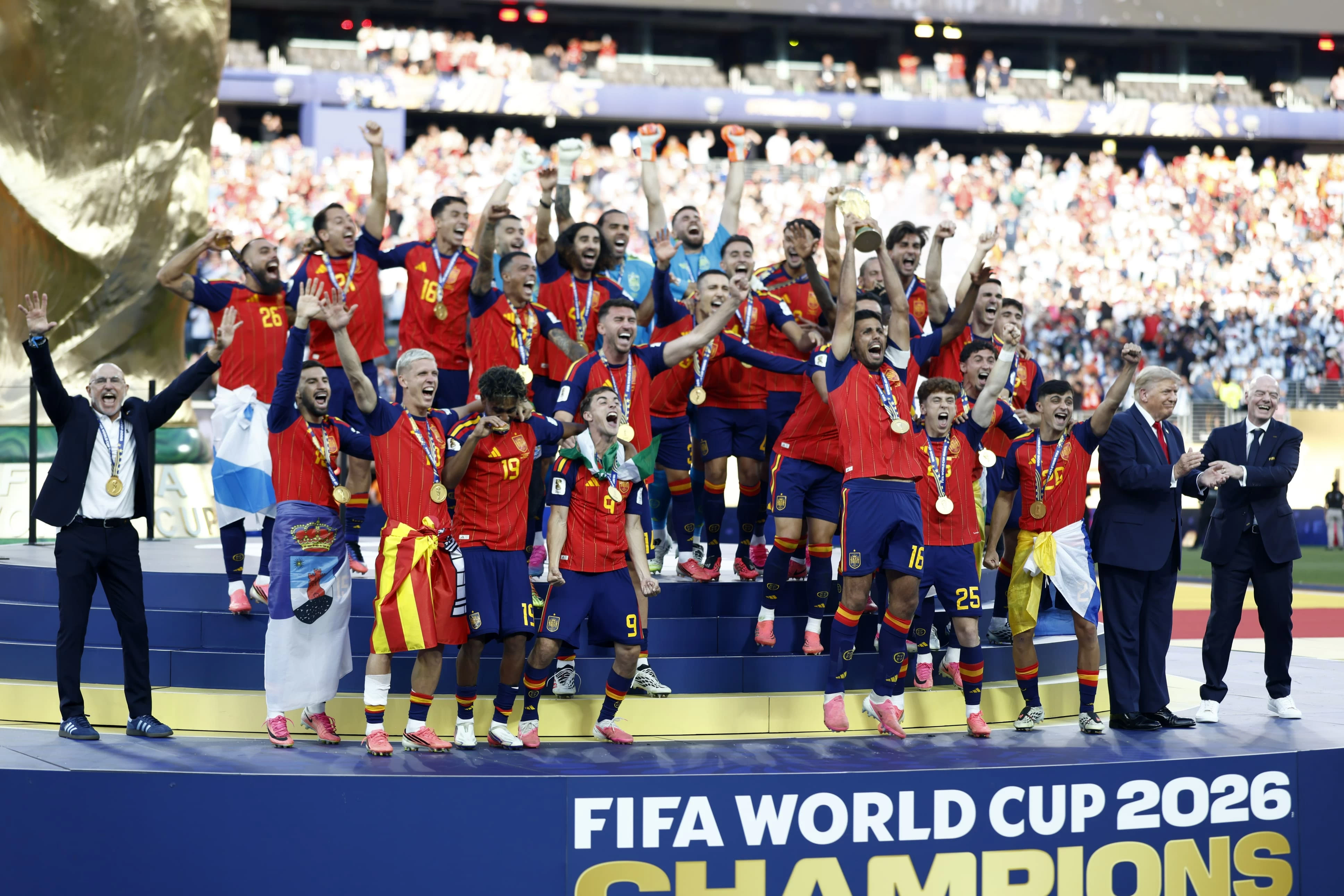
The jubilation on the streets was echoed in towns and cities across Spain as La Roja won the title on Sunday for the second time with a goal by Ferran Torres in extra time.
Recommended Stories
list of 4 items
- list 1 of 4Tearful Scaloni uncertain of Argentina future after World Cup loss
- list 2 of 4How a young and cohesive Spain took down Lionel Messi’s Argentina
- list 3 of 4Mbappe takes home second Golden Boot, Spain sweeps World Cup awards
- list 4 of 4Spain fans hail new generation, as Argentina says goodbye to an icon
end of list
Fans who had been watching the match on giant screens chanted, “Campeones! Campeones! [Champions! Champions!]”
Yet in Castelldefels, a coastal town south of Barcelona, the match was enjoyed by fans of both nations, thanks to a large Argentinian expatriate community.
Chief among them is – in spirit at least – one rather special former resident: Lionel Messi.
Messi spent his greatest years playing at Barcelona, and his presence still looms large over the town. Many Argentina or neutral fans walked around during the match on Sunday sporting his famous #10 shirt.
And this being Catalonia, where support for independence from Spain may have faded in recent years but remains a potent force, many support other sides in the World Cup. Many support Argentina, precisely because of the influence of Messi.
The Argentina captain still owns a luxury complex in Castelldefels, replete with its own football pitch, which is reported to be worth $8m.
It is in Bellamar, a neighbourhood nestled in the hills above this seaside town of 70,000 inhabitants, where he made his home with his family in his glory days at Barca.
Barca fans still cherish the thought of Messi returning to the city when he finally hangs up his boots. The rumour mill ran wild when the player recently bought the Unio Cornella, a team in the fifth tier of Spanish football.
He used to walk his children to school at the local British school in the town as passers-by watched in awe.
Before he became too much of a global megastar, he would go for a quiet drink at seaside bars with his wife and sign autographs or pose for pictures without a problem.
Everyone in this well-to-do-town on the shores of the Mediterranean has a story about when they met Messi. Some of them are true.
La Pampa is just one of the many Argentinian steak restaurants in the town that Messi used to patronise when he lived here. Its owners quietly show off pictures of the player smiling for the camera.
For younger diners, the Ankara Burger is full of football shirts of Argentinian clubs like Boca Juniors, River Plate or Independiente.
Catalonia, the northeastern region of Spain whose capital is Barcelona, has the largest expat population of Argentinians in Spain, numbering 37,980.
Away from these Mediterranean shores, controversy has raged over Argentinian players’ display of a political banner supporting an Argentinian sovereignty claim over the Falkland Islands after their World Cup semifinal victory over England, a move that appeared to violate the FIFA stadium code of conduct and struck a nerve in the United Kingdom over political sovereignty.
Argentinian President Javier Millei’s support for Israel has also prompted controversy in a country like Spain, where polls suggest a majority of the population back the Palestinian cause.
However, in Castelldefels, the political rows raging thousands of kilometres away were not on fans’ minds on Sunday night.
The Spanish and Argentinian flags fly outside the apartment of Gio and Gema Gonzalez, demonstrating perfectly the cultural melting pot here.
Gio Gonzalez immigrated to Spain from Buenos Aires in 2000, following a well-worn path for many other Argentinians. He met his wife, Gema, in Barcelona, and the couple moved to Castelldefels in 2007.
Like thousands of others, the couple went to watch the match on a giant screen organised by the town council.
“I am a mad, keen Argentina fan, so I was dreaming that we would win again, but it was not to be. It was a tough match, but I am happy for my wife that Spain could win,” said Gio Gonzalez, 54, a research scientist.
Gema Gonzalez, 46, a housewife, was beaming in the wake of Spain’s victory after a hard-fought game.
“I feel sorry for my husband – but only a bit!” she laughed. “I think Spain were the better side, and we deserved to win. I know I would say this, but I think we were the best side in this tournament.”
The victory not only ignited nationwide celebrations but also highlighted the unique bond between Spanish and Argentine football cultures, personified by Lionel Messi's deep roots in Catalonia. As the team returns home, attention will turn to building on this success for future tournaments, while the legacy of Messi's time at Barcelona continues to resonate in Castelldefels.
Original source: Al Jazeera

Comments (0)
Be the first to comment.