World Cup: FIFA Opens the Door to a 64-Team Tournament, What Challenges Might Its Host Face?
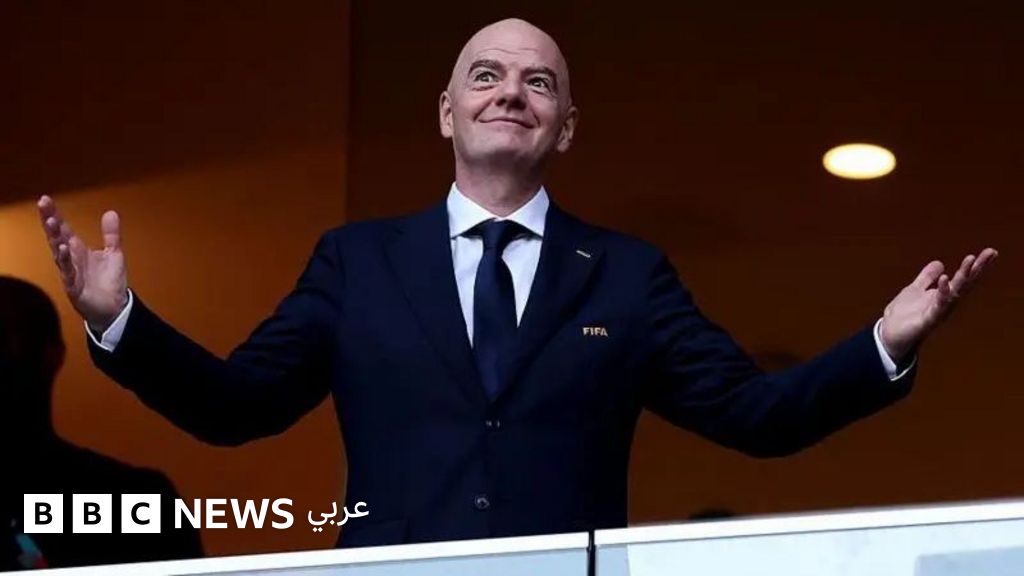
FIFA President Gianni Infantino has opened the door to studying the expansion of the World Cup to 64 teams after the 2026 edition, justifying it by his desire to give more countries the chance to participate, despite opposition from several continental federations who warn of its sporting and organizational repercussions.
World Cup: FIFA Opens the Door to a 64-Team Tournament, What Challenges Might Its Host Face?
Image caption, Infantino, FIFA President since 2016
Published 9 minutes ago
Reading time: 3 minutes
Plans to hold the men's football World Cup with 64 teams are set to be evaluated after the 2026 edition, as FIFA President Gianni Infantino said the tournament should be 'for the whole world'.
The proposal to expand the tournament was put forward last year, and Infantino says the success of the expanded 48-team tournament means FIFA must consider how to organize a World Cup with 64 teams.
Infantino told Swiss channel Blue Sport, when asked whether the tournament could be expanded to 64 teams: 'These are all things we will study after the World Cup.'
'When organizing the World Cup, it is important to organize it for the whole world, not just for Europe and South America, but for the whole world actually. Every country should be allowed to dream of participating in the World Cup,' according to Infantino.
Red card system in chaos due to Trump, FIFA, and Balogun decision
And he added: 'You can see that the level of the teams is very high, and it is constantly rising all over the world. If small countries are not given the chance to participate in the World Cup, they will lack the motivation to continue improving.'
Infantino said the first edition of the 48-team World Cup achieved 'huge success', noting that nine out of ten African teams qualified for the knockout stages.
He continued on this matter: 'In the previous World Cup, there were only five teams from Africa. This shows how important it is to involve all teams and give them this opportunity to participate.'
The FIFA Council approved the expansion of the World Cup from 32 to 48 teams in 2017.
Cape Verde: From World Cup surprise to a model of a small country asserting its presence
Skip most read and continue reading
Escalation of Iranian attacks in the Gulf and Jordan, and Tehran says diplomacy 'has proven futile'
Why do mosquitoes bite some people more than others?
Syria gives Trump a way to bypass the Strait of Hormuz – article in The Telegraph
Popular celebration for the Egyptian national team after controversy over its reception in El Alamein
Skip podcast and continue reading
Worth paying attention to
In-depth explanation of the most prominent events and topics, to help you understand the most important changes around you and their impact on your life
Episodes
Podcast end
The South American Football Confederation (CONMEBOL) presented an official proposal to increase the number of teams in the 2030 World Cup to 64 in April 2025, but no decision has been made yet.
Morocco, Spain, and Portugal will mainly host the 2030 edition, while the three opening matches will be played in Argentina, Uruguay, and Paraguay to celebrate the tournament's centenary. Uruguay hosted the first World Cup in 1930.
UEFA President Aleksander Čeferin is among the opponents of the 64-team proposal, as the Slovenian official described the idea as 'bad' for both the tournament itself and the qualification process.
Sheikh Salman bin Ibrahim Al Khalifa, President of the Asian Football Confederation, agreed with Čeferin, saying that any further expansion would lead to 'chaos'.
Victor Montagliani, President of CONCACAF, said the proposal 'does not seem right,' and he believes the expansion would harm the 'broader football ecosystem'.
In contrast, Andrew Giuliani, executive director of the White House Working Group on the World Cup, said the United States might consider bidding to host the 2038 World Cup, and that it would be able to 'handle it' if the tournament is expanded to 64 teams.
FIFA's official position has always been to discuss expansion ideas with stakeholders, and that it is obliged to study any proposals put forward by Council members.
The FIFA Council will make the final decision, but there are no indications that it is expected to happen soon.
Expanding the tournament poses challenges for host countries
When Infantino was first elected in 2016, part of his election program was to increase the number of teams in the World Cup from 32 to 40.
Within less than a year, the proposed number rose to 48, and it was approved by the FIFA Council to be applied from the 2026 finals.
Since then, speculation about FIFA's desire to go further and faster has not stopped.
The increase to 48 teams for the 2022 finals was discussed, but it was acknowledged that Qatar would not be able to host a tournament of that size on its own.
Herein lies the problem: the larger the World Cup becomes, the more difficult it is to host.
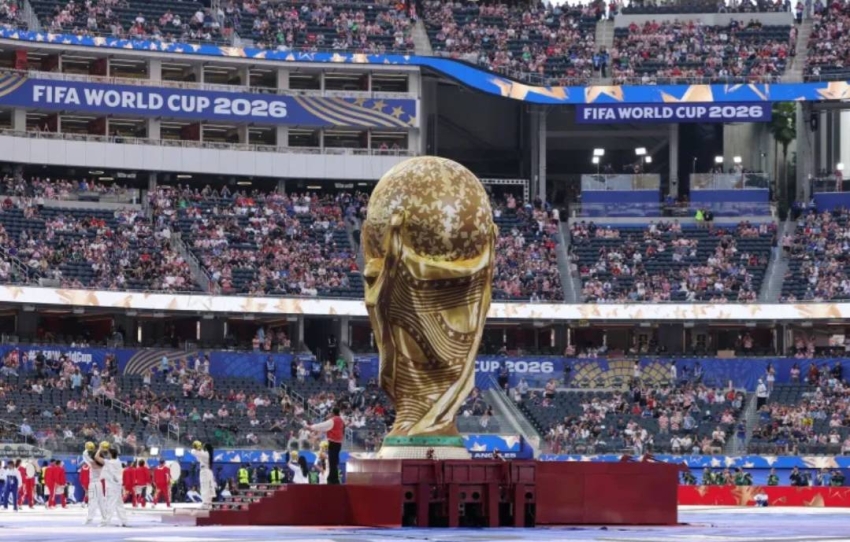
This year, the tournament is being held in three countries spanning a vast geographical area. In 2030, matches will be played in six countries: Morocco, Portugal, Spain, plus Argentina, Paraguay, and Uruguay as centenary nations.
It is not yet known how Saudi Arabia could accommodate a tournament with 64 teams and 128 matches in 2034.
However, this proposal represents a major trump card for Infantino for two reasons.
First, it gives more countries the chance to participate in the World Cup. In fact, a 64-team World Cup would see nearly a third of the 211 FIFA member nations qualify.
Moreover, expanding the World Cup means generating more revenue that can be distributed to member associations.
Skip short clips and continue reading
Short clips
End of short clips
World Cup: Argentina and England scrape through to semi-finals, completing the final four - 12 July 2026
New species of marine mollusk named after Cape Verde goalkeeper Vozinha - 11 July 2026
Morocco's World Cup dreams collide with France's strength and Mbappé's brilliance - 9 July 2026
Original source: BBC Arabic



Comments (0)
Be the first to comment.