How did the Argentina-England match introduce yellow and red cards to the World Cup?
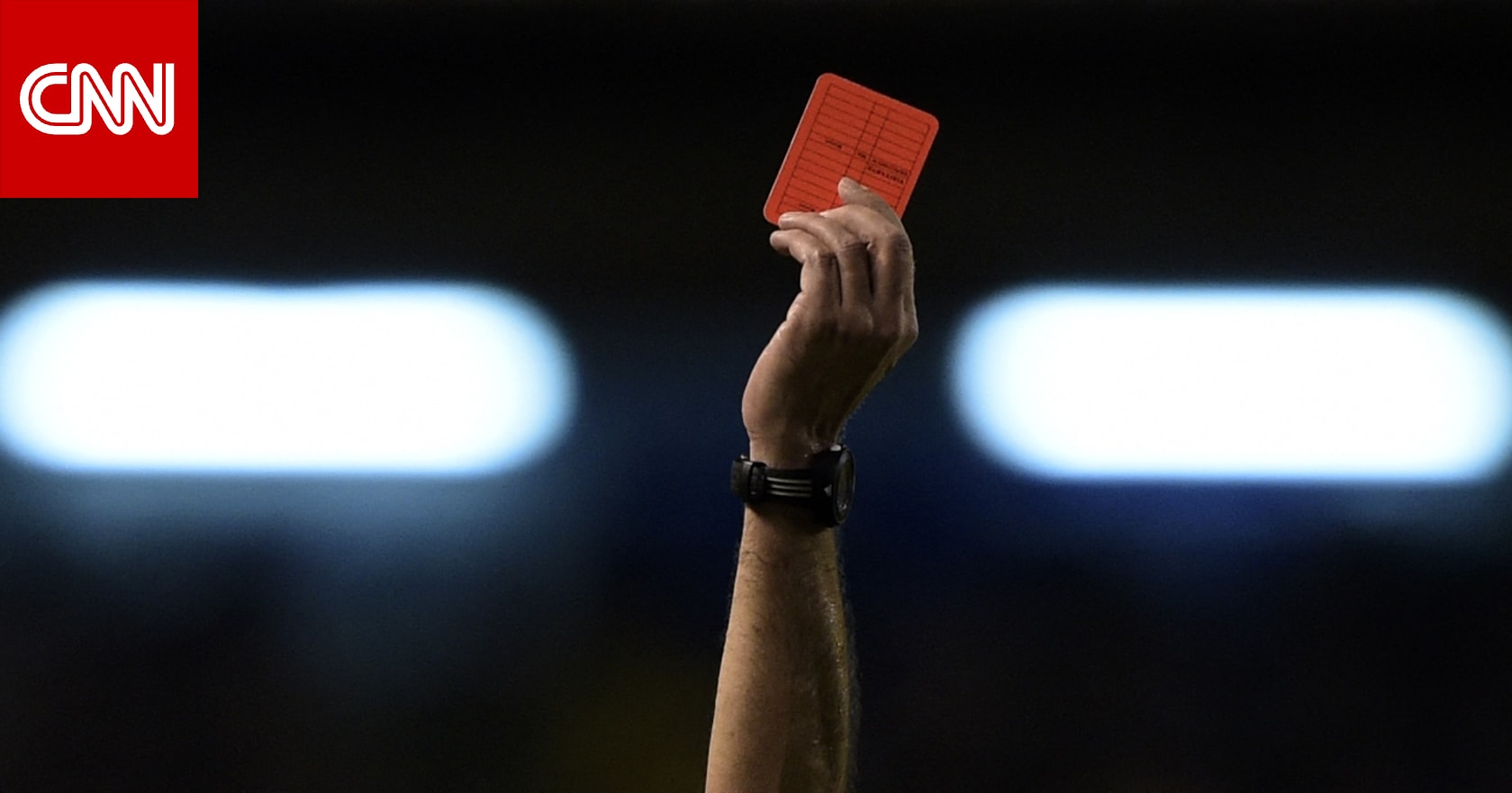
Credit: JUAN MABROMATA/AFP via Getty Images)
(CNN) – Two days before the Argentina-England match in the 2026 World Cup semi-final, a previous encounter between the two teams comes to mind that changed many football laws, as it was the reason for the introduction of yellow and red cards. So what is its story?
During the 1966 World Cup in England, the two teams met in the quarter-finals, when the tournament consisted of only 16 teams.
Argentina captain Antonio Rattín was sent off in that match in an incident that sparked widespread controversy.
Although Rattín was eventually persuaded to leave the pitch, he did not leave before stepping on the royal carpet at Wembley. After the match, England coach Alf Ramsey described the Argentine players in an inappropriate manner.
Rattín said at the time that he did not understand what the referee told him about leaving the pitch because he did not know English.
Rattín's refusal led to a long delay in play, so much so that by the time of the next World Cup in 1970, red and yellow cards had been introduced as universal symbols requiring no further verbal explanation.
England won that match 1-0 with a goal from Geoff Hurst, who later scored a hat-trick in the final against West Germany.
England won its only World Cup title in that edition, while Argentina waited until 1978.
Original source: CNN Arabic





Comments (0)
Be the first to comment.