Matthäus: Messi will not win the World's Best Player award

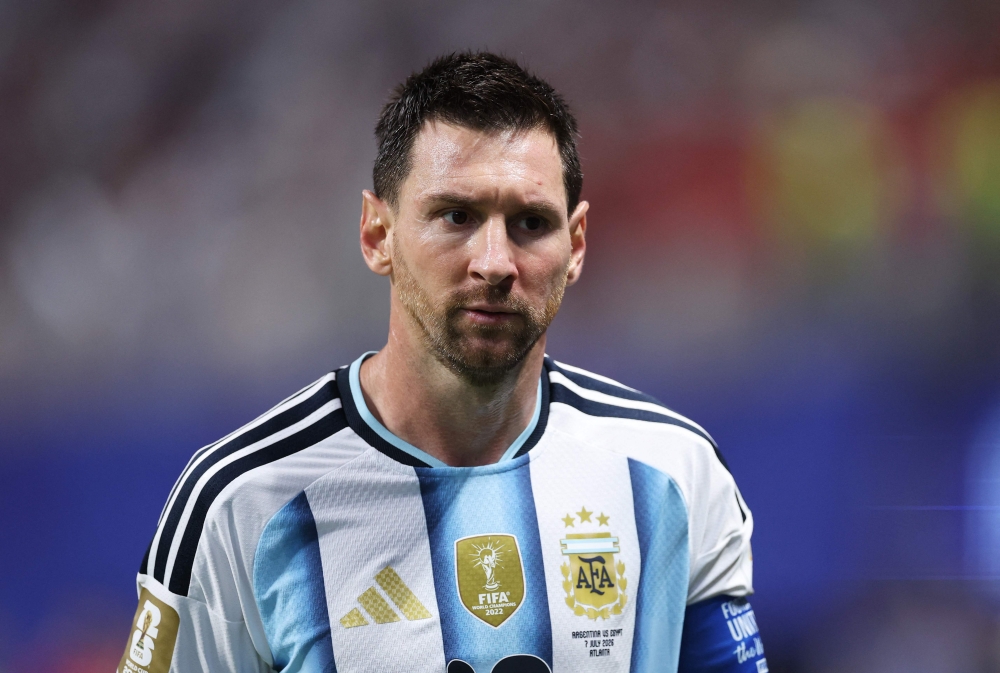
Former German football legend Lothar Matthäus said he does not see Messi, captain of the Argentina national team, as a serious candidate to win the World's Best Player awards this year.
When football players collide in the air, the damages are not always limited to concussions, torn ligaments, or sprained ankles.
Sometimes the injury is a broken nose - blood flow, a few minutes of treatment on the sideline, and perhaps a protective mask and a quick return to play - turning into a permanent injury that leaves the player struggling to breathe long after the match ends.
Dr. Farhad Ardesh, a facial plastic and reconstructive surgeon in Beverly Hills, says this risk remains one of the most underappreciated dangers in football.
Ardesh, who has treated professional athletes including football players, said: 'Sometimes a minor external injury can cause serious internal damage.'
He added: 'The nose may look a little swollen or slightly crooked, but the inside actually has a zigzag pattern or an S-shaped deformity that really affects the player's breathing.'
With many players participating in the 2026 World Cup wearing protective face masks after sustaining jaw or facial injuries, hidden injuries in football are becoming increasingly apparent.
England's Jed Spence, Austria's Stefan Posch, and Algeria goalkeeper Luca Zidane all played with protective face masks. Other notable recent cases include France's Kylian Mbappé wearing a mask to protect his broken nose at Euro 2024, and Croatia's Joško Gvardiol's protective mask at the 2022 World Cup.
To viewers, the mask may seem like a sign of toughness. But to surgeons like Ardesh, it is often an indicator of the effects of trauma.
Ardesh said: 'The face is very fragile after an injury, whether from trauma like an elbow strike or from surgery. We want to protect the bones.'
Ardesh said facial injuries sustained while playing football can resemble those from boxing or mixed martial arts.
He added: 'People don't think of football as a combat sport. But you watch professional athletes running at top speed and jumping very high. When you talk about an elbow or shoulder hitting directly into the nose, it's somewhat like receiving a strong punch to the face.'
He noted that the ball itself is rarely the main cause; injuries often come from heads, shoulders, elbows, knees, feet, or falls.
The nose is particularly vulnerable due to its location and structure.
Ardesh said: 'The nose is the protruding part of our face. It's the first thing that is likely to receive any kind of impact.'
A broken nose can lead to chronic obstruction, deviated septum, long-term breathing problems, or a visibly twisted nose, or the need for reconstructive surgery months later if not properly evaluated. For elite athletes, Ardesh said airflow can affect performance.
He added: 'If patients don't get good airflow through their noses, they won't perform at their best.'
He continued: 'The goal of rhinoplasty and septoplasty is not only to improve the aesthetic appearance of the nose but also to ensure they breathe as well as possible.'
In the moments following a hard hit, the first steps are to control bleeding, rule out a more serious injury, and lean forward to prevent blood from flowing down the throat.
Once the athlete reaches a specialist, a septal hematoma – bleeding inside the wall that divides the nose – is one of the immediate concerns.
If left untreated, it can cut off blood flow to the cartilage and cause a saddle nose deformity.
Swelling can make it difficult to assess fractures in the first hours after injury, and Ardesh stressed that if the injury seems more than a bruise, X-rays are needed to check for fractures in the eye socket, cheekbone, or jaw, as well as a concussion.
In the case of an isolated nasal fracture, the doctor may wait one to two weeks for swelling to subside before realigning the bones. More precise surgery, including rhinoplasty or septoplasty, may be performed three to six months later depending on breathing, appearance, and function.
He said: 'The goal for these players is to return to the field. But we need to assess all injuries and develop a customized plan for each case.'
Algeria goalkeeper Luca Zidane played a World Cup match with a mask (Reuters)
Goalkeepers are particularly vulnerable because they constantly collide with players while trying to save the ball.
Ardesh said: 'They may be hit by elbows, heads, or knees. They are at higher risk of direct impact to the face.'
However, he does not expect mandatory facial protection to gain widespread acceptance in a sport that relies on speed, wide vision, and comfort. He stressed that players recovering from injury wearing a protective mask is the most sensible option.
He continued about professional players: 'These are fighters. They don't want to leave the field.'
Original source: Asharq Al-Awsat


Comments (0)
Be the first to comment.