Messi's Challenges

He was just a small child in the Argentine city of Rosario carrying a dream that seemed bigger than his body.
He had loved the ball since his early years, but at the age of ten, doctors discovered he suffered from growth hormone deficiency, a disorder that leads to slow growth compared to his peers if left untreated.
It is Messi, the legend who is the focus of the world's conversation now. The treatment was available, but it was extremely expensive, as it required regular hormone injections for years, which his family could not afford.
Newell's Old Boys, where Messi started, tried to help, but resources were limited, and his move to one of the big clubs in Argentina did not succeed due to the cost. At that moment, it seemed that the little boy's dream might end before it began, but fate had a chance in store that changed the history of football. His talent reached Barcelona's scouts, and at the age of thirteen he traveled to Spain for a trial period.
He was not the tallest child, nor the strongest in build, but when the ball reached his feet, it made everyone completely forget his size. The story goes that the sporting director Carles Rexach was so convinced of his talent that he wrote his approval to sign him on a paper napkin, before completing the official procedures later. Barcelona agreed to cover all his treatment costs, and the family moved to Spain to begin a new journey.
With continued treatment and training, Messi grew to a height of about 170 centimeters, a height shorter than many professional football players, but it was no longer an obstacle; on the contrary, what some considered a weakness turned into one of the secrets of his superiority.
His low center of gravity gave him an exceptional ability to change direction quickly, maintain balance while dribbling, and control the ball in tight spaces—qualities that became his trademark. Messi not only overcame his illness, but also overcame the preconceptions that linked success in football to physical strength and towering height. He proved that willpower, talent, and continuous work can defeat the limitations imposed by the body.
The second challenge was not biological or physical, but psychological. In the summer of 2021, Messi faced one of the toughest psychological periods. Despite being the undisputed legend of Barcelona, a segment of Argentine fans and media kept chasing him with one accusation: 'He did everything for Barcelona, but he did nothing for Argentina.'
The comparison was harsh. The Argentine national team kept losing one final after another, starting from the 2014 World Cup, then the 2015 and 2016 Copa América finals. With each failure, the arrows of criticism pointed at him alone, to the extent that he announced his retirement from international football after losing the 2016 Copa América final to Chile. But the retirement did not last long. Messi returned because he felt that his story with the national team was not over yet, and that escape was not the solution. He began a new journey, more mature and calm, with a single goal in sight: to give Argentina the long-awaited title. In 2021, the first major victory came when he led his country to win the Copa América at the expense of Brazil at the Maracanã stadium, ending a 28-year drought of titles.
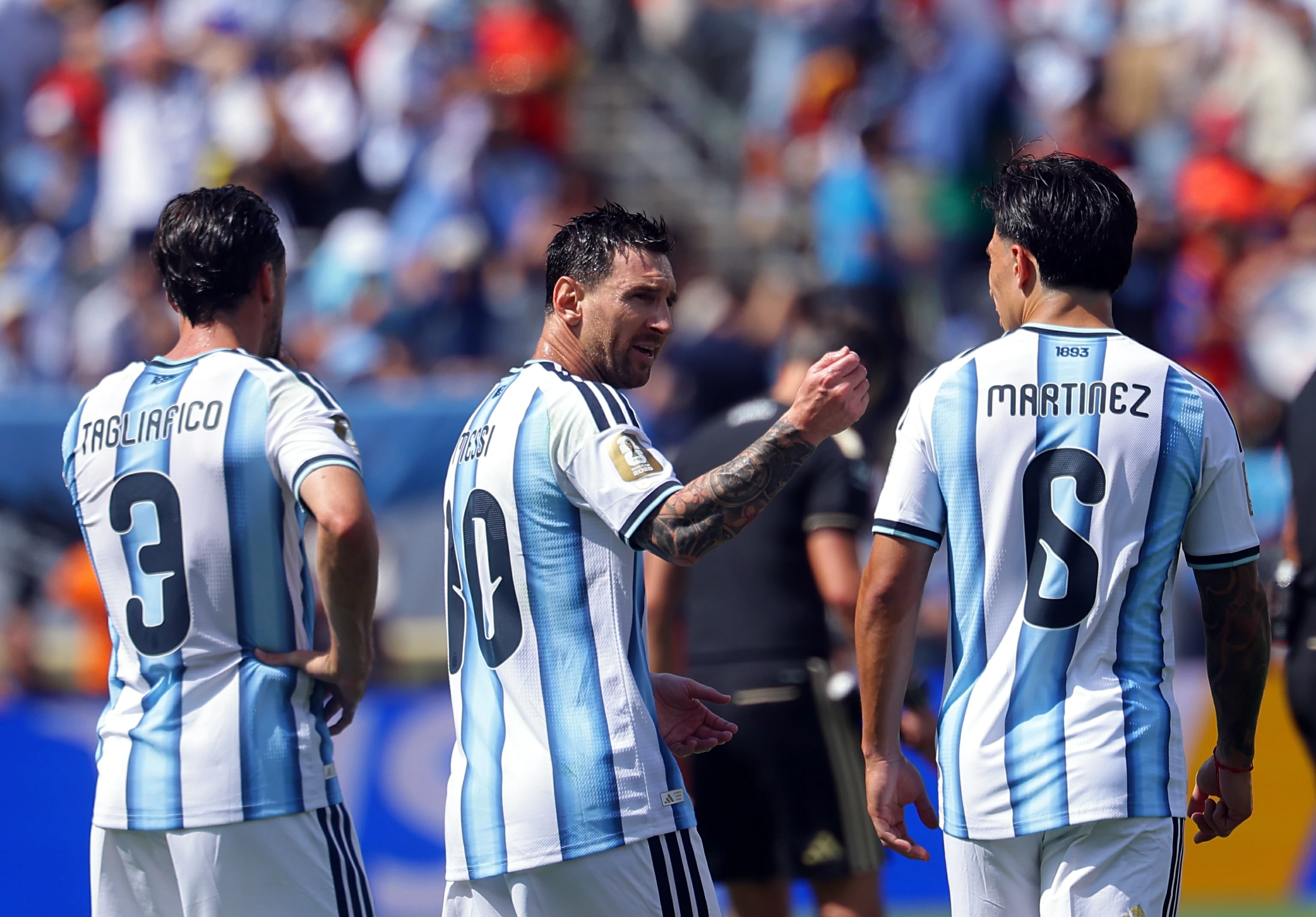
It was not just a trophy; it was a moment of psychological liberation for Messi and for an entire generation of fans. Then came the 2022 World Cup to write the greatest chapter. Messi put on an exceptional tournament, scored in almost every knockout round, and led Argentina to the final before winning the most coveted trophy after one of the greatest matches in World Cup history against France. And in 2024, he added a new title by winning the Copa América again, becoming the most decorated captain in the history of the Argentine national team. The chants that once questioned him turned into songs glorifying him, as he gave his country a World Cup, two Copa América titles, and the Finalissima, restoring to Argentines a sense of pride in their national team.
Messi's story with his national team reminds us of an important truth: sometimes the difference between failure and immortality is not talent, but the ability to rise after defeats.
Taken from Al-Watan
Advertorial
Advertorial
Disclaimer: All published articles represent the views of their authors only.
Original source: Al Arabiya


Comments (0)
Be the first to comment.