2026 World Cup: Messi's Last Dance Ends in Tears
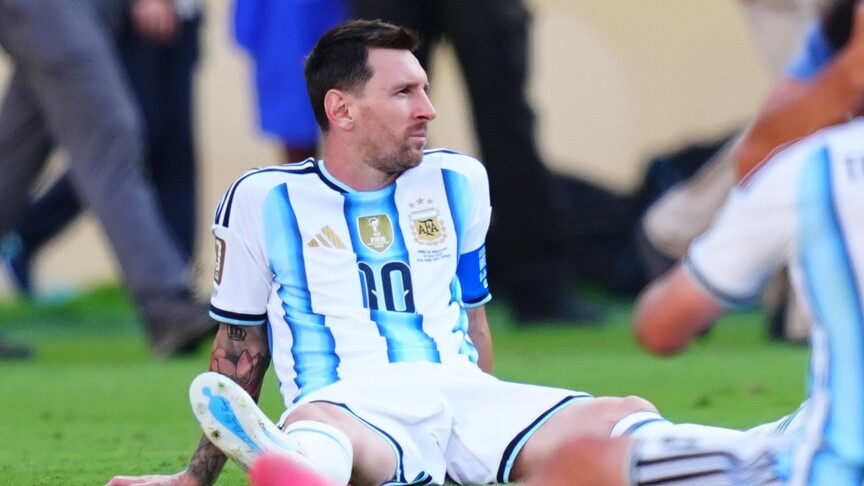
- Spain defeated Argentina 1-0 in the final - Messi's (39) dream of winning back-to-back World Cups evaporated - Messi's tears and Yamal's joy seemed like a transition between a generation leaving the stage and another beginning to write its history
ISTANBUL / Ahmed Hassan / Anadolu
The dream of Argentine football legend Lionel Messi to end his World Cup career with a second title ended after his team lost 1-0 to Spain in the 2026 World Cup final on Sunday evening.
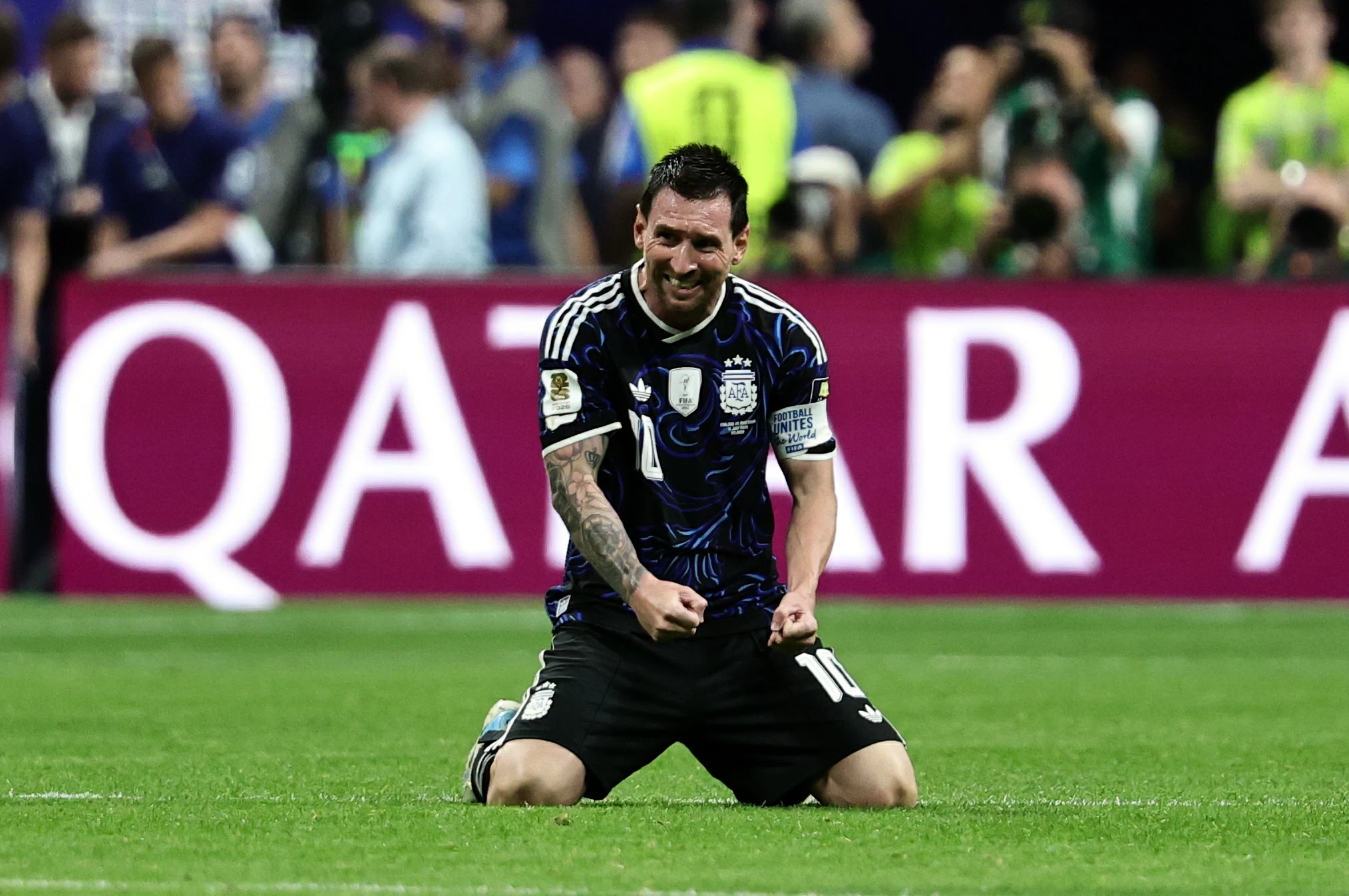
As the Spanish players celebrated their second world title, the first since the 2010 World Cup, Messi (39) stood among his teammates trying to hide his tears.
Argentine fans applauded their captain, who over two decades wrote one of the most prominent chapters in football history, despite failing to end his journey with a second World Cup.
Ironically, Messi followed in the footsteps of the late Argentine legend Diego Armando Maradona, who led his country to the 1986 World Cup title, then lost the 1990 final 1-0 to West Germany.
The same scenario repeated with Messi, who won the World Cup in Qatar in 2022, before his dream ended in the 2026 final with the same scoreline.
Spanish dominance
Argentina entered the final against Spain driven by the dream of achieving an unprecedented feat in its history: becoming the first team to retain the World Cup since Brazil in 1962.
But Argentina ran into a Spanish team that, in terms of performance, control, and numbers, delivered one of its most complete displays of the tournament, which was hosted by the United States, Canada, and Mexico between June 11 and July 19.
At the New York New Jersey Stadium, in front of more than 80,000 spectators, the Spanish team imposed its character from the first minutes, controlled possession, and created chances in succession.
In contrast, the Argentine team seemed unable to match the pace of its opponent, especially after being forced to finish the match with ten players following Enzo Fernández's red card for a violent tackle.
Despite repeated saves by goalkeeper Emiliano Martínez and the resilience of the defense, Argentine resistance ended in the 106th minute when Ferran Torres scored the only goal of the match, giving Spain its second world title.
Notable differences
The numbers reflected the gap between the two teams in the final, as Spain attempted 20 shots compared to just two for Argentina.
This is the second-largest difference in shots in World Cup final history since the stat was first recorded in 1966, after the 1990 final where West Germany outshot Argentina 23 to 1.
Spain also dominated possession and build-up play, completing 845 passes compared to Argentina's 433.
Goalkeeper Martínez had to make 11 saves, compared to 10 saves by Spanish goalkeeper Unai Simón.
Spanish dominance was not limited to the final but extended from a remarkable run throughout the tournament.
Spain finished the World Cup having conceded just one goal, the fewest ever conceded by a champion in World Cup history.
It also scored 14 goals, had a total of 145 shots compared to opponents' 45, and extended its unbeaten run to 38 matches, the longest for a European team.
Messi's night
For Messi, the final was not just another night.
Twenty years after his first World Cup appearance, he stepped onto the pitch dreaming of becoming the first Argentine captain to lift the trophy twice, but tight Spanish marking denied him from leaving his usual mark.
The Argentine captain touched the ball only 54 times, about half of them in extra time, and did not create a real scoring chance nor get a clear opportunity to score.
Messi, who played for Barcelona and Paris Saint-Germain, found whenever he received the ball that more than one Spanish player was waiting for him, and his influence gradually faded until the referee blew the final whistle, announcing the end of the dream that accompanied him throughout the tournament.
Enduring legacy
During his European career, Messi won four Champions League titles and 12 league titles with Barcelona and Paris Saint-Germain.
He also won the Ballon d'Or eight times, the most in football history.
When he left Europe three years ago for Inter Miami in the US, observers predicted his career was nearing its end.
But the Argentine star helped Inter Miami win the MLS title, then led his national team again to the World Cup final, after scoring eight goals and providing four assists in the tournament.
Despite the bitter loss in the final, what Messi achieved with Argentina remains exceptional: he led the team to the 2022 World Cup title, and added two Copa América titles in 2021 and 2024.
Messi played in six World Cups, setting a record with 34 appearances, and scored 21 goals in the tournament.
He raised his international tally to 125 goals, becoming the second-best scorer in men's international football history, behind Portugal's Cristiano Ronaldo with 146 goals.
Messi became the first player to start in three World Cup finals—2014, 2022, and 2026—affirming his longevity at the highest level over more than two decades.
He also became the oldest player to appear in a World Cup final, at 39 years and 29 days, breaking the record of Sweden's Gunnar Gren, who played in the 1958 final at 37 years and 241 days.
On the other hand, Messi lost the top spot on the World Cup all-time scoring list after France's Kylian Mbappé raised his tally to 22 goals, following his two goals in the third-place match, which England won 6-4.
Messi and Yamal
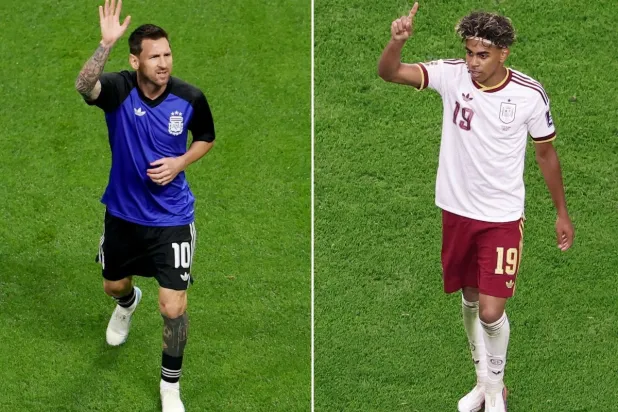
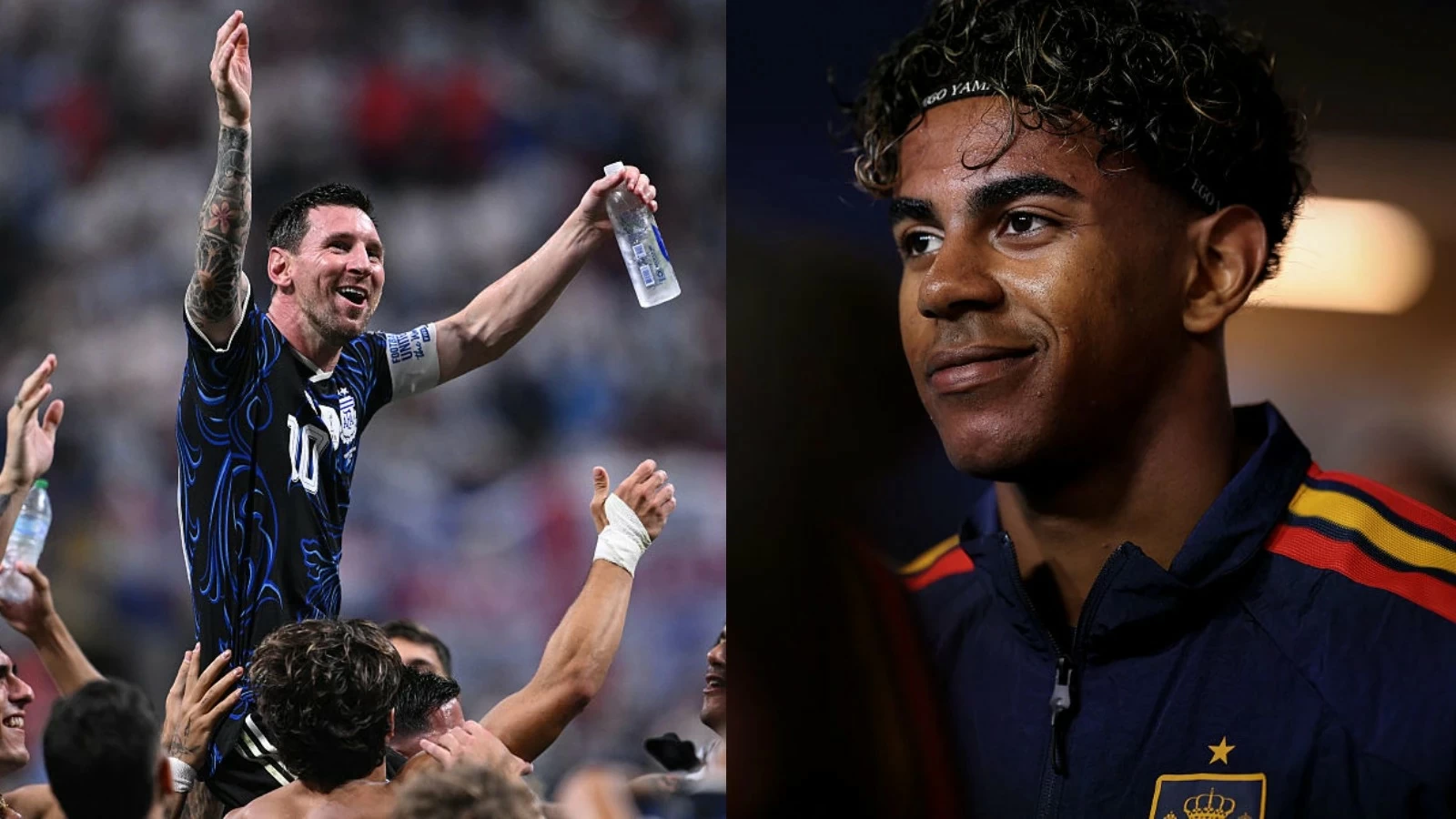
While Messi's tears summed up the end of a golden era in Argentine football history, another picture was forming on the opposite side of the pitch.
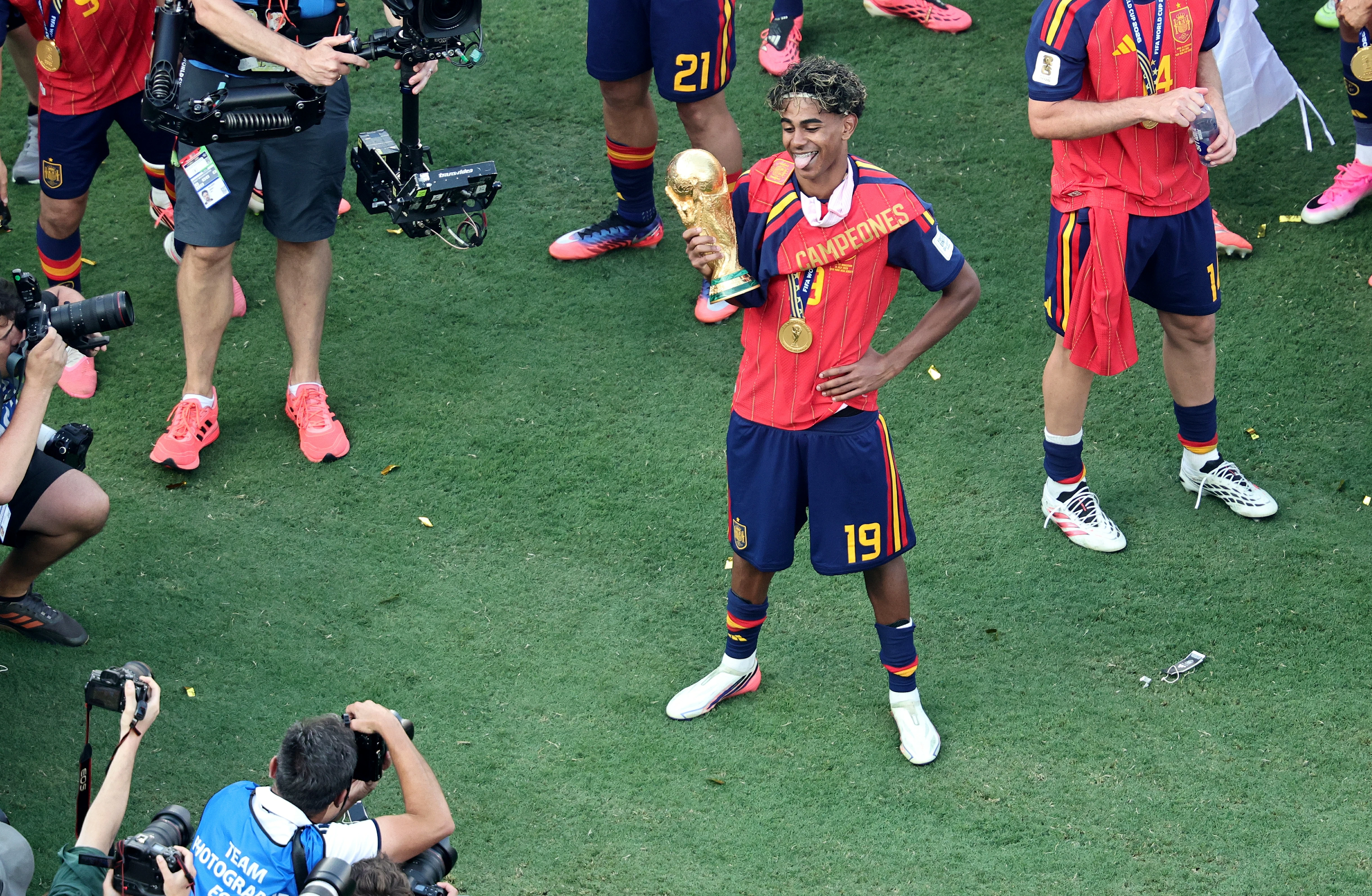
Lamine Yamal, who turned 19 just days ago, ran to celebrate with Torres, in a scene that seemed like a symbolic transition between a generation leaving the stage and another beginning to write its history.
Thus, the night in New Jersey was not just a World Cup final, but a moment that brought together the end of a dream for one of the greatest players in the history of the game and the start of a new era for Spain, which imposed its dominance and won its second world title.
Original source: Anadolu Agency


Comments (0)
Be the first to comment.