Popovic: Australia needs greater status to earn referees' respect

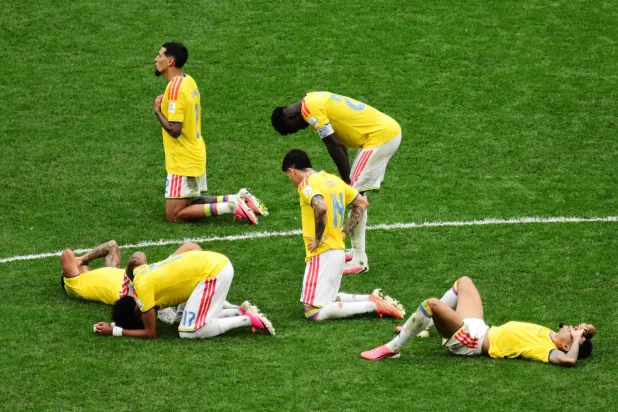
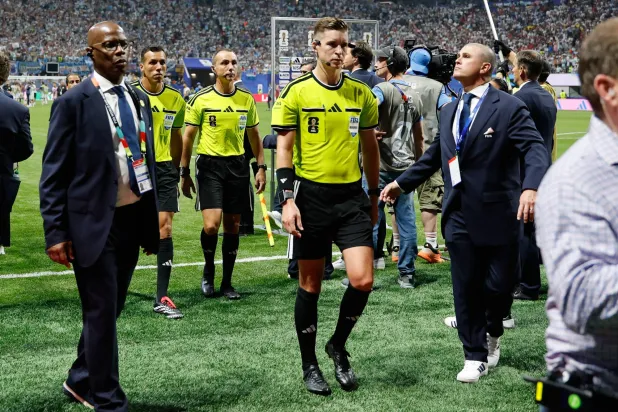
Tony Popovic wants his national team to establish its place among the elite of world football in order to gain more respect from referees after his team's World Cup exit on penalties.
The historic Mexico City Stadium bids farewell to this edition of the World Cup on Saturday evening local time, when it hosts the anticipated clash between Mexico and England.
The two teams meet in a highly anticipated Round of 16 match in the World Cup currently being held in the United States, Mexico, and Canada, as both seek a place in the quarter-finals.
German Thomas Tuchel, England's head coach, said: 'It's a good moment to make peace with this stadium. It will reward us.'
Tuchel's comments came after England's hard-fought 2-1 victory over DR Congo last Wednesday in the Round of 32, setting up a meeting with Mexico in Mexico City in the next round.
Tuchel spoke about Mexico City Stadium as if it were a living entity, capable of reward and punishment. This statement alone shows how deeply the stadium's history is rooted in the memory of those who were once just fans, or who grew up on stories told by those before them, and who now write their own chapters on the world stage.
Before this edition, the last World Cup match hosted by this legendary stadium was the 1986 final, when late Argentine star Diego Maradona reached the pinnacle of glory with his national team after setting up the title-winning goal for his teammate Jorge Burruchaga against West Germany.
In that same edition, England lost to the 'Tango dancers' in the quarter-finals in an unforgettable match. Today, the two stories intersect again, with Tuchel admitting that he believes in 'karma'—that what one sows, one reaps.
Even then, the Mexican crowd had mastered the art of intimidating the opponent. They helped spread the 'Mexican wave' worldwide—an idea that originated in the United States—and their vocal impact and collective rhythm showed their ability to move the entire stadium at will. They also added chants that became part of popular culture and are still present today.
Aguirre, Mexico's coach, believes that playing in Mexico City gives extra strength (AFP)
Although many of the stadium's greatest moments were not for the home team, the relationship between Mexico's fans and the stadium has evolved over the years into something like a complete unity.
After a four-year renovation project that preserved the stadium's spirit, Mexico City Stadium (formerly Azteca) welcomed 80,824 spectators in each of coach Javier Aguirre's team's three matches, with very limited presence of opposing fans, creating an atmosphere and pressure on opponents even before the kickoff.
Aguirre, praising the importance of fan support, said in remarks published on FIFA's official website: 'The biggest difference, without a doubt, is playing at home. They are our 12th player. We know the entire country is behind us, and that gives us huge motivation.'
Mexico has won all four of its World Cup matches so far, sparking wild celebrations on the pitch. After a 2-0 victory over Ecuador, photos and videos spread of players singing and hugging fans, raising a simple question: Were the fans singing to the players, or were the players singing to the fans?
Fans interact enthusiastically with the team, constantly singing famous national songs.
The impact of the atmosphere and the stadium has become a major topic of discussion in both countries. During a talk on the BBC, former England international stars Joe Hart and Wayne Rooney warned that playing at this historic stadium in front of this passionate crowd will be England's toughest test in the tournament.
Mexican stands... the home team's most prominent weapon against the English (Reuters)
For his part, Javier Hernández said on Fox Sports, speaking about the importance of playing at the historic Azteca Stadium: 'What that legendary stadium represents, the atmosphere you feel when it's full of Mexicans. In addition, the pitch is difficult due to the altitude and the physical fatigue it causes. And of course, that makes the task more difficult.'
The visual archives, the stories of that era, and the events themselves have created an aura of mystery around this giant edifice that has opened its doors to the world again. Before the Round of 16 match, which will be the last match of the tournament on Mexican soil before the competition moves entirely to the United States, the anticipation has reached its peak.
Tuchel revealed, referring to some of the challenges awaiting his team against Mexico: 'We will face an entire country, and we will play in front of a full stadium on their home turf.'
This comes as Mexico has not lost any World Cup match on home soil, with their last defeat there dating back to 2013 against Honduras in the final round of CONCACAF qualifying for the 2014 World Cup in Brazil.
Álvaro Fidalgo wrote on his Instagram account after scoring his first goal for Mexico against the Czech Republic: 'Once you choose it, it never leaves you.'
He may have meant the Mexican national team, but the phrase also applies to Mexico City Stadium itself: everyone who sets foot on this green rectangle falls under its spell forever.
Original source: Asharq Al-Awsat



Comments (0)
Be the first to comment.