Spain and France... Plucking Feathers... Retirement... And Early Vacation
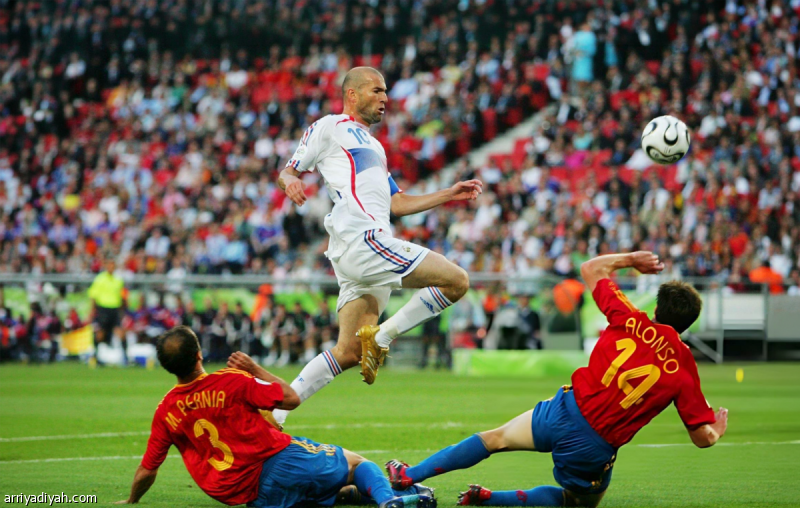
"We will send Zidane into retirement," so headlined the Spanish newspaper Marca. There could be no better way to provoke the pride of the Blues in the 2006 World Cup, where just three days later, they sent the entire Spanish national football team on an early vacation by eliminating them in the round of 16. For the second time in its World Cup history, France faces its Spanish counterpart on Tuesday in Dallas, this time in the semifinals, and all indications are that the famous newspaper will avoid the arrogance mistake it made on its front page on June 24, 2006. When that World Cup was held in Germany, Spain was not yet...
"We will send Zidane into retirement," so headlined the Spanish newspaper Marca. There could be no better way to provoke the pride of the Blues in the 2006 World Cup, where just three days later, they sent the entire Spanish national football team on an early vacation by eliminating them in the round of 16. For the second time in its World Cup history, France faces its Spanish counterpart on Tuesday in Dallas, this time in the semifinals, and all indications are that the famous newspaper will avoid the arrogance mistake it made on its front page on June 24, 2006. When that World Cup was held in Germany, Spain was not yet the powerhouse that would dominate world football in the following years. It had never won the title, and Sergio Ramos was only 20 years old, playing as a right-back, while coach Luis Aragones's players easily reached the round of 16 after three victories. That fueled the ambitions of the young Spanish team, while the French, experienced but aging, experienced moments of anxiety: two draws with Switzerland (0-0) and South Korea (1-1) revived the ghost of early elimination in 2002, before they qualified under coach Raymond Domenech by beating Togo 2-0. A tense final group match, in which Zinedine Zidane did not play due to suspension after receiving two yellow cards in the first two matches. Zizou, who turned 34 on June 23, 2006, had announced in the spring that his career would end with the current World Cup. The brilliant playmaker of Spanish Real Madrid had first retired internationally in 2004 after the disappointing European Championship in Portugal, before returning in summer 2005 to save the team on the road to qualifying for the 2006 World Cup. From the round of 16 onward, every match was like the last for the captain of the Blues. It was a tragic situation for millions of French people who cannot separate from the best player they have seen since Michel Platini. For Zidane, that match on June 27 in Hanover, which was his 105th, carried a special flavor; he was an "adopted Madrilenian" and had secured a high place in the record of Real Madrid legends. The match also saw a new encounter on the field between Thierry Henry and Aragones, 20 months after the latter's racist remarks against the French player, which sparked widespread controversy. And if Marca also lacked decorum in its inside pages when it attacked the rooster (the French team emblem) with the phrase "We will pluck its feathers," it was not wrong in talking about a "clash of generations." Alongside Zidane, Lilian Thuram (34 years), Claude Makélélé (33), and Fabien Barthez (35) seemed behind the elegant style of play of the young Spaniards, such as David Villa (24), Fernando Torres (22), and Andrés Iniesta (22). The start of the match confirmed that with Villa's opening goal from a penalty kick (28th minute) after a foul by Thuram in the area. But Patrick Vieira (30), outstanding against Togo, was the man of the match: a brilliant assist to Franck Ribéry, the surprise of this World Cup, who dribbled past Iker Casillas and equalized (41st), then a decisive header from a free kick by Zidane (83rd). As if symbolic, Zizou himself buried Spanish hopes with a right-footed goal (90+2). He said after the final whistle, "For me, it was clear that this was not the last match... Good criticism should be accepted, that which is constructive... But there are people who never touch the ball and yet allow themselves to say anything." He later added that during that strange shot, which fooled Casillas, he felt pain in his thigh, and he played the quarterfinal against Brazil while injured, where he delivered one of his finest performances. In a sporting spirit, Marca retracted its stance after France's 1-0 victory over the Seleção, and its headline read: "Never stop!" The rest became history: the Panenka in the final, the headbutt against Marco Materazzi, then the loss on penalties to Italy. A loss hard to swallow. As for Spain, they would reach the top four years later in South Africa, and also win the European Championship in 2008 and 2012, rewarding a golden generation that Iniesta, who did not play in the match of June 27, 2006, would later lead.
Original source: Arriyadiyah


Comments (0)
Be the first to comment.