Tennis Stars Turn Courts Into Daring Fashion Shows
From Wimbledon to Grand Slam tournaments, tennis courts are no longer just about athletic competition. They have become spaces where outfits are showcased as much as skills, and players have turned into fashion ambassadors.
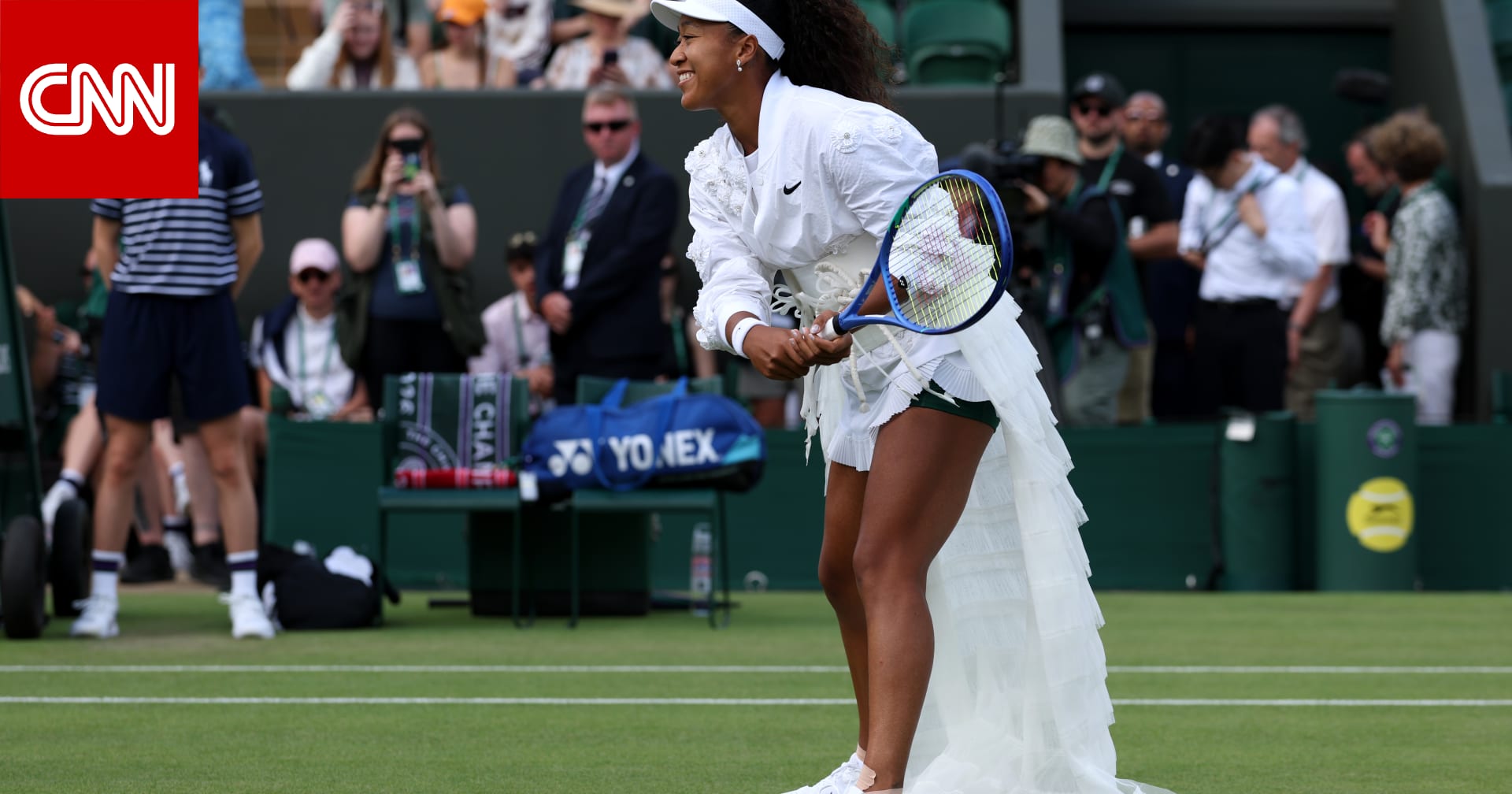
Japanese tennis player Naomi Osaka appeared in a luxurious cape by designer Tokyo Hana Yagi at Wimbledon 2026. Credit: Photo by Clive Brunskill/Getty Images
CNN - As Wimbledon kicked off this week, Japanese tennis player Naomi Osaka caught the eye with an outfit that has become an extension of her visual identity on and off the court. She appeared in a luxurious cape designed by Tokyo Hana Yagi, made from an old kimono and wedding dresses, worn over a white tennis dress from American brand Nike.
The designer explained that this contrast between the two pieces reflects a ritual akin to a celebration before entering the competition. The cape is later removed to reveal the sportswear ready for performance, considering that the design embodies the moment before the performance, while the Nike outfit represents the athlete's identity during the actual game.
The next day, American tennis player Serena Williams returned to Grand Slam courts this summer at age 44, four years after announcing her retirement, with a more subdued yet equally powerful and elegant look: a white top and matching skirt with a lightweight perforated jacket that gives a sense of air and movement, also designed by Nike.
American tennis player Serena Williams' look after four years of retirement. Credit: Photo by Cameron Spencer/Getty Images
This comeback follows the series of striking outfits Naomi Osaka presented at Roland Garros in May, possibly hinting at a new chapter in the growing relationship between tennis and fashion. The sport, long associated with strict dress codes such as the all-white rule at Wimbledon, now seems closer to high-impact visual displays.
But deep down, this transformation is not sudden. Tennis has been a space of direct overlap with fashion since its inception. Legendary names, such as French player Suzanne Lenglen and American Helen Wills, enlisted top Parisian designers to create their on-court looks. Meanwhile, golden-era players like Frenchman René Lacoste and Briton Bunny Austin drew inspiration from traditional materials such as Aran sweaters and from other sports like football to reinvent sportswear that combines comfort and innovation.
Men embraced fashion on tennis courts. The photo shows British tennis players Reginald Doherty (left) and his younger brother Laurence Doherty during their participation in Wimbledon, circa 1902. Credit: Paul Popper/Popperfoto/Getty Images
Sunita Kumar Nair, author of the book ACE: The Times and Style of Tennis, said that 'men and women simply wanted to move freely,' noting that early tennis players, often from affluent classes, had the privilege of direct access to fashion houses such as Jean Patou and Chanel at a foundational moment that united sport, luxury, and image-making. Sportswear became an extension of daily elegance and high-end evening wear.
She added that this connection was not just a fleeting collaboration but a reflection of the nature of tennis itself, which offers a rare space for individual expression. It is one of the few sports that does not impose a strict uniform, giving players the opportunity to showcase their personal style on the court.
American tennis star Helen Wills and French player Suzanne Lenglen after their match on the tennis courts. Credit: Bettmann Archive/Getty Images
She noted that this specificity made tennis an open space for self-expression. Across generations, players have exploited the absence of strict rules to create their own styles, from Suzanne Lenglen and Andre Agassi to Serena Williams, Roger Federer, and Rafael Nadal, who have succeeded in turning their sports outfits—even within specific brands—into personal signatures reflecting their individual identities.
She pointed out that Serena Williams' outfit at the 2004 US Open—a denim skirt and embellished black top—is a prime example of this creative rebellion, partly inspired by Agassi's adoption of denim shorts in 1988. This reflects how the tennis court has evolved over the decades into a space balancing athletic discipline with fashion creativity.
Serena Williams in a denim skirt, one of her most famous and celebrated looks. Credit: Al Messerschmidt/Getty Images
Even when players strictly adhere to dress codes, they succeed in breaking them with striking individual style. At Wimbledon 2008, both Roger Federer and Rafael Nadal wore the required white, but each presented it in a completely different spirit: Federer appeared in a classic white jacket adorned with gold buttons and his own logo, in a look that seemed like an elegant satire of the 'traditional English gentleman' image, while Nadal, in all-white with a matching headband, presented the image of a 'modern athlete.'
Roger Federer and Rafael Nadal during Wimbledon 2008, highlighting how tennis dress codes allow each player to show a lot of personal character. Credit: Photo by Julian Finney/Getty Images
Kumar Nair noted that a designer from Adidas told her that tennis restrictions—such as Wimbledon's strict all-white rule, limits on logo size, or exposure of body parts—are seen by the brand as an attractive challenge that pushes them to innovate.
She added that this thinking was reflected in Adidas collaborations with designers such as Japanese Yohji Yamamoto under the Y-3 line, where symbols like the designer's love for practical pieces like overalls were employed, or patterns were created while strictly adhering to Wimbledon's white rules. This proves that rules do not restrict creativity but rather push it to expand further.
Osaka's outfit was designed to embody the ritual of preparation before performance and the seriousness of competition behind it. Credit: Photo by Clive Brunskill/Getty Images
Kumar Nair believes the current moment, with Naomi Osaka's haute couture-like outfits and Jannik Sinner's partnership with Gucci, is different because it combines aesthetics and functionality simultaneously. Osaka's cape was designed to be removed in under a minute to reveal her sports outfit, reflecting a new trend that makes the piece itself an element combining visual and athletic performance.
She also noted that designers today also assess their work through its kinetic presence, considering that a design's success increases the more alive it looks on the athlete's body in motion. She added that tennis has reached a stage where it is qualified to be treated visually on the level of red carpets and major shows.
She concluded by noting the role of Anna Wintour, who supported this intersection of sports and fashion by featuring stars such as Serena Williams and Roger Federer on the cover of Vogue magazine, affirming that her early vision recognized that athletes possess the same cultural value as movie and music stars, which granted them the status of global 'fashion ambassadors.'
Original source: CNN Arabic




Comments (0)
Be the first to comment.