Golden Square Matches FIFA Ranking for First Time... Coincidence or Years of Planning?

Big Four in 2026 World Cup... Historic Clash Matches FIFA Ranking for First Time, France, Argentina, Spain, and England in Battle for Dominance and End of Decade.
Does history repeat itself? How did the Falklands War turn into a derby between Argentina and England?
Football has never been just a game within the rectangular boundaries of ninety minutes; it is a mirror of peoples, a stage where scores that diplomacy could not settle are settled. And on the evening of Wednesday, July 15, 2026, the world's eyes will turn to the Mercedes-Benz Stadium in Atlanta, USA, where the two giants of the football world, Argentina and England, meet in the semifinal of the 2026 World Cup, in a confrontation that goes beyond football tactics to dig into the hot pages of history.
This battle is not just a ticket to the grand final; it is a direct recall of the spirit of 1982, and that cold, rocky spot in the South Atlantic known as the Falkland Islands (or Malvinas as the Argentines call them).
Photo showing the British frigate HMS Broadsword sailing alongside the aircraft carrier HMS Hermes in South Atlantic waters during their participation in the Falklands War operations in 1982 (Wikipedia)
The violent military conflict between the two countries, which left deep wounds in the narcissistic conscience of the 'Tango' and the sovereignty of the 'British Crown,' returns to cast its political and emotional shadows over the minds of players and fans alike.
Photo documenting piles of weapons and military equipment left behind by Argentine soldiers in the capital Port Stanley after their surrender to British forces and the end of the Falklands War in 1982 (Wikipedia)
Islands and Sovereignty Conflict: A Wound That Has Yet to Heal
In the spring of 1982, a surprise war broke out lasting 74 days between Britain and Argentina over control of the Falkland Islands. The battles ended with a decisive British military victory and London regaining control of the islands, leaving hundreds of Argentine casualties and a bitter national resentment in Buenos Aires.
Photo taken on May 19, 1982, showing Harrier GR3 aircraft of the Royal Air Force and Sea Harrier FRS1 aircraft of the Royal Navy lined up on the deck of the aircraft carrier HMS Hermes during their journey to fight the Falklands War (Wikipedia)
For Argentines, the military defeat was not the end of the matter; rather, the 'Malvinas' turned into a popular doctrine and a cause of occupied land, later translated into every gathering that brings together the sky blue and white against the English white.
Photo documenting Argentine prisoners of war in the capital Port Stanley after the surrender of Argentine forces to British forces at the end of the Falklands War in 1982 (Wikipedia)
From the Trenches of the Malvinas to the Azteca Grass: Maradona's Miracle of 1986
Between the generations of Maradona and Messi... Do the repercussions of the Falklands crisis persist when facing England? (Reuters)
The Argentines did not wait long to settle the symbolic score. In 1986, on Mexican soil, the two teams met in the quarterfinals. There, the late legend Diego Armando Maradona embodied the role of 'the people's avenger,' not only eliminating the English but doing so in a way that intertwined deception with enchanting genius.
Maradona's goal that remains the most controversial World Cup moment in history (DPA)
From the 'Hand of God' that shook Peter Shilton's net, to the Goal of the Century in which he dribbled past half of England, Maradona later stated clearly: 'We said the match had nothing to do with the war, but we knew that our boys had died there... It was a war for us.'
This legacy is what gives today's confrontation a dramatic weight that is not repeated in any other derby in the world.
Argentina national team legend Maradona (AFP)
The Language of Numbers Reveals Its Secrets: Historical English Superiority Dispelled by Argentina's 'Elimination' Complex
The excitement does not stop at the limits of geography and politics; it extends to FIFA's records, revealing a fierce numerical battle. The two giants have met historically in 15 encounters, including World Cup and friendly matches, with the overall statistical balance leaning in favor of the 'Three Lions' with six wins against four for the 'Tango,' while five other matches ended in draws.
Despite this English numerical superiority in the overall record, the psychological and historical balance shifts completely when this history is examined under the microscope of decisive knockout rounds in the World Cup.
England national team (Reuters)
Since the controversial 1966 match, which England won on home soil, the English have been completely unable to eliminate Argentina in any knockout stage; Argentina has always had the final dramatic word and the knockout punch, whether manifested in Maradona's brilliant genius and historic rebellion in Mexico in 1986, or through the fatal penalty shootout in France in 1998, which saw David Beckham sent off and the breaking of a whole golden British generation.
Composite image of Argentina goalkeeper Emiliano Martínez and England goalkeeper Jordan Pickford (AFP)
This stark contradiction between English honorific superiority and the 'life or death' complex against Argentina gives the Atlanta clash a terrifying psychological dimension, putting Tuchel's squad facing the challenge of breaking the historical curse, while giving Messi's teammates an inherited confidence that Argentina, in decisive matches, always remains the unyielding hard nut.
Atlanta 2026: Messi's Last Dance Facing the Ambition of the Land of Fog
At this historic turn of the 2026 World Cup, the technical calculations are complex and charged with great ambitions:
Argentina's Squad and Defense of the Throne
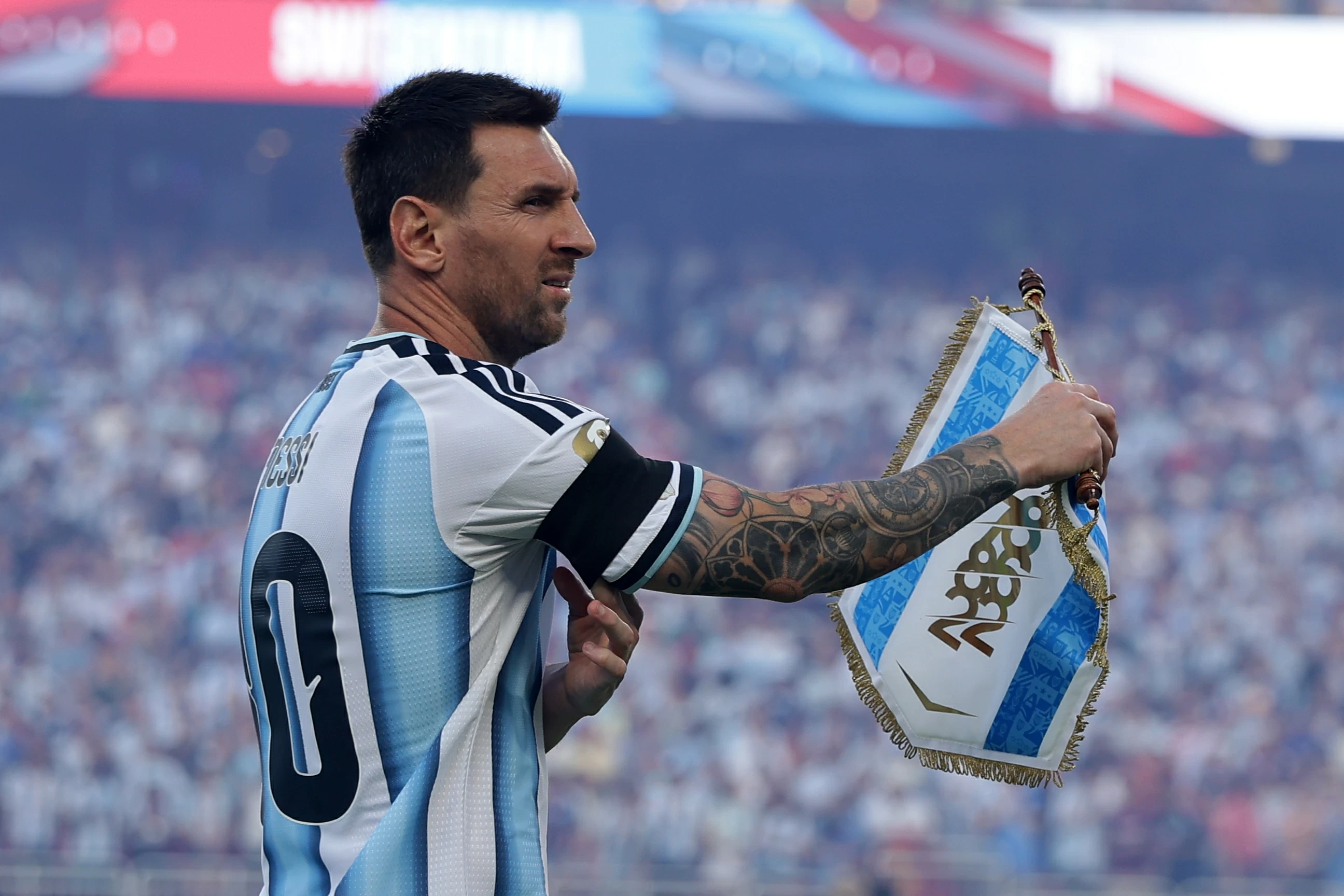
Lionel Scaloni's men enter the match as defending champions, with a single objective in mind: to give legend Lionel Messi a cinematic ending to his exceptional World Cup story.
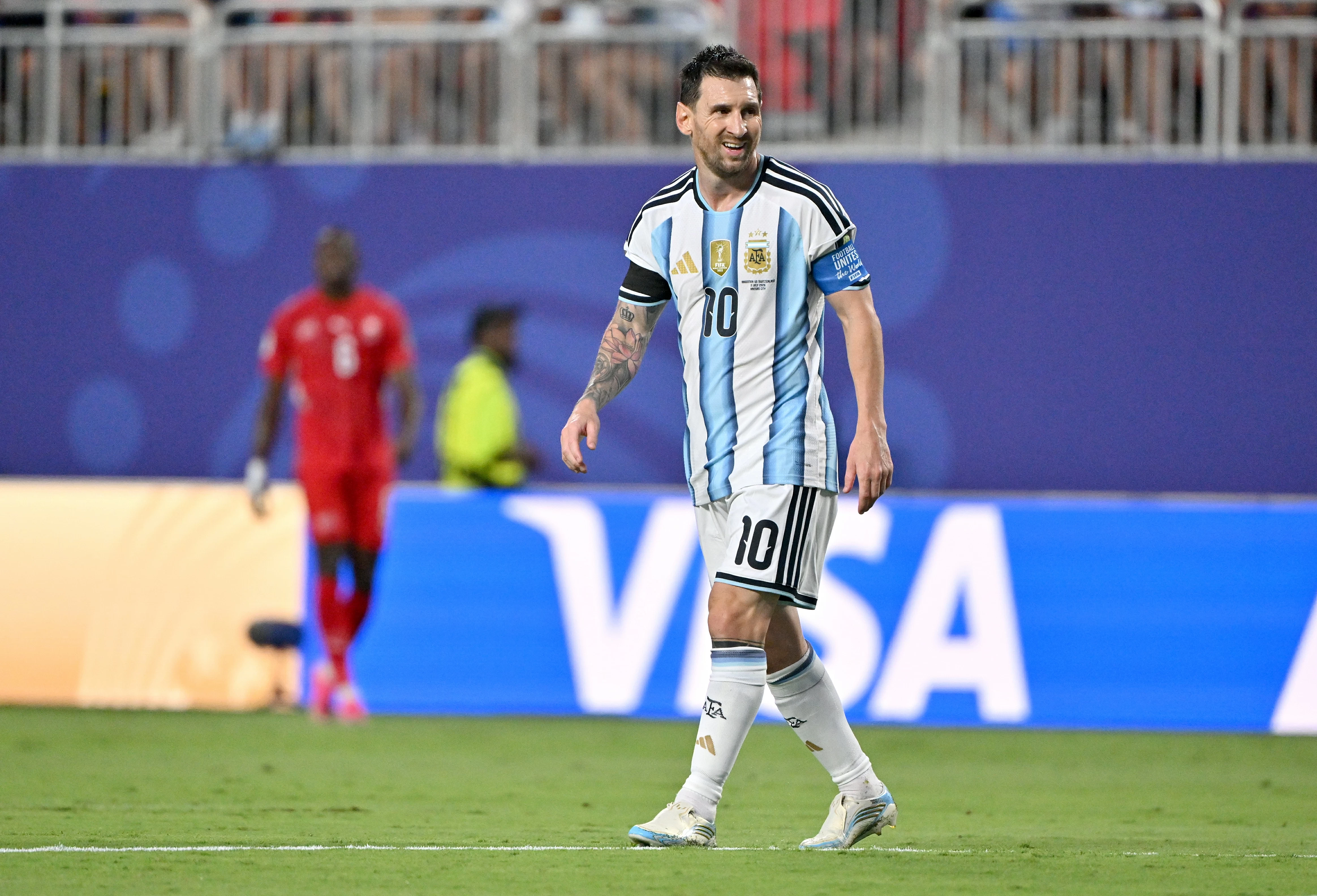
Lionel Messi (AFP)
Argentina, which struggled to reach this stage after overcoming the obstacle of Switzerland in the quarterfinals and Egypt in the round of 16 with high fighting spirit, relies on Messi's cunning, Emiliano Martínez's goalkeeping, and the vibrant youth in midfield to thwart the English plan.
Lionel Messi (AFP)
England's Ambition and Ending 60 Years of the Curse
On the other side stands German Thomas Tuchel, head coach of the England national team, who has brilliantly and stringently reshaped the character of the 'Three Lions.'
England seeks to end six decades of historical curse and absence from global podiums since 1966.
German Thomas Tuchel, England coach, and his captain Harry Kane (Reuters)
The team, which relies on the solidity of young star Jude Bellingham, who brilliantly led the team against Mexico and Norway, and veteran striker Harry Kane, sees in this battle the legitimate gateway to writing a new history that overcomes the past's complex.
Clash of Tactical Minds: Scaloni and Tuchel on the Chessboard
Scaloni in conversation with captain Messi (Reuters)
The confrontation will not only be inside the green rectangle but will be a complex tactical battle between two completely different minds, as Scaloni bets on fervent emotion mixed with tactical patience and rapid transitions that serve Messi's genius in the final third.
Thomas Tuchel and Jude Bellingham (Reuters)
In contrast, Tuchel imposes a strict pragmatic style, focusing on physical dominance, high pressing, and exploiting half-chances through Bellingham's runs from behind.
Original source: Asharq Al-Awsat

Comments (0)
Be the first to comment.