World Cup Final: Why Does Argentina Seem Closest to Making History?

17 July 2026 14:11
Getty ImagesThe recipe that put the Albiceleste one step away from glory
When the two best teams in the tournament meet on the pitch, small details become the decisive factor between glory and disappointment. That is the scene awaiting the world in the 2026 World Cup final, as defending champions Argentina clash with Spain, who have produced one of the most convincing campaigns in their recent history.
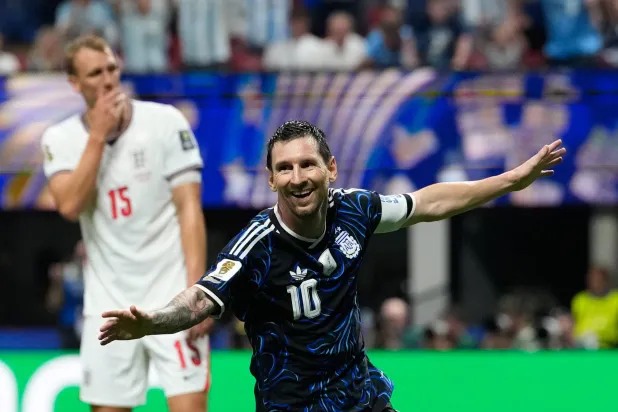
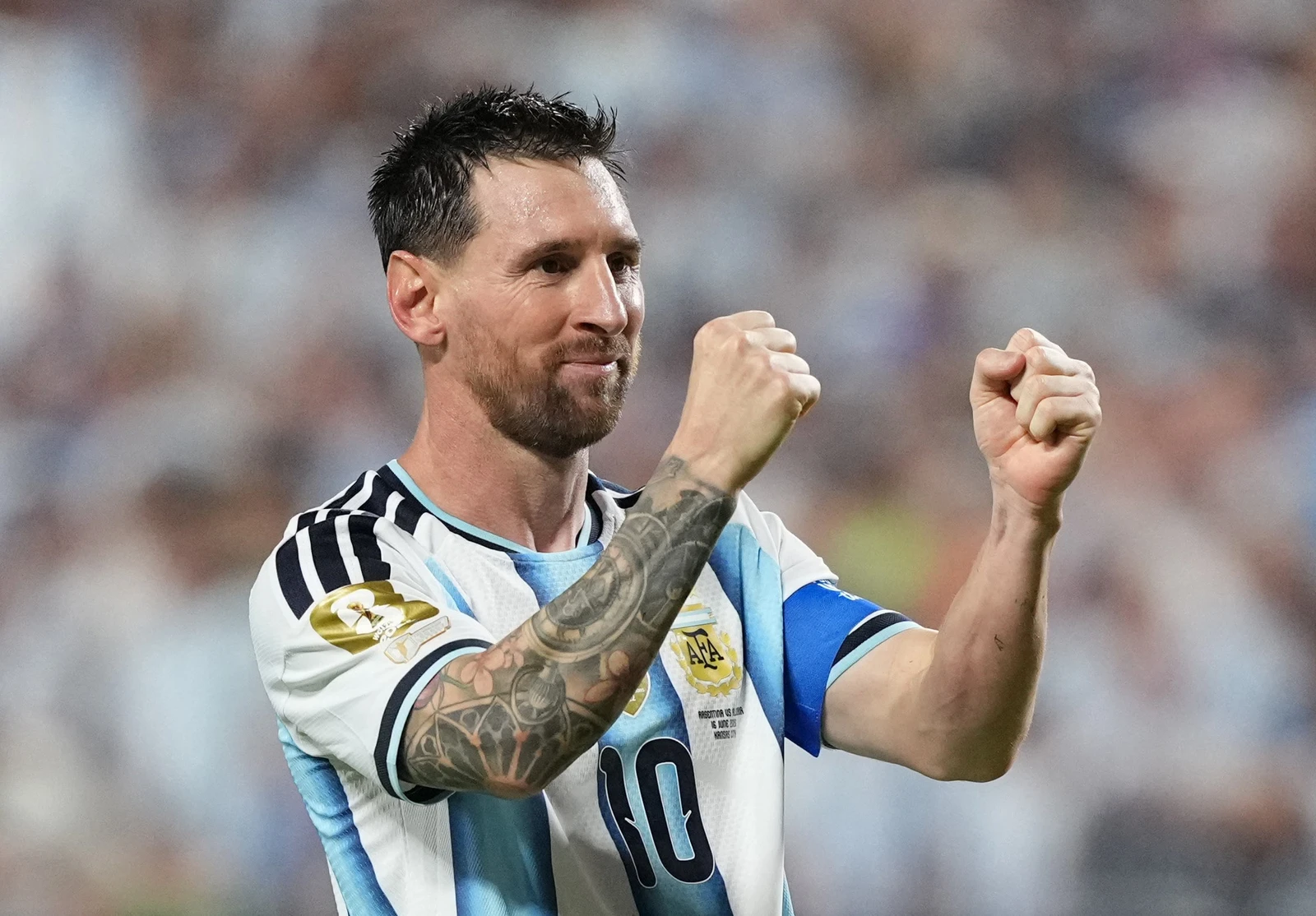
It is not just a match for the World Cup, but a clash between two different football schools. On one side stands Argentina, with the winning culture instilled by Lionel Scaloni, and the experience of stars who have played in the biggest arenas and are accustomed to handling pressure, led by legend Lionel Messi, who seeks to end his international career in historic fashion by winning a second consecutive world title.
On the other side, Spain appear in a new guise, relying on modern attacking football, constant possession, relentless pressure, and a young generation led by Lamine Yamal, as they attempt to reclaim world glory after an absence since 'La Roja' won the 2010 title.
Although Spain appeared more balanced throughout the tournament, Argentina possesses a set of factors that give them a relative advantage heading into the final, whether on technical, mental, or even historical levels.
In truth, it is difficult to favor one side in a final of this magnitude, but considering the journey of both teams and their playing styles, Argentina seems more prepared to handle the nature of finals, which are often decided not by beautiful play but by experience and the ability to seize opportunities.
Perhaps the most notable characteristic of the defending champions is that they do not need to dominate possession to impose their identity on the match. The team excels at defending in medium and low blocks, is distinguished by rapid transitions from defense to attack, and possesses players capable of exploiting half-chances.
Advertisement
Getty Images
The weapon Spain does not have
No matter how high the quality of the Spanish system, the presence of Lionel Messi remains an exceptional element that is difficult to compare with any other player. Despite being 39 years old, the Argentina captain has continued to deliver an exceptional tournament, topping the list of players with the most goal contributions, confirming that age has not diminished his ability to make a difference.
Messi is no longer the player who relied on speed and explosiveness as in his early days; his roles have evolved remarkably, becoming the mastermind of attacks, the final decision-maker in the attacking third, and capable of breaking any defensive setup with a single pass, set piece, or surprise shot.
Most importantly, his presence gives his teammates extra confidence, while forcing the opponent to assign more than one player to mark him, which creates spaces that the rest of the team can exploit.
Despite the immense technical value of the Albiceleste captain, Argentina's success in the last two World Cup editions is no longer based solely on individual brilliance. The team has developed a clear collective identity, where every player knows their role precisely, whether in defense or attack.
The current tournament has proven that Argentina can create danger from multiple sources; forwards score, midfielders contribute to playmaking, and defenders pose a constant threat from set pieces. This collectivity has made the team less reliant on a moment of individual creativity and more capable of controlling match proceedings.
Advertisement
Advertisement
Getty Images
Set pieces and mental toughness
In finals, set pieces often become the key to victory, and Argentina knows this well. The current tournament has shown great ability to exploit free kicks and corners, whether through Messi's precise execution or the aerial strength of Romero, Lisandro Martínez, Lautaro Martínez, and others.
Perhaps Argentina's biggest advantage is their ability to handle pressure. The team does not lose balance when trailing, nor is it affected by the crowd atmosphere or the importance of the match. They have proven this repeatedly during the tournament, overcoming complex matches and showing the character of champions in the toughest moments.
This mentality did not come from nowhere; it is the product of years of work, starting with the Copa América triumph, then the 2022 World Cup, and continuing through the current edition. That is why Argentina appears calmer in big matches and more capable of making the right decision when details become the difference between winning and losing.
Getty Images
The man of details and the secret of continuity
If Messi is the leader on the pitch, Lionel Scaloni is the mind driving the project from the outside. Since taking charge, the Argentine coach has succeeded in building a team with a clear identity without sacrificing tactical flexibility.
He does not impose a single style of play but deals with each opponent according to their strengths and weaknesses. Sometimes he relies on high pressing, other times he cedes possession to the opponent and then hits them with counterattacks, and in some matches he prefers possession when circumstances dictate. This variety has made the Argentine national team one of the hardest to read, because the opponent does not know which version they will face.
Argentina's reaching the World Cup final for the second consecutive time cannot be explained solely by Messi's talent or as an exceptional moment for a golden generation. The success achieved by the Albiceleste in recent years is the result of an integrated football project, laid down by Scaloni, transforming the team into one of the most stable and disciplined in the world.
When Scaloni took over, the team was not in its best period, but he gradually succeeded in rebuilding the squad, blending experience with youth and giving confidence to players capable of executing his ideas on the pitch. Today, Argentina has a clear identity, whether they possess the ball or play with a deep defense, making them able to adapt to all opponents.
After winning the 2022 World Cup, the coaching staff did not make drastic changes, as often happens with champion teams. Instead, Scaloni maintained the core structure of the team while gradually integrating young elements, without disrupting the harmony built over years.
This stability gave players a greater understanding of each other and facilitated the execution of tactical ideas on the pitch, reflected in the collective performance throughout the tournament's matches. Argentina no longer relies on individual solutions or personal efforts, but on an integrated system where every player knows their role precisely.
Advertisement
Advertisement
Did you enjoy this story?
Add Kooora as a preferred source on Google to see more of our reports
Follow Kooora on GoogleGetty Images
The team before the stars
Although Messi remains the most prominent name, what distinguishes the Argentine national team is that all players work for the benefit of the team. Pressure starts from the forwards, midfielders constantly support the defense, while defenders participate in building attacks, giving the team a clear balance between the defensive and offensive phases.
Original source: Kooora




Comments (0)
Be the first to comment.