World Cup: How the Arabs Told Their Story in the Group Stage (in Numbers)
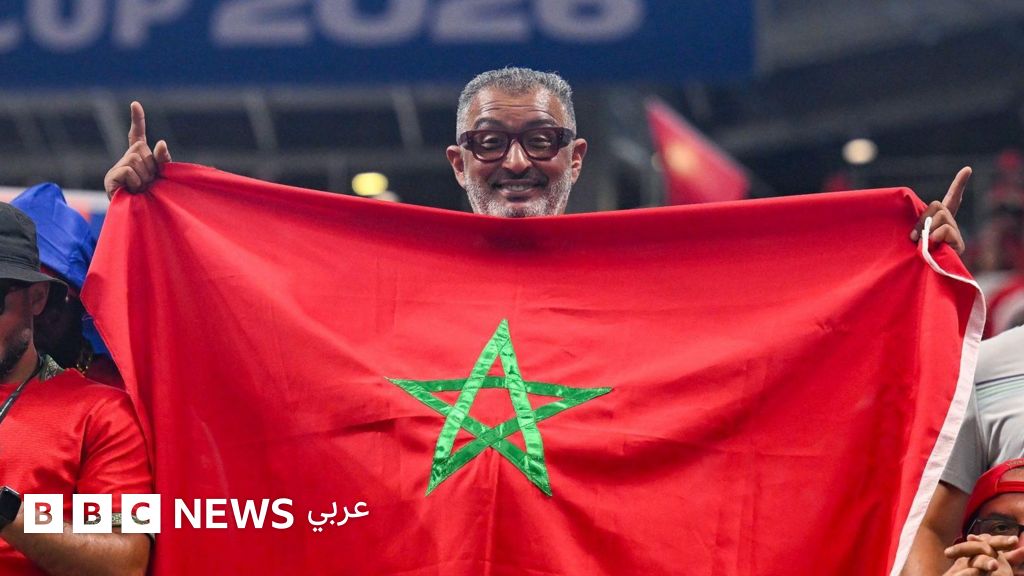
FIFA figures reveal how the Arab teams performed in the World Cup group stage, with three teams advancing and five eliminated.
World Cup: How the Arabs Told Their Story in the Group Stage (in Numbers)
Article Information
Author: Hisham Al-Jaraysheh, BBC News Arabic
Published 28 June 2026
Reading time: 11 minutes
The group stage of the 2026 World Cup concluded with the largest Arab presence in tournament history, featuring eight teams. Despite five of them exiting early, Morocco, Egypt, and Algeria succeeded in reaching the Round of 32, as the numbers provide a deeper picture of Arab performance beyond just match results.
The Arab teams played 24 matches, scoring 25 goals and conceding 60. Morocco topped the Arab standings with 7 points, followed by Egypt with 5, then Algeria, which advanced as one of the best third-placed teams.
In this report, we review the numbers of the participating Arab teams based on indicators compiled and published by FIFA.
Arab Attack: Morocco in the Spotlight, Algeria and Egypt Close Behind
Attack performance indicators from the first round show that Morocco was the most prominent Arab team in the attacking third, scoring six goals to rank 13th among all tournament teams, tied with Belgium, Portugal, England, and Mexico.
The Atlas Lions' superiority was not limited to goal count but also included overall attacking output. Their players attempted 48 shots, 16 on target, and 30 from inside the penalty area.
This was evident in the draw with Brazil, where Morocco matched one of the tournament favorites, before imposing their rhythm even more against Scotland and Haiti, securing qualification to the knockout stages with seven points.
Algeria and Egypt tied for second among Arab teams with five goals each, but their paths differed. Algeria scored from just 36 shots, 14 on target, while Egypt needed 48 shots, with only 13 on target.
These numbers explain the nature of the two teams' campaigns. Algeria, which started the tournament with a heavy loss to Argentina, quickly regained balance against Jordan, before snatching a qualification spot among the best third-placed teams, relying on greater efficiency in front of goal.
Skip to most read and continue reading
"Do you really need to avoid gluten?"
"A meal I ate during my holiday ended up infecting me with 38 parasites in my brain"
"Ukraine strikes a major oil station in the Russian city of St. Petersburg"
"Funeral music and 'selected verses': How social media interpreted Khamenei's farewell ceremony?"
Egypt, meanwhile, built its qualification on creating more chances, evident in its comeback against New Zealand from a goal down to win 3-1, before securing advancement with a draw against Iran.
Skip the podcast and continue reading
Worth paying attention
In-depth explanation of key events and topics to help you understand the most important changes around you and their impact on your life
Episodes
End of podcast
Jordan finished fourth among Arab teams, scoring three goals from 24 shots, nine on target. Although their goal tally was lower than Morocco, Algeria, and Egypt, their shot conversion rate was 13%, roughly equal to Morocco and higher than Egypt, indicating a good ability to exploit available chances, even if insufficient to offset defensive weaknesses that ended their group stage campaign.
In contrast, the attacking performance of the remaining Arab teams declined. Tunisia and Qatar managed only two goals each, while Iraq and Saudi Arabia each scored just one, placing them 44th globally in this indicator.
This tally reflects limited ability to finish attacks, clearly seen in matches. Iraq, despite repeated attempts to come back against Norway, France, and Senegal, only managed two shots on target from 21 attempts and scored just one goal throughout the tournament.
Saudi Arabia, meanwhile, created chances against Uruguay, Spain, and Cape Verde, attempting 17 shots, eight on target, but only scored one goal, ending their campaign with an early exit despite staying competitive until the final round.
Chance Conversion: Algeria and Jordan Exceed Expectations
Goals alone do not tell the full story. The expected goals (xG) indicator, which measures the quality of chances a team creates, reveals that some Arab teams achieved a scoring return exceeding what their chances suggested, while others paid the price for squandering opportunities at crucial moments.
Algeria scored five goals from chances with an expected value of 3.99 goals, achieving an efficiency of 1.25, meaning they finished attacks with higher effectiveness than expected. This was reflected in their tournament run, as the Desert Warriors needed relatively few chances to secure a win against Jordan.
The same applies to Morocco, which scored six goals from chances valued at 4.25 expected goals, with an efficiency of 1.41, reflecting the Atlas Lions' ability to capitalize on opportunities at decisive moments. This was evident in wins over Scotland and Haiti, where Morocco did not need a deluge of chances to decide both matches, maintaining attacking efficiency alongside defensive solidity to secure a spot in the Round of 32.
Jordan, however, topped this indicator among Arab teams, scoring three goals from chances with an expected value of just 1.81 goals, achieving an efficiency of 1.6, among the highest in the Arab contingent. Despite exiting the group stage, these numbers indicate that Al-Nashama exploited the few chances they had with high efficiency, but defensive problems and conceding eight goals prevented them from converting that into points.
Tunisia also showed good efficiency in front of goal, scoring two goals from chances with an expected value of just 1.12 goals. However, the limited opportunities they created, combined with defensive fragility, made this efficiency insufficient to avoid early elimination.
Egypt, in contrast, was more balanced, scoring five goals from chances valued at 3.76 expected goals. Iraq and Saudi Arabia, however, presented the opposite picture. Despite the quality of chances available to each suggesting more goals were possible, they managed only one goal each, a clear reflection of the teams' struggles in front of goal.
This was evident in Iraq's three matches, where they failed to capitalize on the chances they created despite repeated attempts, while Saudi Arabia lacked the final touch in its matches against Uruguay, Spain, and Cape Verde, leaving the tournament after its attack wasted opportunities that could have changed its fate.
Chance Creation: Morocco and Egypt the Most Threatening
In terms of shot count, Morocco and Egypt led the Arab teams with 48 shots each, placing them in the top half of the tournament, tied with France and ahead of major teams like Brazil, Argentina, and Portugal.
This was no coincidence, reflecting both teams' styles during the group stage. Morocco maintained its attacking presence in all three matches, whether in the draw with Brazil or the victories over Scotland and Haiti, repeatedly reaching the opponents' goal.
Original source: BBC Arabic



Comments (0)
Be the first to comment.