Turkish 'İMECE' Satellites Join NATO Space System
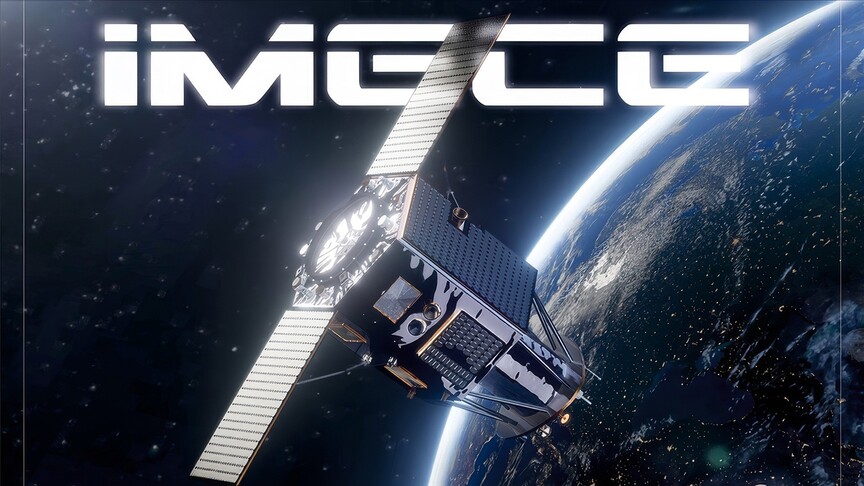
Turkey to develop two new high-resolution satellites based on its İMECE satellite; contract value exceeds $300 million
Ankara / Anadolu
Defense industry forum at NATO summit in Ankara featured projects and partnerships worth a total of $4.012 billion
Aselsan signed contracts exceeding $350 million for low Earth orbit satellite development and military communication systems
The NATO summit in Ankara, hosted by Turkey on Tuesday and Wednesday, discussed several space projects, and it was decided that Turkish İMECE satellites will play a role in the alliance's space and surveillance system.
According to information compiled by Anadolu, projects and partnerships worth a total of $4.012 billion under the title "Space and Surveillance" were announced at the defense industry forum held as part of the 36th NATO summit in Ankara.
In this context, Turkey will develop two new high-resolution satellites based on its İMECE satellite, with the contract value exceeding $300 million.
Within the scope of the satellite constellation development project, İMECE-2 and İMECE-3 will operate alongside the current İMECE satellite, aiming to image larger areas in less time and reduce the revisit time to the same region.
These capabilities will enable faster data production in crisis zones, borders, maritime areas, and monitoring of military movements, as well as disaster and emergency situations.
The İMECE satellite, Turkey's first domestically produced sub-meter resolution remote sensing satellite, entered service with the Turkish Air Forces under the name GökTürk-2B.
İMECE, developed by the Space Research Institute of the Scientific and Technological Research Council of Turkey (TÜBİTAK), was launched on April 15, 2023, from Vandenberg Air Force Base in California, United States.
**Other agreements in the space field**
Turkey also signed contracts through Aselsan worth over $350 million for the development of low Earth orbit (LEO) satellites and military communication systems, as well as early warning radar systems within the "Steel Dome" project for an integrated national air defense system.
These systems are expected to contribute to enhancing Turkey's ability to maintain communication in battlefields and improve its surveillance and early warning capabilities.
In an interview with Anadolu, Aselsan General Manager Ahmet Akyol stated that the company was tasked, within the framework of a joint investment program among allied nations to develop next-generation technologies, with designing secure communication satellites in low Earth orbit (LEO), considering this as evidence of international trust in Turkish engineering capabilities.
Akyol added: "In the next phase, we are working to establish a secure communication infrastructure via LEO satellites to meet military and strategic needs, and we will supply space with a network of LEO satellites."
Also prominent at the forum was the "Hybrid Multilayered Space Coalition Operations" (HALO) initiative, including Turkey, Germany, Denmark, Finland, the Netherlands, Sweden, Canada, and Norway.
The initiative aims to integrate military satellites of member countries, which are under their national control, into a common satellite constellation.
This new model is expected to overcome limitations related to cost, time, and coverage range faced by single-country satellite fleets, providing significant advantages, especially in high-speed communications, intelligence, and missile tracking.
The project aims to enable NATO to have more flexible and comprehensive capabilities in areas of rapid communications, intelligence gathering, and missile tracking.
Original source: Anadolu Agency




Comments (0)
Be the first to comment.