Governor of Riyadh Region Reviews Work of His Highness's Chair for Artificial Intelligence Technologies
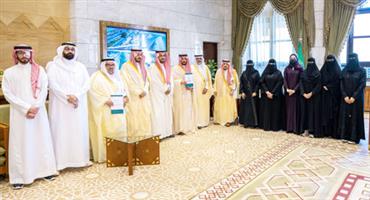
His Highness during the meeting
Monday, July 13, 2026
Al-Jazirah – SPA:
His Royal Highness Prince Faisal bin Bandar bin Abdulaziz, Governor of Riyadh Region, was briefed on the latest developments in the Prince Faisal bin Bandar Chair for Artificial Intelligence Technologies in Smart Cities at Shaqra University.
City and local guides
This came during His Highness's reception, at his office in Al-Hukm Palace yesterday, of Shaqra University President Dr. Ali bin Muhammad Al-Saif, a number of university leaders, and students participating in the chair.
His Highness listened to an explanation about the chair's efforts in supporting scientific research and innovation, empowering national talents, and enhancing the role of universities in developing artificial intelligence solutions that contribute to achieving the goals of the Kingdom's Vision 2030.
A number of university students presented to His Highness their innovations and research and scientific achievements supported by the Prince Faisal bin Bandar Chair for Artificial Intelligence Technologies in Smart Cities.
After that, His Highness received a copy of the chair's work report for the second semester of the academic year 1447 AH, and a copy of Shaqra University's annual report, which includes the university's achievements in academic, research, and administrative tracks, a comprehensive monitoring of the most prominent indicators and data over the past year, and reviews the academic, research, and community programs and initiatives that have had a significant impact on improving the quality of educational outputs and supporting the institutional development march according to the highest standards.
It is worth noting that the Prince Faisal bin Bandar Chair for Artificial Intelligence Technologies in Smart Cities at Shaqra University is the first research chair at the university, and represents the fruit of the generous support the university received from His Highness the Governor of Riyadh Region. The chair contributes to launching qualitative research initiatives, implementing scientific events, and engaging faculty members, graduate and undergraduate students in research projects that contribute to building national capacities and enhancing the university's scientific and societal impact.
Original source: Al-Jazirah



Comments (0)
Be the first to comment.