Education Laboratory

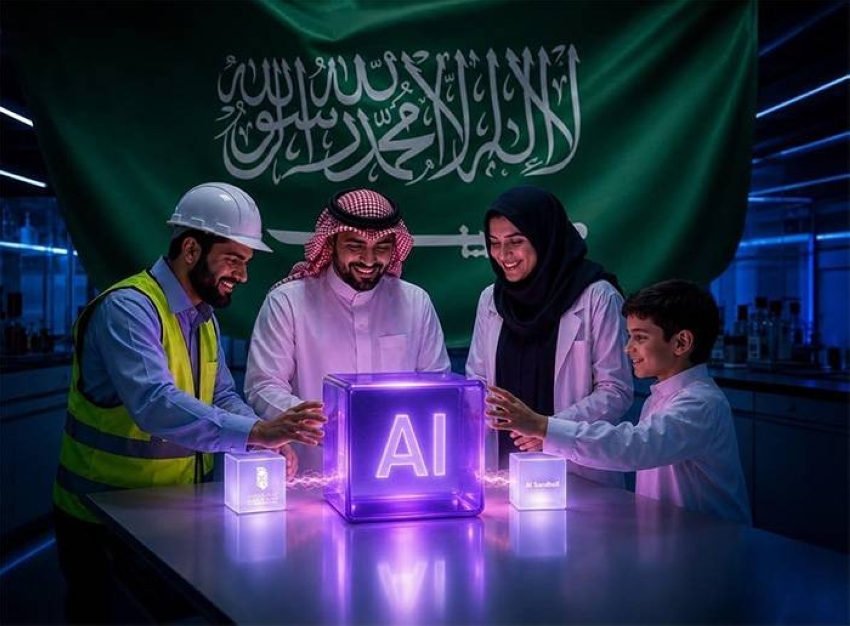
I paused for a long time at the news of the World Bank's praise for the experimental environment for artificial intelligence in education in the Kingdom, not because the praise came from an international body—that is undoubtedly an important aspect—but because I felt that many might read the news as technical news, while it is actually news about a new way of thinking. So what does it mean to have an 'education laboratory'? Initially, I see that this experiment is not just a technical tool, but a new institutional culture; education today can no longer tolerate traditional solutions. The student is changing, knowledge is changing, and the labor market is changing at an unprecedented speed.
Mona Al-Otaibi
Education Laboratory
July 10, 2026 - 00:01 | Last updated July 10, 2026 - 00:01
Follow Okaz on WhatsApp
I paused for a long time at the news of the World Bank's praise for the experimental environment for artificial intelligence in education in the Kingdom, not because the praise came from an international body—that is undoubtedly an important aspect—but because I felt that many might read the news as technical news, while it is actually news about a new way of thinking. So what does it mean to have an 'education laboratory'? Initially, I see that this experiment is not just a technical tool, but a new institutional culture; education today can no longer tolerate traditional solutions. The student is changing, knowledge is changing, and the labor market is changing at an unprecedented speed, and therefore educational institutions need to change at the same speed, but intelligently, not randomly.
Hence the value of the experimental environment, which gives teachers and learners the opportunity to try new tools that support innovation and creativity, and gives them more time for what technology cannot do: 'building the human being.' It also gives decision-makers real data instead of impressions, so they know what succeeded, why it succeeded, and what deserves to reach all educational environments and fields of knowledge. But I see that the broader impact of this project extends beyond the confines of classrooms; when a country possesses an environment where researchers, innovators, and companies test their educational solutions, it does not merely become a consumer of technology, but a partner in its production. Over time, ideas born within this environment may turn into Saudi products, startups, and experiences that benefit educational systems in other countries. Thus, education becomes an engine for the economy, not just a service sector.
Perhaps the most beautiful aspect of the idea is that it does not seek the perfect solution from the outset, but believes that reaching the best solutions begins with experimentation, then learning, then continuous development. This is the mindset that has driven the progress of many countries: giving ideas a chance to be tested before being judged. Therefore, the World Bank's praise is not just a certificate of success for a project, but a recognition that the Kingdom is building a different model for education development—a model based on innovation, measurement, sustainability, and knowledge creation. Another equally important idea emerges here: the experimental environment should not be measured only by the smart tools it adds, but by the flexible educational mindset it creates. A teacher accustomed to experimentation and measurement becomes more capable of developing their practices; a student learning in an environment that allows exploration becomes more prepared to deal with a rapidly changing world; and the educational institution transforms from an entity waiting for solutions to one that creates and develops solutions. From another perspective, this environment opens the door for deeper partnership between education, scientific research, and the private sector. True innovation is not born in isolation, but in a space where the educational field meets the researcher, developer, and entrepreneur. When these parties integrate within a safe and flexible testing environment, we are not only developing educational tools, but building a system capable of turning challenges into opportunities and ideas into applications with tangible impact. The value of this model also lies in embedding the principle of continuous institutional learning: just as the student learns in the classroom, the institution learns from the results of experiments, data, and accumulated observations. This type of institutional learning is what makes development sustainable, because it does not rely on a transient decision or a temporary project, but on a permanent cycle of testing, improvement, and expansion.
In conclusion, I see that the news carries a deeper message than just international praise; it indicates that the Kingdom is not content with adopting future technologies, but is building an environment capable of producing the future of education itself. This is the real qualitative shift: for education to become a space for conscious experimentation, a platform for knowledge creation, and a bridge connecting human ambition with the potential of technology in service of development and building the human being.
Original source: Okaz



Comments (0)
Be the first to comment.