How does a 123-year-old air conditioning system help us cope with extreme temperatures today?
As temperatures rise around the world, air conditioning is no longer just a comfort device but in some cases a lifesaving line of defense.
How does a 123-year-old air conditioning system help us cope with extreme temperatures today?
Article Information
Author, Chris Baraniuk
Published 5 hours ago
Reading time: 10 minutes
As the effects of climate change increase and cities around the world heat up, air conditioning can mean the difference between life and death for the most vulnerable groups, but it comes at a high cost. The long history of air conditioning in public places reveals how humanity has dealt with this issue for a long time.
In front of me is a giant 6-blade fan. Weighing several tons, this fan, painted bright red and expertly mounted inside a circular opening in the wall, spins effortlessly when I place my hand on one of its blades, without making the slightest squeak, as if it were installed just yesterday. A gentle breeze flows from the fan as it gradually slows down to a stop.
More than 2,000 additional deaths in France during the peak of the heatwave, as Europe braces for severe weather
"Heat dome" responsible for Europe's scorching heat, what is the secret behind this phenomenon?
Alan Looney, Chief Facilities Management Officer at the Royal Victoria Hospital in Belfast, Northern Ireland, says in amazement: "Isn't this amazing? After all these years, you can still turn it, I mean it makes no noise."
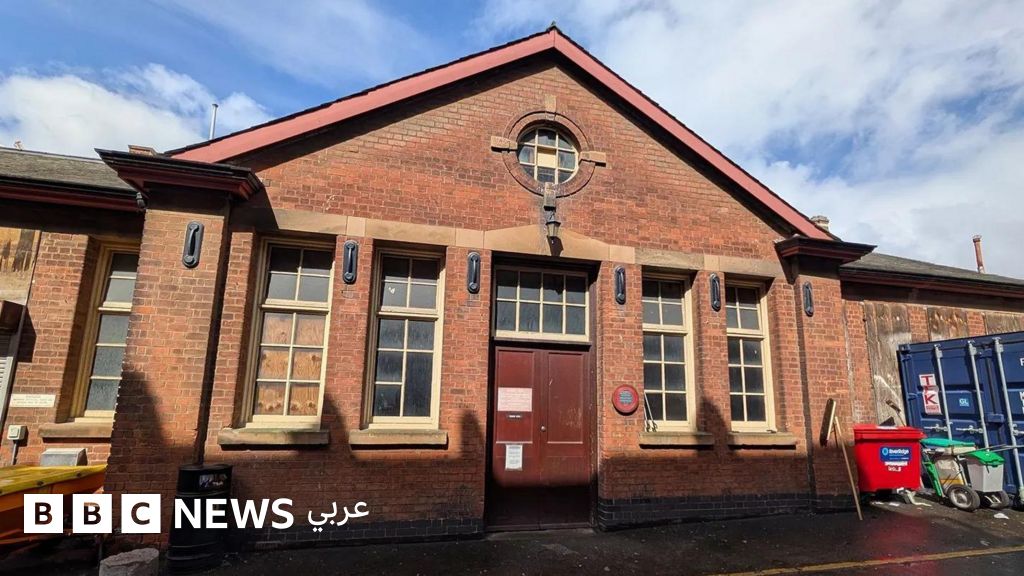
I was standing inside a 123-year-old air conditioning system, built from brick and iron. Installed in 1903 to cool the hospital's main wards, which were later demolished, the Royal Victoria Hospital became one of the first public buildings in the world to be equipped with a mechanical air conditioning system.
The fan drew air through a dense mesh of coconut fiber ropes that were regularly moistened with cold water during summer. The air then flowed through a 150-meter-long passage with a gradually rising floor, and openings in the passage walls allowed the temperature- and humidity-controlled air to reach the patient wards on the upper floors via hidden ducts.
The goal was to improve patients' recovery speed and ultimately save lives.
As global temperatures rise and heatwaves become more intense and frequent, the role of air conditioning in protecting public health is more important than ever. The need is clear: high temperatures not only sometimes cause death, but can also make people more prone to aggression or negatively affect their decision-making abilities. Heatwaves can also reduce the effectiveness of some medications. Therefore, many cities around the world are encouraging the provision of cool public spaces, and some have even created specially designed air-conditioned climate shelters.
But to understand the true importance of air conditioning as a means of preserving health, we must go back to its historical roots.
Skip most read and continue reading
Jordan and Kuwait announce interception of Iranian missiles
Popular celebration for Egypt's national team after controversy over its reception in the city of El Alamein
Why do mosquitoes bite some people more than others?
Who is Qatar's former Emir Sheikh Hamad bin Khalifa Al Thani?
Image caption, These original equipment helped keep the hospital cool and regulate humidity inside, contributing to faster patient recovery
Skip podcast and continue reading
Worth attention
In-depth explanation of the most important events and topics, to help you understand the key changes around you and their impact on your life
Episodes
End of podcast
Although the giant fan and coconut fiber cooling system at the Royal Victoria Hospital in Belfast were later replaced with more modern and hygienic technologies, they still stand as witnesses to the role air conditioning can play in saving lives. Access to air-conditioned buildings significantly reduces the risk of heat-related death, and one study concluded that air conditioning prevents approximately 195,000 deaths worldwide each year among people over 65 years old.
David Eisenman, a physician and public health researcher at the Fielding School of Public Health at the University of California, Los Angeles, says: "Cooling is the most important means of reducing health risks from heat, and it often requires the use of air conditioning or active cooling methods."
In hospitals, air conditioning plays a vital role, as it can reduce the risk of patient death by up to 40 percent during extreme heatwaves. Therefore, failure of cooling systems in hospitals is considered a "critical incident" during hot weather.
Beginnings of air conditioning
In the 19th century, Florence Nightingale, a nursing pioneer and social reformer, advocated for a set of health measures, including improving air quality inside hospitals. At that time, most doctors and nurses achieved this goal simply by opening windows.
But the engineers who designed the Royal Victoria Hospital wards in 1903 sought to provide a healthy environment in a city suffering from high infant mortality rates, as well as severe pollution from factories and mills. The coconut fiber ropes soaked in water not only cooled the incoming air but also trapped soot and dust.
The story of the 'Lady with the Lamp' who saved many lives
Climate emergency in Europe, what about summer in Arab countries?
Nigel Kerry, Head of Facilities Management Operations at the Belfast Health and Social Care Trust, says: "The goal was to provide what we now call a healthy environment, so that there was no need to open windows and let coal dust and soot inside."
He adds that the resulting system, some parts of which were made by the same company that produced the ventilation fans for the Titanic, was "extremely effective." Doctors at the hospital recorded outdoor temperatures reaching 26 degrees Celsius in the shade during summer after the hospital opened to patients, while the air conditioning system kept the indoor ward temperature at around 18 degrees Celsius, a much more comfortable temperature.
In the 1860s, an American inventor proposed a hospital air cooling system based on ice, but this system did not control humidity levels.
Hospital designers and medical professionals in the early 20th century clearly recognized the health benefits of controlling indoor air quality, and over time, the idea of applying these systems began to extend to places outside hospitals.
Cooling stations for cities suffering from extreme heat
Image caption, Public cooling stations in Jodhpur, India, provide a refuge from deadly heatwaves
Today, in the Indian city of Jodhpur, there is a public cooling station, a cabin-like building that has provided a refuge for people from extreme temperatures during severe heatwaves over the past two years.
Original source: BBC Arabic





Comments (0)
Be the first to comment.