OpenAI prepares to launch its new AI model GPT-5.6
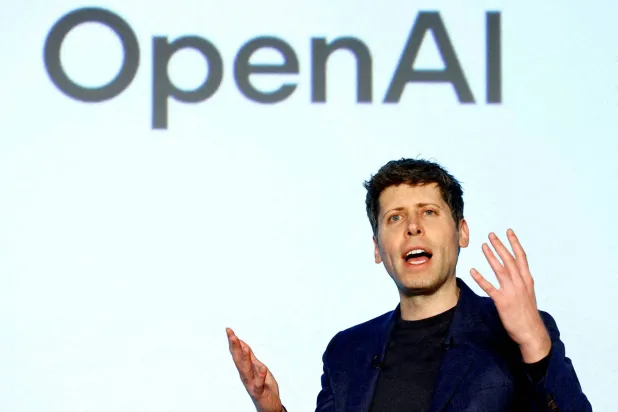
OpenAI announced Tuesday that it will release its new model GPT-5.6 to the public on Thursday.
Saudi call for international partnership to bridge gaps... and a study by SDAIA monitors scenarios for the development of artificial general intelligence
The Kingdom of Saudi Arabia’s participation in the United Nations Global Dialogue on AI Governance, taking place these days in Geneva on the sidelines of the 2026 World Summit on AI for Public Good, highlighted the Kingdom’s commitment to harnessing its digital resources, capabilities, and international partnerships to support a trustworthy, safe, and inclusive AI future that serves the world’s population, and enhances its role as an active international partner in shaping the future of AI governance.
This commitment is not only evident through the delegation representing the Kingdom, but is also part of its qualitative participation in the summit and dialogue, alongside the Kingdom’s renewed call to countries worldwide to partner with it to bridge AI gaps, serving humanity and protecting the planet. Additionally, through a speech delivered by the Minister of Communications and Information Technology, the Kingdom affirmed its commitment to developing technical enablers and language models that serve a wide segment of the world’s population, and contribute to enhancing linguistic and cultural inclusivity in AI applications, ensuring that this technology is fairer and more representative of different peoples and societies, given its status as the center of the Arab and Islamic world.
Global call: In addition to the call for a global shift from talking about internet access as a human right to working to make AI access a human right, given its decisive impact on humanity’s future, protecting the planet, and creating new opportunities for development and prosperity.
Saudi efforts continue on this platform through an upcoming side session on Tuesday during the dialogue, titled 'Responsible and Trustworthy AI for Prosperity: From Principles to Application' at Palexpo in Geneva, to discuss ways to transform AI governance principles into practical applications that support sustainable digital development and prosperity. The session will be organized by the Saudi Authority for Data and Artificial Intelligence (SDAIA) in partnership with the International Center for AI Research and Ethics (ICAIRE) and the Digital Cooperation Organization.
Forward-looking study and integrated scientific vision: This also comes at a time when Saudi Arabia, through efforts undertaken by SDAIA, has adopted advanced forward-looking visions and studies that contribute to supporting international discussions on the future of this technology. Foremost among them is a study titled 'Foresight of Artificial General Intelligence Governance: Current Status and Future Aspirations,' which provides an integrated scientific view of the concept of AGI, reviews the global landscape of governance of these advanced technologies, analyzes expected future scenarios for its development, and includes practical recommendations for decision-makers on how to deal with these technologies with ethical responsibility.
The study’s importance aligns with the importance of the major international dialogue led by the United Nations in Geneva to discuss AI governance, amid the unprecedented acceleration in AI technologies globally and their approach to more advanced levels that may enable them to perform various intellectual tasks accomplished by humans. This makes AGI governance one of the most important strategic issues on the international arena, due to its direct impact on the future of economies, security, innovation, and sustainable development.
In describing the international reality of AGI governance, the study emphasized that there are currently no specialized international or national regulatory frameworks for this type of intelligence, despite the multiplicity of initiatives related to AI governance in general. This reinforces the need to intensify international cooperation and build flexible governance frameworks capable of keeping pace with rapid technical developments. It also monitored the most prominent global trends in this field, explaining the differences in regulatory models between countries, along with the growing role of global technology companies in developing proactive frameworks for managing risks of advanced models, evaluating their capabilities, and setting necessary controls to ensure their safe and responsible development and deployment.
Scenarios for the development of artificial general intelligence: The study touched on the most prominent possible future scenarios for the development of AGI, and reviewed a number of proposals put forward internationally, including 'establishing a specialized international agency for AGI governance,' establishing an international consortium for its development, along with decentralized governance models, reflecting the importance of reaching an international consensus that ensures maximizing the benefits of this technology while reducing its risks.
The study highlighted the Kingdom’s efforts in building an advanced AI governance system, through efforts undertaken by SDAIA that included: issuing AI ethics principles, generative AI guidelines, an AI adoption framework, a national framework for AI risk management, in addition to launching a set of guides and regulatory documents that enable entities to adopt AI solutions safely and responsibly according to best global practices.
Commenting on this, Eng. Saeed Al-Shahrani, the official spokesman of the Saudi Authority for Data and Artificial Intelligence (SDAIA), affirmed that through the Kingdom’s participation in the Global AI Dialogue in Geneva, 'national efforts continue to consolidate the Kingdom’s role as an active international partner in shaping the global future of AI governance, through an approach that combines innovation and responsibility, and transforms principles into practical applications that contribute to building a more prosperous and trustworthy digital future.'
Original source: Asharq Al-Awsat




Comments (0)
Be the first to comment.