Science and Technology / King Salman bin Abdulaziz Royal Reserve Development Authority Records a New Global Achievement in Amphibian Behavior
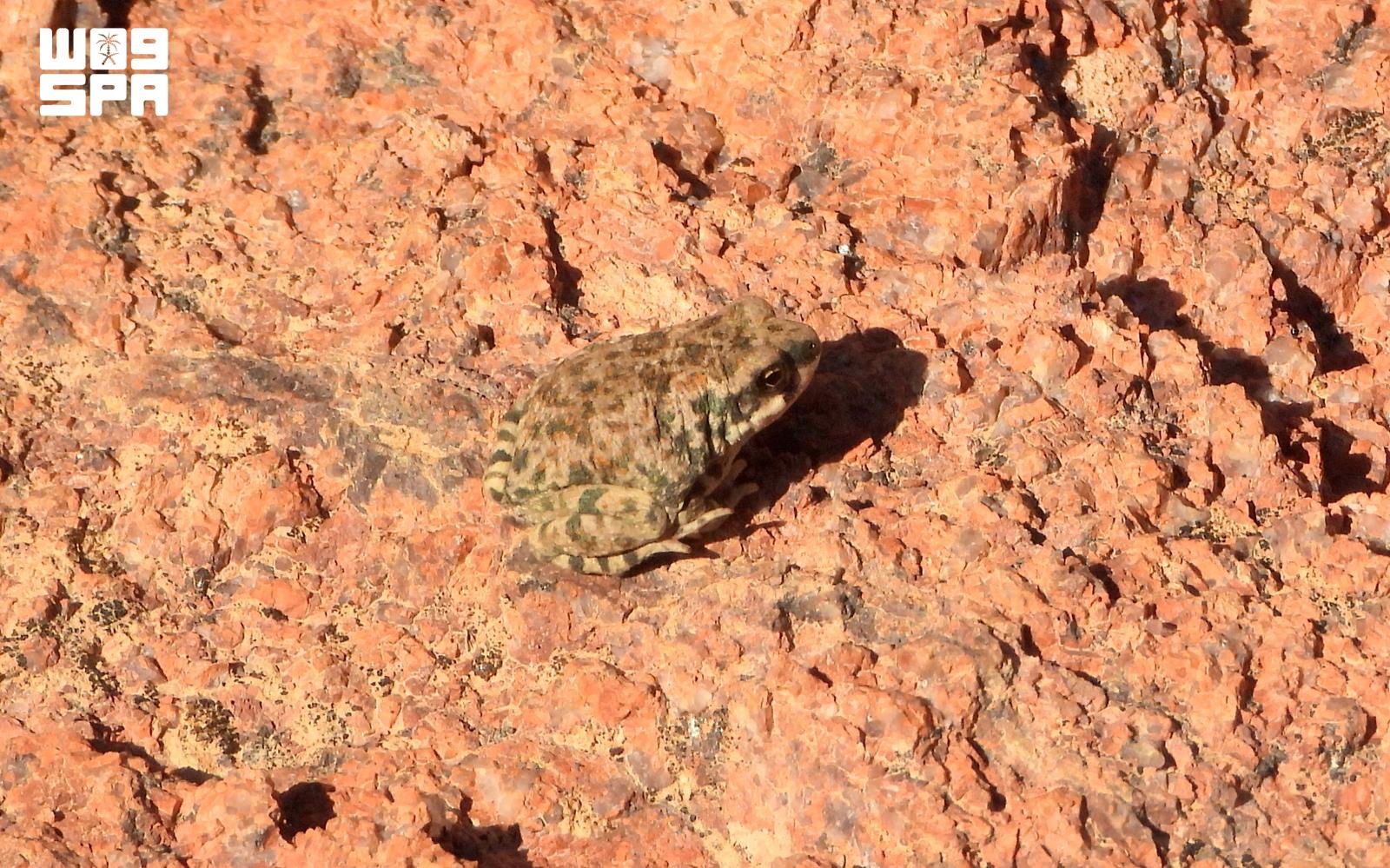
Sakaka, 02 Safar 1448 AH corresponding to July 16, 2026, SPA — The King Salman bin Abdulaziz Royal Reserve Development Authority recorded a new scientific achievement after a team of environmental experts and specialists in the reserve succeeded in documenting a rare and unprecedented phenomenon in the amphibian world, consisting of observing what is known as "reverse cannibalism" in the Arabian toad, a behavior that contradicts known biological patterns. This discovery came during a field environmental survey within the reserve's boundaries, where small tadpoles in their early stages of growth were observed attacking a larger individual more advanced in the metamorphosis stage. According to the study published in the international journal Herpetology Notes, this documentation is the first of its kind for this behavior in the natural environment, both in the Kingdom and globally. Cannibalism in amphibians is usually known for the dominance of larger individuals over smaller ones, but what was recorded represents a complete reversal of this pattern, as the smaller individuals became predators, opening new horizons for understanding the dynamics of feeding behavior within the same species. The Arabian toad is an endemic species in the Arabian Peninsula and is characterized by its ability to adapt to mountainous and semi-arid environments, provided water sources are available. Despite its use in some laboratory studies, documentation of its behavior in its natural environment remains limited, giving this discovery additional scientific value. This achievement comes within the efforts of the King Salman bin Abdulaziz Royal Reserve to monitor wildlife and study environmental changes within its vast area exceeding 130,000 square kilometers, where research teams pay special attention to amphibians due to their vital role in the balance of ecosystems. This scientific work reflects the growing role of the reserve as a leading center in biodiversity, and its contribution to supporting scientific knowledge and enhancing the Kingdom's position in environmental research at the international level. // End // 14:24 T M 0071
Original source: SPA






Comments (0)
Be the first to comment.