Smart Glasses Without a Camera: Will Even Realities' Bet on Productivity Pay Off?

Despite increasing bets that smart glasses will be the next computing platform, most devices available today still rely heavily on smartphones to deliver their core functions.
This also applies to the Even Realities G2 glasses, which offer a sleek design and a bright front display resembling neon signs, but they cannot do without a constant connection to the phone, which can sometimes be unstable.
A Different Philosophy from Competitors
Unlike companies like Meta, Even Realities has chosen a different approach: it completely abandoned cameras and speakers, focusing on providing a tool that enhances productivity without raising privacy concerns among those around the user.
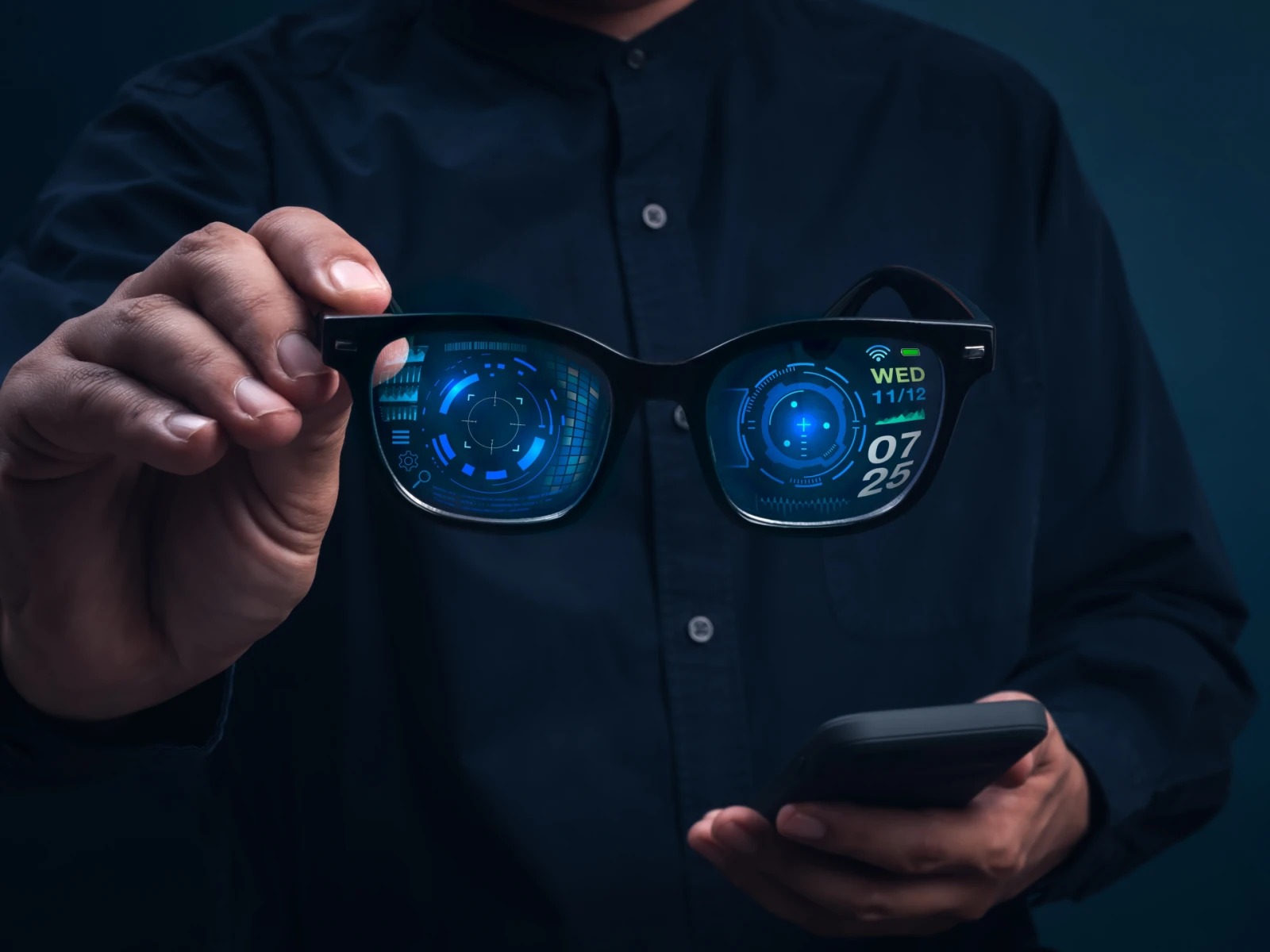
The glasses display information and text in green on a monochrome screen, giving them a distinctive look resembling neon signs, according to a report by TechCrunch reviewed by Al Arabiya Business.
Significant Improvements Compared to the First Generation
The G2 is the second generation of the company's glasses, bringing several important upgrades over the previous G1 model, including:
- A brighter screen reaching 1200 nits instead of 1000.
- Four microphones instead of two.
- A 75% larger display area.
- Refresh rate increased to 60Hz from 20Hz, making information display smoother.
The connection between the glasses and the phone also saw significant improvement after several app updates, after frequent disconnections were a major issue initially.
Smart Glasses Without a Camera from Even Realities
Targeted at Travelers and Meeting Attendees
The company targets businesspeople, conference speakers, and people who frequently travel to different countries, offering tools for real-time translation, meeting management, and note display.
Lightweight Design and Two-Day Battery Life
The glasses weigh only 35 grams, with a frame made of magnesium alloy and titanium arms, making them comfortable for prolonged use.
The lenses offer UV protection, and the company claims the battery lasts two days of typical use.
They come with a charging case that can recharge them up to seven times before the case itself needs charging.
Screen Displays Meetings and Notifications
The glasses act as a personal assistant to display appointments, reminders, and notes, with access to a dashboard showing upcoming meetings, market news, and headlines.
They also display phone notifications directly in front of the eye, but this feature was not always stable, reducing its usefulness as long as the phone is near the user.
Real-Time Translation During Conversations
One of the standout features is the translation capability, which translates live speech into a language selected by the user.
During a test at the Global Connect Show in China, the feature proved effective in translating conversations in Chinese, and also worked well with other languages like French and Spanish.
However, it suffers from a clear limitation: the other party cannot understand what the user says in their language unless they are using the same app.
Navigation System in Front of the Eye
The glasses also offer a Navigate feature that displays turn-by-turn directions directly on the display.
However, it does not support Google Maps or Apple Maps, relying instead on the company's own app, which still suffers from address errors, limiting its reliability in unfamiliar places.
AI Assistant Needs Improvement
The glasses rely on a built-in assistant called Even AI to execute voice commands, manage tasks, and answer questions.
Despite the promising concept, the assistant had trouble understanding commands, especially when adding tasks, and long answers were displayed gradually on the screen without the ability to skip.
Voice recognition performance was also unsatisfactory in crowded places, despite the glasses using four microphones.
Ring for Control, But at a High Price
The company also launched a smart ring called R1 that serves as an additional control method for the glasses via a touch surface.
The ring includes health tracking features like heart rate, steps, calories, and blood oxygen level, but these functions seem limited compared to specialized rings like Oura.
At a price of $249, the reviewer believes the ring does not offer sufficient value, especially since the control features on the glasses perform the same functions.
Is It Worth Buying?
The Even G2 sells for $599, featuring a sleek design, robust and lightweight hardware, and the company is working to expand its capabilities by supporting third-party apps.
Despite that, the glasses still lack a clear daily use case for most users, except for those who constantly need real-time translation or text display during presentations.
Ultimately, Even Realities' bet on forgoing cameras and speakers in favor of focusing on productivity seems a logical direction, but it needs a more mature software ecosystem before the glasses become a daily dependable device, rather than just an intriguing product to try.
Advertorial
Advertorial
Original source: Al Arabiya





Comments (0)
Be the first to comment.