SoftBank: AI Needs $5 Trillion Annual Investment
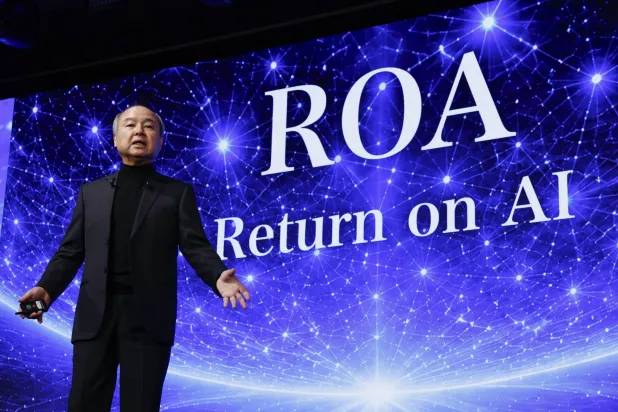
Masayoshi Son, CEO of SoftBank Group, dismissed concerns about a bubble in AI investments as ridiculous.
SoftBank Group CEO Masayoshi Son dismissed concerns about a bubble in AI investments as ridiculous, scoffing at the doubts and describing them as backward, similar to questioning the usefulness of cars and airplanes.
Son told executives at the company's annual event in Tokyo: 'Questioning whether AI is a bubble is a foolish question. AI will completely change our lives, and it will do so in a profitable way.' He added that 'those who reject development are closing off their world. Those who condemn AI are distorting reality,' according to the Associated Press.
Financial markets have recently been swept by waves of anxiety that the rocket-like rise in share prices of companies like Nvidia, and massive investments in data centers, may not yield returns matching the hopes for huge profits from AI.
Son founded SoftBank more than four decades ago and is a pioneer in technology investments in Japan. He was an early supporter of AI and has invested tens of billions of dollars in related companies.
Son said he estimates that annual global investments of nearly $5 trillion are needed to expand data centers, increase computer chip production, and provide energy systems and other infrastructure required for AI.
He added: 'By 2040, nearly 20% of global GDP will be converted to industries related to AI, the world of superintelligence.'
SoftBank oversees a wide range of companies through its Vision Funds. Its other businesses include telecommunications and energy.
Tokyo-based SoftBank Group previously announced that its profit for the fiscal year ending in March rose about fivefold to 5 trillion yen ($32 billion) compared to the previous year, thanks to returns on its AI investments.
The tech giant invested $34.6 billion in OpenAI. It sold its stake in computer chip maker Nvidia last year to provide liquidity for further investments in AI and data centers.
SoftBank also recently launched a battery production project in Japan, aiming to build advanced electrical energy infrastructure in anticipation of rising electricity demand due to AI use.
Original source: Asharq Al-Awsat





Comments (0)
Be the first to comment.