Will Your Manager Be an AI?
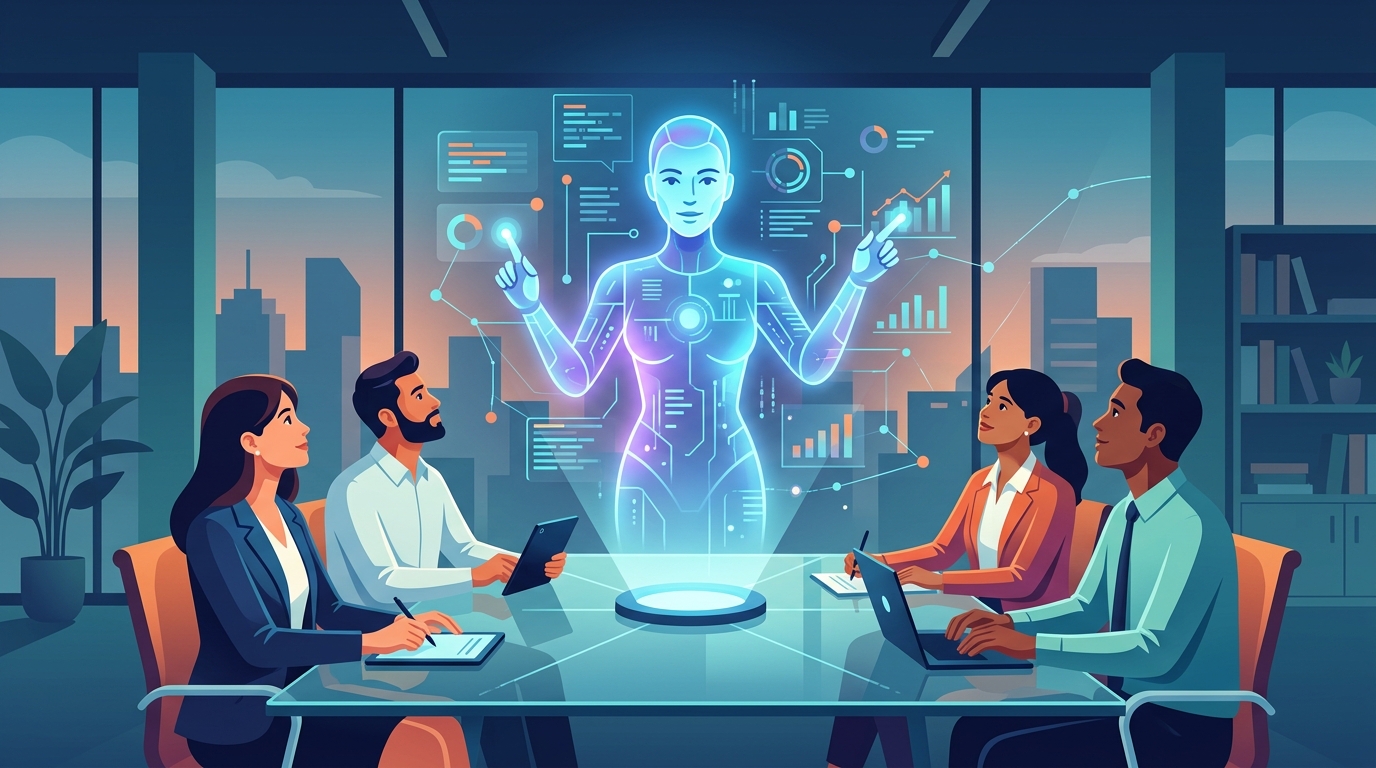
A few months ago, during an executive course at a Western university, I participated in a simulated board meeting discussing a set of files, attended by an AI agent who was also a participating member. The atmosphere was electric and strange at first, but over time, members began to get used to the AI agent and took the matter seriously. Some of the most important observations I and the other participants came away with from this experience were as follows:
The AI agent was very confident in its words and information, even when it was wrong.
There were hallucinations and fabrication of non-existent data and information that required verification and scrutiny.
Sometimes it was inconsistent with the context and deviated from the discussion framework.
It leaned toward agreement and did not object to the views presented by other members. The decision was to give direct instructions to the AI agent to be clear and frank and to express its opinion without flattery. We also asked it to speed up its speech tone and shorten its talk so that it would not repeat every time: 'As a fellow member of this board...' Frankly, we ended up asking it to summarize the key points, compare opinions, decide between two conflicting views, and share the meeting minutes via email. In other words, its role was sometimes closer to a coordinator and secretary of the board than a board member. Nevertheless, it performed well in presenting and organizing opinions impartially and orderly.
This experience may lead to a profound question: Will the day come when AI systems manage companies and organizations and begin to give instructions to humans? In today's world, algorithms and their recommendations account for 80% of views on Netflix, and algorithms control the coordination and communication between customers, stores, and delivery representatives.
In fact, many participants in that executive course from various entities and multiple countries complained about strange reports they received from senior management containing facts based on hallucinations from AI systems, prepared by consultants for managers who do not read, scrutinize, or verify, and who are content to occupy their teams by responding to AI hallucinations.
AI systems may not have reached the stage of taking over leadership yet, but it is clear that their indirect influence has reached many organizations at the senior management level.
In short, the question is not: Will an AI agent manage you or not? Rather, the question is: How will you prepare for a world in which AI systems intervene in many critical administrative decisions, directly or indirectly? Change is coming strongly and quickly, so will you be a victim of this change or part of the caravan that initiates, innovates, leads change, and shapes the future with its own hands and will?
Original source: Al-Riyadh






Comments (0)
Be the first to comment.