Heatwave Fuels Fires in Maghreb Countries, Calls for Urgent Measures
Rabat / Anadolu
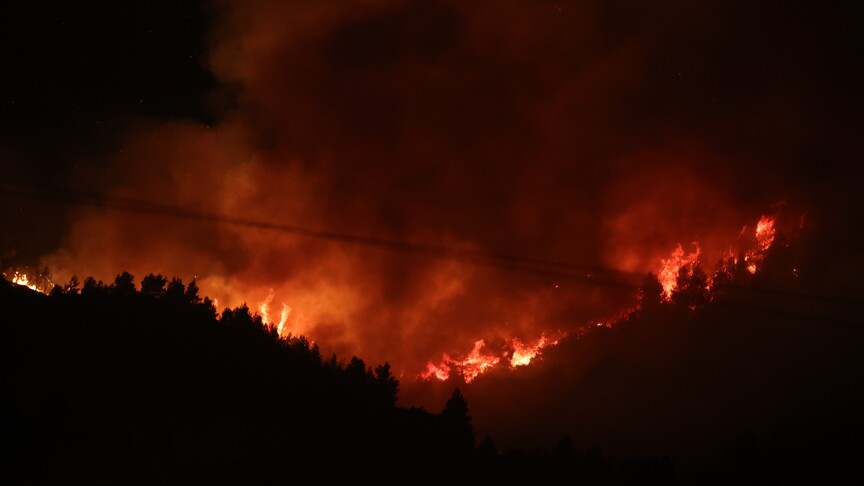
Tunisia is making strenuous efforts to contain the fires amid temperatures reaching 49.6 degrees, while Morocco has recorded 310 fires since the beginning of 2026, and Algeria is working to extinguish 14 separate fires in 12 provinces.
These severe climate developments coincide with rising environmental challenges facing Mediterranean basin countries due to the continuous increase in global temperature rates.
Buses and cars, and the fires have cost vast forests and farms, amid official warnings of worsening effects of drought and hot winds.
- Environmental expert Mustafa Benramel calls for enhancing early warning, climate-smart agriculture, and accelerating the transition to renewable energy
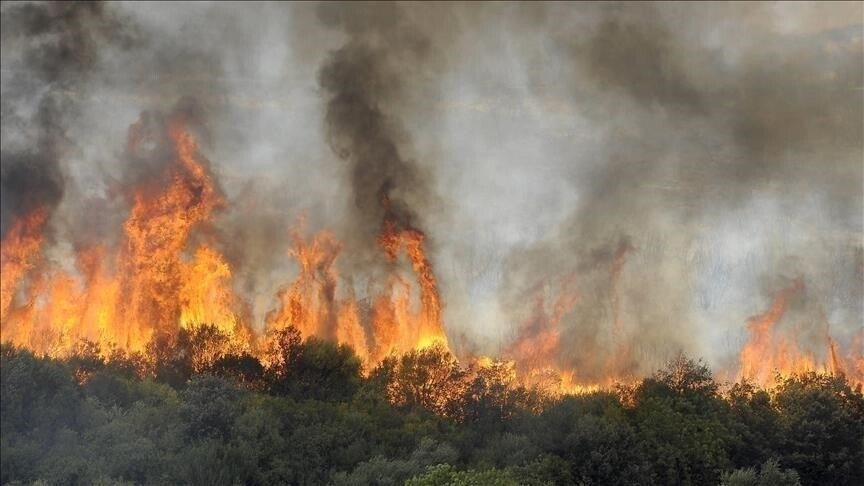
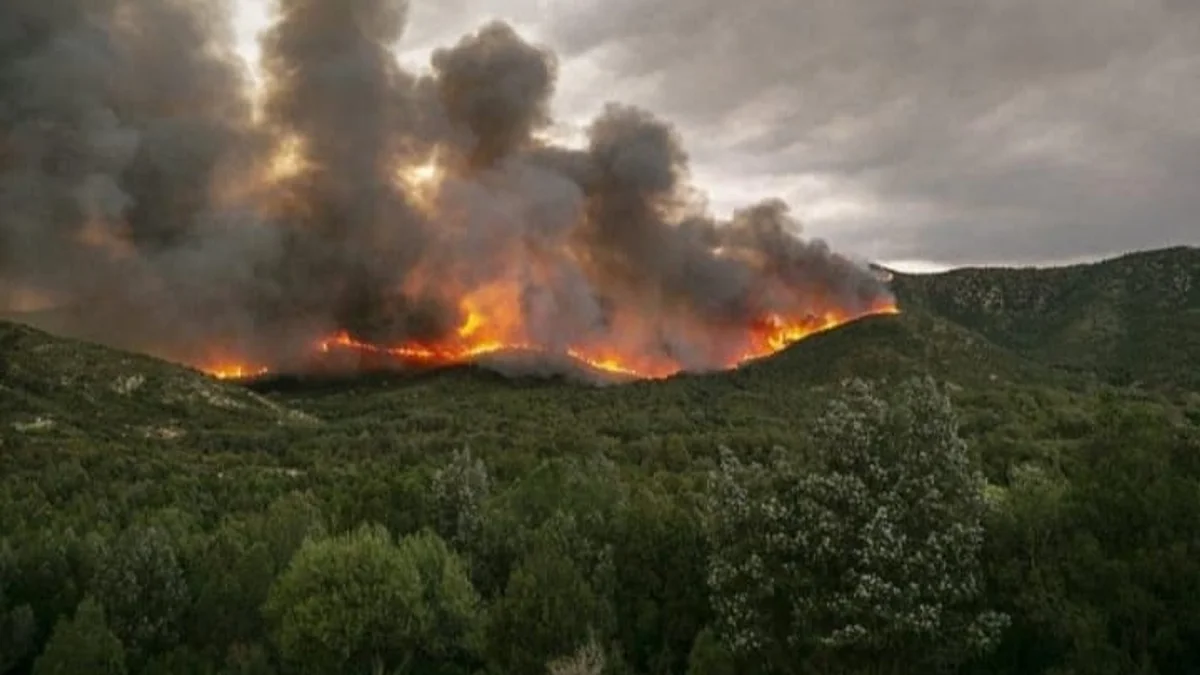
Countries in the Maghreb region, particularly Morocco, Algeria and Tunisia, are experiencing a severe heatwave that has contributed to the outbreak and spread of fires that have consumed vast areas of forests and agricultural land, causing environmental and agricultural damage.
On the Algerian front, civil protection teams are making efforts to control 14 fire hotspots covering vegetation in 12 provinces, after extinguishing 89 fires thanks to air and ground support.
Protection teams in Tunisia on Wednesday extinguished a fire that lasted more than 16 hours, and are monitoring the site on the ground to prevent the fires from reigniting, amid the heatwave and winds.
In the Kingdom of Morocco, official data reported that the tally of forest fires since the beginning of the year until July 20 reached 310 fires, consuming a total area of 1850 hectares.
An environmental expert, in an interview with Anadolu, called on affected countries to implement a package of urgent measures, including enhancing early warning, climate-smart agriculture, and accelerating the transition to renewable energy.
** Heat and drought
For weeks, the Maghreb countries have been experiencing a severe heatwave that has pushed their authorities to repeatedly call on citizens to be cautious.
The authorities warned that record temperatures, drought, and hot winds create favorable conditions for the outbreak of rapidly spreading fires.
Moroccan environmental expert Mustafa Benramel predicted, in an interview with Anadolu, an increase in long drought waves in Maghreb and North African countries due to rising temperatures and declining water resources.
He added that this will negatively and directly affect agriculture and threaten food security.
He continued that some areas will, in contrast, witness heavy rains causing floods at the Maghreb level, due to atmospheric circulation disturbances in the Mediterranean basin.
"The risk of forest fires is also expected to increase due to extreme heat and low humidity," according to Benramel.
** Alternative measures
The Moroccan expert considered that climate fluctuations have become less predictable and more violent.
He saw that this necessitates investing in early warning systems and adopting policies suited to these fluctuations, because the region is one of the most vulnerable in the world to climate change.
Benramel called for developing weather monitoring stations and expanding the use of climate models that allow rapid prediction of forest fires and floods.
He also highlighted the need to invest in climate-resilient infrastructure, such as hill dams and river protection, as well as strengthening cities' ability to withstand climate phenomena.
He also called for adopting alternative measures to mitigate the repercussions of climate fluctuations, which cause rising temperatures and increased fire frequency.
Benramel considered that supporting climate-smart agriculture has become a necessity, through adopting drought-resistant varieties, along with rationalizing water use and adopting drip irrigation.
He stressed the need to protect forests through intensifying afforestation operations.
He pointed to the need to accelerate the energy transition by expanding the use of alternative and renewable energy sources, encouraging electric transport, and reducing dependence on fossil fuels, thus contributing to reducing emissions.
He also noted the importance of enhancing regional and international cooperation to mitigate the repercussions of climate fluctuations, considering that exchanging experiences and technology transfer will reflect positively on countries.
He stressed that overcoming the repercussions of climate fluctuations requires prevention, long-term planning, and collective action.
** Algeria
On July 22, Algerian authorities announced the evacuation of residents of areas threatened by forest fires in the town of Seraidi in Annaba province in the east of the country, and evacuated the area's hospital.
The General Directorate of Civil Protection said in a statement that forest fires in the town spread rapidly due to record high temperatures and strong winds.
The Directorate explained that ground firefighting teams, supported by aerial means, continue firefighting operations without interruption, in coordination with the National People's Army and various security agencies.
As of July 21, Algeria recorded 170 fires, of which 104 were extinguished, while operations to extinguish 66 fires in 19 provinces continue.
The fires coincide with record temperatures in Algeria for more than two weeks, reaching 49 degrees Celsius in coastal cities overlooking the Mediterranean, accompanied by hot and strong southern winds locally known as 'Al-Shahili'.
According to civil defense data, the total fires recorded from May 1 to July 20 reached 3719 fires, compared to 1501 during the same period in 2025, an increase of nearly 150 percent.
The fires consumed more than 1666 hectares of vegetation cover in the mentioned period, compared to 467 hectares during the same period last year, according to data from the General Directorate of Forests.
** Tunisia
On Wednesday, Tunisian authorities announced control of a fire that broke out in forests and whose extinguishing efforts lasted more than 16 hours.
The governorate of Bizerte said in a statement that rescue teams extinguished fires that broke out in coastal forests between the towns of Rafraf and Ghar al-Milh in Bizerte governorate in northern Tunisia.
It added that firefighting efforts lasted more than 16 hours, and that field monitoring operations will continue at the fire site to prevent its recurrence, especially with the continuation of the heatwave and winds.
The governorate clarified that the fire did not result in human casualties, as fire trucks were deployed around the houses adjacent to the forest, and residents were called to leave, while 8 women and 6 infants were evacuated from the area.
Tunisia is experiencing a heatwave during which temperatures exceeded 45 degrees Celsius in most areas.
According to the Tunisian Weather and Climate Observatory (non-governmental), the city of Kairouan on Tuesday was the second hottest city in the world, recording 49.6 degrees Celsius, after the Saudi city of Yanbu which recorded 50 degrees Celsius.
On July 15, Tunisian firefighting teams controlled a fire that broke out in areas of Jendouba province (northwest), after it destroyed more than 30 hectares of forests.
The fire also caused damage to homes and animal deaths.
The previous day, the head of the Operations Management Department at the National Office of Civil Protection, Colonel Mohsen Bougzala, announced that civil protection units had fully controlled forest fires that broke out in 4 provinces.
Bougzala explained in a radio statement that the control came thanks to continuous field interventions, coinciding with the heatwave the country is experiencing.
He added that the fires broke out on July 11 in Jebel al-Shahma in Zaghouan province (center), along with fires in the provinces of Siliana, Beja, and Kef (northwest).
He reported that preliminary estimates indicate that more than 400 hectares were damaged by the Jebel al-Shahma fire.
Original source: Anadolu Agency



Comments (0)
Be the first to comment.