How did camels fail to adapt to rising temperatures in Africa?
Herdsmen and experts tell the BBC how Africa's camels are suffering from extreme heat.
How did camels fail to adapt to rising temperatures in Africa?
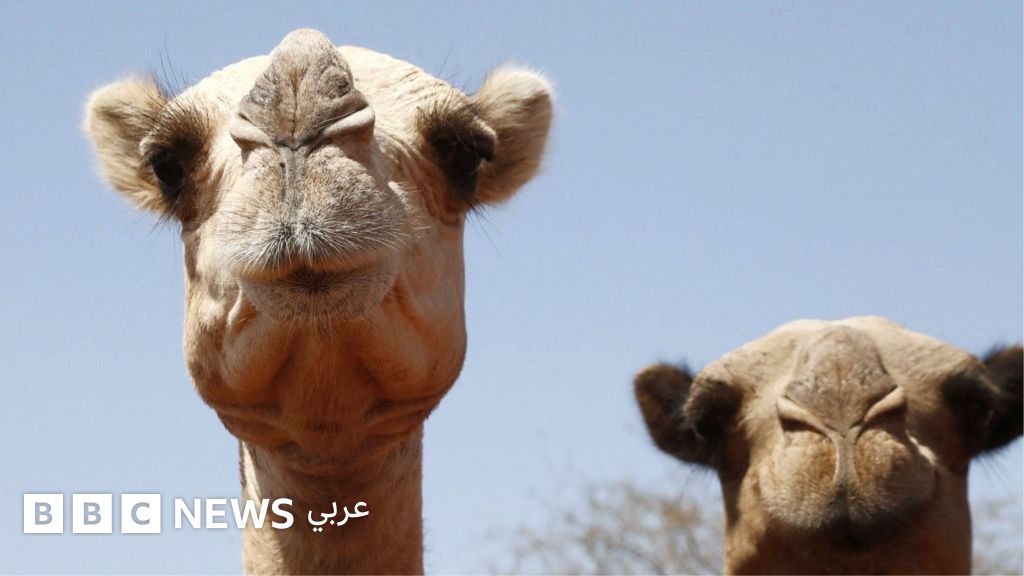
Image caption, Herders in the Horn of Africa and North Africa have turned to camel breeding over the years, due to their reputation for high endurance.
Article Information
Author, Navin Singh KhadkaRole, Environment correspondent
Published 2 hours ago
Reading time: 7 minutes
Despite camels being renowned for their unique ability to adapt to harsh desert environments, rising temperatures in Africa are now posing a real threat to their well-being.
These warnings come amid growing international concern over the impact of climate change on ecosystems and the livelihoods of pastoral communities in the region.
The Afar region in northeastern Ethiopia is one of the driest and hottest places on Earth, where nomads often travel with camel caravans carrying salt.
Ali Omar, a camel herder from the town of Samara in the Afar region, told the BBC: "I can see my camels suffering from the extreme heat."
Competition to choose the 'most beautiful camels' in Qatar coinciding with the World Cup
Why have camels become a national treasure in Somaliland?
The 40-year-old man, who owns about 500 camels, adds: "Blisters appear on their feet, their eyes water, the hot sand burns their skin and damages their wool when they kneel on the ground."
He said: "In the past month I have lost eight young camels due to the extreme heat, which has become much harsher and more difficult."
He added: "Even the wind, which used to bring cool air, now carries heat," noting that he has observed these significant temperature changes in recent years.
These changes are not only observed by herders but are also documented in scientific studies and reports by animal protection experts, confirming the spread of drought, stress, and diseases due to the heat.
Rising temperatures also indirectly affect camels by causing severe loss of water and vegetation, as well as a reduction in shaded areas.
Skip the most read and continue reading
What is the story of the Egyptian child 'Makari Younan' who was excluded because of his religion?
Trump considers resuming major combat operations in Iran, and Arab countries describe Tehran's attacks as 'blatant aggression'
OpenAI's artificial intelligence systems go out of control and launch an 'unprecedented' cyber attack
The nuclear deal between Trump and Saudi Arabia will strengthen Iran's position - The Telegraph
Image caption, Camels carry slabs of salt cut from mineral-rich lakes in the Danakil Depression, where temperatures can reach 50°C
North Africa and the Horn of Africa are home to about 80 percent of the world's largest population of one-humped camels.
Over the years, farmers and livestock breeders in these areas have turned to these animals because of their ability to withstand extreme heat and severe drought.
But a study based on the views of camel herders in southern Ethiopia, published in 2025, showed that rising temperatures and climate variability had a detrimental effect on the health of camel herds.
It stated: "Participants reported that climate change and its variability have affected the health, productivity, and reproductive performance of camels."
In neighboring Somalia, the situation appears more serious, with research published last June showing that drought-related camel deaths represent a widespread crisis, affecting nearly 46 percent of camel-owning households.
The study covered nearly six thousand pastoral households and showed that deaths were concentrated in northern regions, where the Sool region recorded a 'shocking death rate of about 73 percent'.
Video caption, Two of Ali Omar's herders in Ethiopia's Afar region bathe a one-month-old young camel to cool it down
Skip the podcast and continue reading
Worth paying attention
In-depth explanation of the most important events and topics, to help you understand the key changes around you and their impact on your life
Episodes
Podcast End
Experts say extreme heat is the main cause of the drought in the region, although other factors such as lack of veterinary services and poor livestock management exacerbate the situation.
An analysis by atmospheric scientists found that high temperatures in the region were behind the drought that occurred during 2021 and 2022, as extreme heat turns water in soil and water bodies into vapor, and plants release their water into the air as vapor.
Camels: Ancestral heritage cherished by descendants in the UAE
Veterinarians say they are treating more sick camels and witnessing more deaths due to extreme heat and drought.
Hassan Noya Guyo, a veterinary officer in Marsabit County, northeastern Kenya, bordering Ethiopia, told the BBC: "We are seeing a notable increase in cases of hyperthermia in camels, exposing them to many diseases and infections."
He added: "Over the past two years, we have seen an increase of more than 15 percent in camel deaths in our county due to extreme heat."
Another study conducted in the Horn of Africa region (including Djibouti, Ethiopia, Eritrea, and Somalia) revealed that the spread of diseases among camels and the decline in milk production are due to the effects of climate change, including heat stress.
Image caption, Hassan Noya Guyo, a veterinarian in northeastern Kenya, says the past two years have seen a 15 percent increase in camel deaths in the area he oversees
The same scenario is repeated in North Africa, where a study conducted in Algeria and published this year showed a significant increase in camel deaths during summer heatwaves.
It stated: "Time series analysis reveals important seasonal patterns of mortality, confirming the need for targeted interventions during high-risk periods, such as peak summer months, including strategic water provision, supplementary feeding, and enhanced disease surveillance."
'Camel Beauty Contest' in Saudi Arabia: 40 camels disqualified due to Botox
The World Meteorological Organization (WMO) says extreme heat events have become common in many North African countries, with heatwaves showing a clear upward trend since 1981.
It added that a number of countries in the region and the Middle East recorded temperatures exceeding 50°C in 2024.
The WMO's State of the Climate in Africa 2025 report indicated that North Africa recorded the fastest rate of temperature rise among the six subregions of the continent, at 0.43°C per decade, during the period between 1991 and 2025.
Experts explain that camels can tolerate heat efficiently up to about 40°C, thanks to their ability to allow their body temperature to fluctuate by a few degrees throughout the day to adapt to external temperatures.
Original source: BBC Arabic






Comments (0)
Be the first to comment.