Rip Currents Return to the Forefront in Egypt... Warnings for Vacationers of Drowning Risks
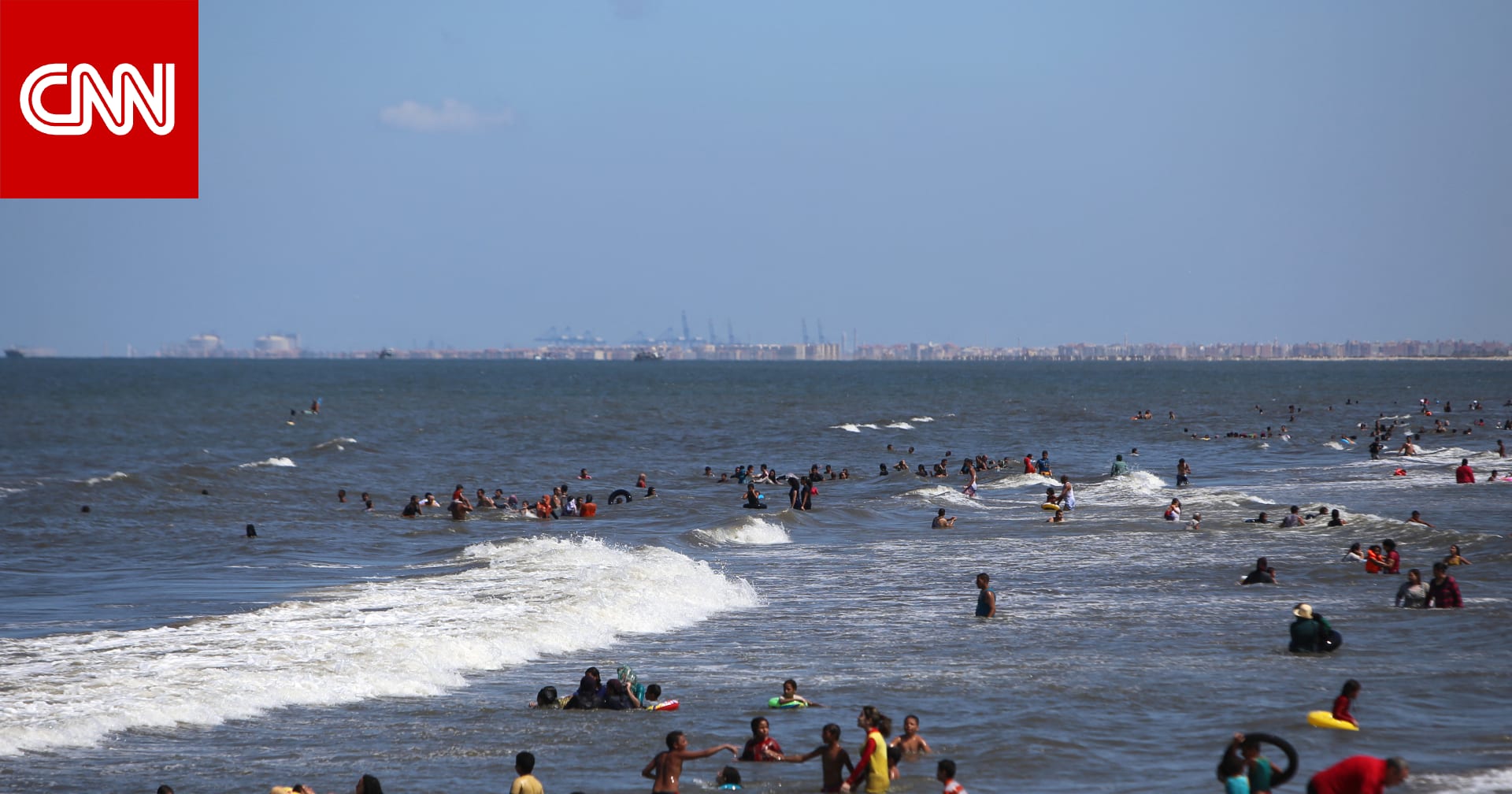
Credit: MOHAMED EL-SHAHED/AFP via Getty Images
(CNN) -- The Egyptian General Authority of Meteorology warned about the dangers of rip currents, a marine phenomenon that is one of the leading causes of drowning on sandy beaches, as demand for coastal areas increases during the summer season, urging vacationers to follow safety instructions and not to ignore official warnings.
The authority said that rip currents are strong water currents moving from the shore towards the sea, and can reach speeds of about 2.5 meters per second, a speed that exceeds the ability of many swimmers to resist, making them one of the most dangerous marine phenomena that vacationers may face, even on days when the weather seems stable.
It said that these currents form when the water of incoming waves returns to the sea through narrow channels, creating a strong current that can drag swimmers into deeper water. They can be identified by an area that appears calmer, darker in color, or mixed with sand compared to the surrounding water, with foam accumulating on its surface, despite the presence of waves on either side.
The authority advised not to try to swim directly towards the shore when caught in a rip current, as that exhausts the swimmer's energy. Instead, the correct action is to swim parallel to the shore until leaving the current's path, then return with the waves to land.
As part of precautionary measures, the Matrouh Governorate warned against swimming on beaches facing the open sea due to high waves and active rip currents, stressing that these conditions could pose a danger to citizens and increase the risk of drowning. It decided to restrict swimming to beaches located within safe bays and lakes, while intensifying monitoring and raising the state of readiness.
The governorate stressed to beach officials the need to prevent vacationers from entering unsafe areas and to adhere to issued instructions to preserve lives, while allowing continued swimming on beaches classified as safe according to assessments by relevant authorities.
The head of the National Institute of Oceanography and Fisheries, Abeer Ahmed Mounir, said that the safety of vacationers begins with full compliance with instructions from responsible authorities and lifeguards, and not entering the sea when red flags are raised or official warnings are issued, explaining that these warnings are based on continuous assessment of sea conditions and weather, and ignoring them may endanger lives.
Mounir added, in special statements to CNN in Arabic, that the greatest danger to swimmers is related to high waves and rough sea conditions, while the receding of seawater alone is not dangerous if marine conditions are stable, stressing the importance of following posted instructions at each beach and not relying on personal judgment when deciding to enter the water.
Mounir explained that rip currents and seawater receding are natural phenomena associated with changes in atmospheric pressure and high temperatures, noting that these phenomena have become more frequent in recent years due to climate change, but they do not necessarily indicate abnormal or exceptional developments on Egyptian beaches.
She added that the relevant authorities continuously monitor these changes through specialized devices for monitoring sea levels and various marine phenomena, allowing them to issue necessary alerts when any indicators requiring warning are detected, noting that continuous scientific monitoring is an important element in supporting beach safety measures, in addition to raising awareness among vacationers on how to deal with marine hazards.
Original source: CNN Arabic




Comments (0)
Be the first to comment.