Severe heatwave and recurrent power cuts spark Tunisians' anger
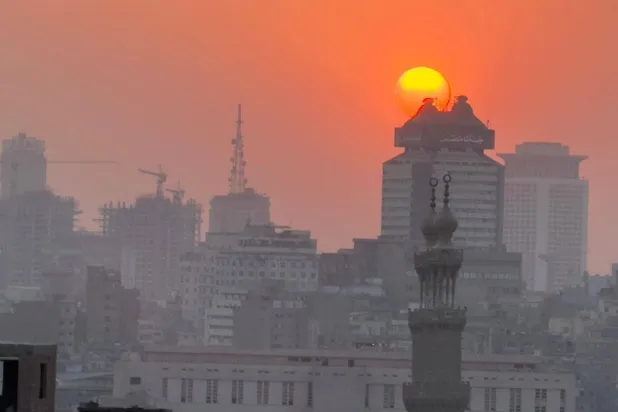
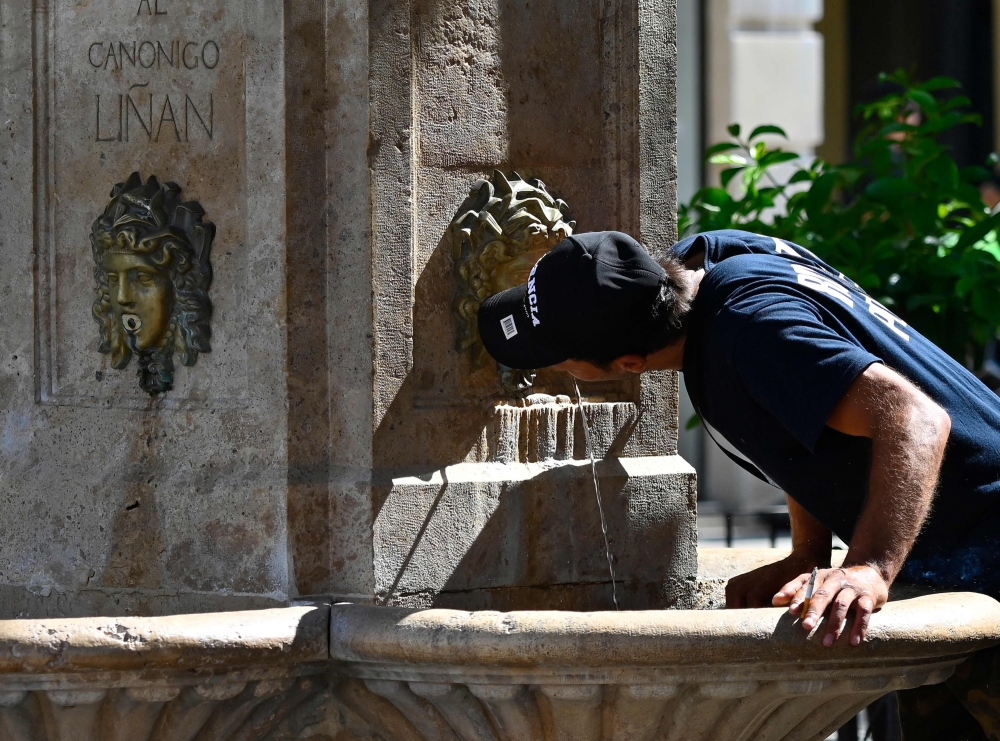
A severe heatwave is hitting Tunisia these days, with temperatures reaching 50°C, while residents are experiencing recurrent power cuts, fueling growing anger and concern in homes and among business owners. For about a week, the Tunisian Company of Electricity and Gas (state-owned) has been publishing daily a 'power cut notice... heatwave,' listing a long list of areas affected by the cuts, aiming to reduce pressure on a network already suffering from high energy demand. This adopted solution is called 'rolling blackouts,' a term that has become familiar to Tunisians.
The Tunisian Company of Electricity and Gas publishes a 'power cut notice' daily (AFP)
* Excessive electricity consumption
According to statements by the company's CEO, Faisal Trifia, to local media, electricity demand has risen significantly under the effect of 'excessive use of air conditioning' in homes. Another government official from the company told state television that national consumption may have reached a record 6,000 megawatts last Tuesday, after an initial peak of 5,600 megawatts the previous week.
'Summer cuts,' which include electricity and drinking water supplies, have become familiar to Tunisians in recent years, especially in inland areas. But this summer they have been exceptional, affecting most regions from north to south, with power cuts lasting for hours, according to testimonies posted on social media.
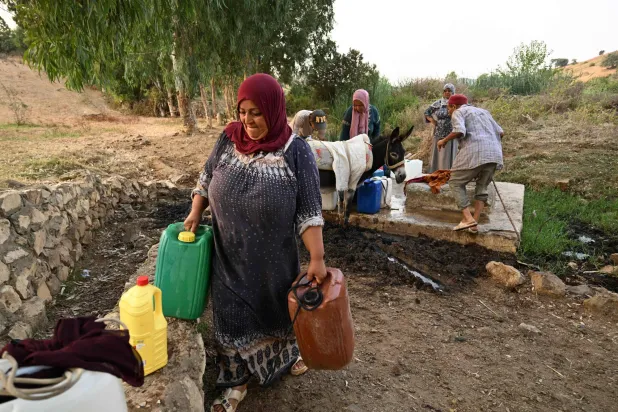
Tunisian women forced to fetch water from distant places due to continuous outages (AFP)
A worker at a pastry shop in Tunisia told AFP: 'It seems the gates of hell have opened,' as the displayed cakes are almost melting from the heat and the failure of cooling. On the street, as on social media, the topic of cuts dominates much of the discussion among citizens. Some avoid using elevators for fear of getting stuck. On Saturday, Tunisian President Kais Saied described the frequency of power cuts as 'abnormal,' stressing the need to 'take responsibility and find solutions.'
* 'Aging grid'
The Tunisian Company of Electricity and Gas stresses that rolling blackouts prevent a total blackout that could plunge the country into darkness. In this regard, Hala Tlili, an economics professor at the University of Tunis El Manar and researcher in renewable energy, believes that Tunisia 'faces record demand for electricity during the tourist season, against a grid that cannot sufficiently absorb it.' She explains to AFP that 'consumption is increasing much faster than production.' Note that Tunisia relies heavily on imported natural gas to generate electricity, while domestic production declines, and imports burden the budget of the Tunisian Company of Electricity and Gas.
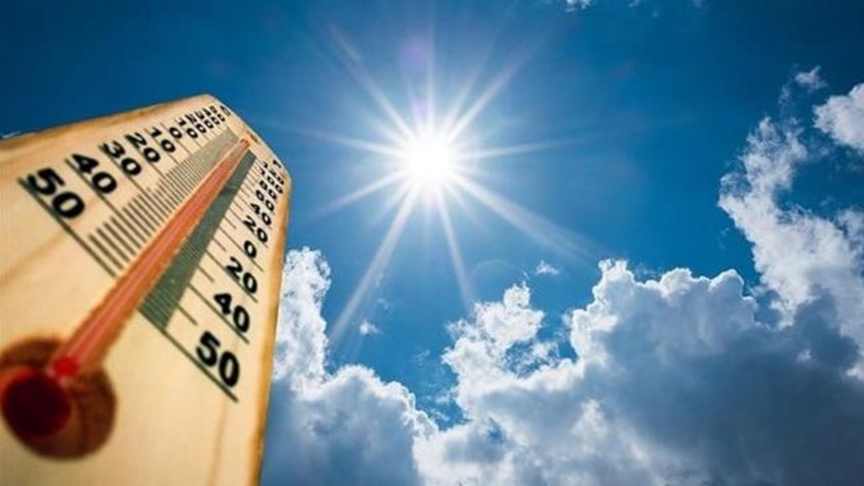
A severe heatwave hitting Tunisia these days, with temperatures reaching 50°C (AFP)
Tlili also points to an aging grid and a lack of maintenance. This situation is likely to worsen with heatwaves, which have become more severe and frequent in recent years.
Power cuts have economic repercussions. The Tunisian Confederation of Citizen Enterprises expressed regret over the lack of precision in announcing cut times; 'which prevents enterprises from scheduling their activities and taking preventive measures. For example, in a factory in the southern suburbs of Tunis, work almost stopped for two days,' according to an employee who requested anonymity. Meanwhile, shopkeepers and butchers are raising their voices for fear of spoiling their stocks.
* Energy storage
Tlili believes it is necessary to accelerate the development of renewable energy sources, noting that Tunisia 'has very strong potential in solar energy, and promising potential in wind energy.' But the 'real challenge remains storage,' especially using batteries to reinject surplus solar energy produced during the day into the grid at night. Meanwhile, many Tunisians express their dissatisfaction with these difficult climatic conditions.
A truck delivering drinking water to residents in remote areas (AFP)
Mariam, a pseudonym for a woman living in a popular neighborhood in the northern suburbs of Tunis, says: 'I sleep on the floor to feel some coolness,' while advising her son to sleep clutching a bottle of ice water wrapped in a towel.
Concern is growing for prisoners, as Tunisian prisons are not equipped for these weather conditions. On Tuesday, renowned cardiologist Dr. Zakher El Ahib, on his Facebook page, called on President Kais Saied to issue a pardon 'for climatic reasons' for prisoners who have not committed murder or rape, and who suffer from chronic diseases and whose release would not pose a danger to society.
Original source: Asharq Al-Awsat

Comments (0)
Be the first to comment.