After Restoration, Egypt Opens Historic Dome from Mamluk Era
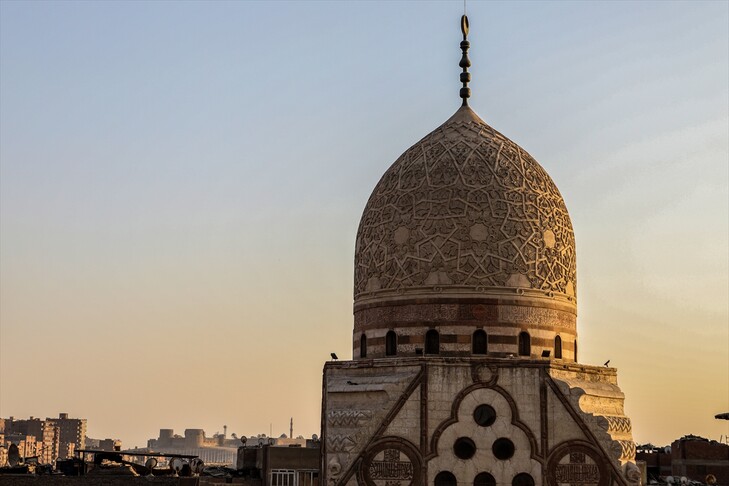
Restoration of the dome of Sultan Al-Ashraf Qaytbay's mausoleum took years
Cairo / Anadolu
Egyptian Tourism Minister Sherif Fathy on Monday evening inaugurated the historic dome of the mausoleum of Mamluk Sultan Al-Ashraf Qaytbay in the al-Gamaliya district of the capital Cairo, after completing a restoration project that lasted years.
The dome is considered one of the most splendid examples of Mamluk architecture in Egypt, distinguished by its delicate stone carvings, precise architectural proportions, and artistic details that reflect the peak of Islamic arts in the 15th century CE, making it one of the most prominent landmarks of historic Cairo.
Egyptian authorities closed the dome for several years after it was subjected to theft in 2011, before beginning in 2015 a comprehensive restoration plan supervised by the Supreme Council of Antiquities in cooperation with the US Embassy in Cairo, according to Egyptian media.
Abu al-Nasr Qaytbay is considered one of the most prominent sultans of the Circassian Mamluks, ruling Egypt between 1468 and 1496.
He was known for extensive urban development, including the construction and renovation of dozens of religious, civil, and military facilities in Egypt and abroad, and is regarded as one of the greatest patrons of Islamic architecture in the Mamluk era.
Qaytbay ordered the construction of his famous architectural complex between 1472 and 1474, comprising a mosque, a school, his mausoleum dome, a public fountain (sabil), a Quranic school (kuttab), a lodging (rab'), and a watering trough for animals, making it one of the most important surviving architectural complexes from the Mamluk period.
The restoration work aimed to preserve the architectural and decorative elements of the dome using the latest scientific methods in monument maintenance, addressing the damage the building sustained over time, ensuring its sustainability and preserving its historical and artistic value for future generations.
According to Egyptian media, the opening of the dome after its restoration adds a new stop to the visitor routes in historic Cairo, and is expected to attract more visitors and those interested in Islamic heritage, especially as the Egyptian Ministry of Tourism moves to develop services in archaeological areas and improve the visitor experience.
Original source: Anadolu Agency





Comments (0)
Be the first to comment.