The Late Emir Hamad bin Khalifa Al Thani: A Historic Journey That Led Qatar's Renaissance
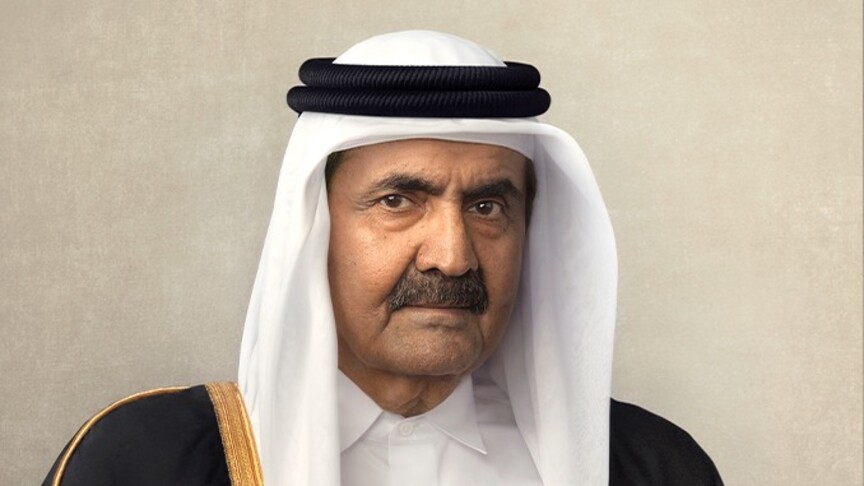
- The Amiri Diwan announced on Sunday morning the death of the Father Emir at the age of 74
Istanbul / Anadolu
- He assumed power in 1995 and in 2013 handed over to his son and heir apparent, Sheikh Tamim bin Hamad
- Under his rule, Qatar witnessed a broad economic, social, and cultural renaissance
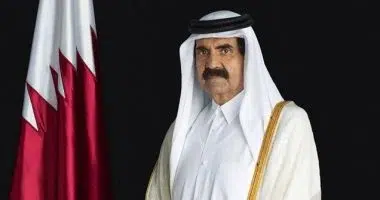
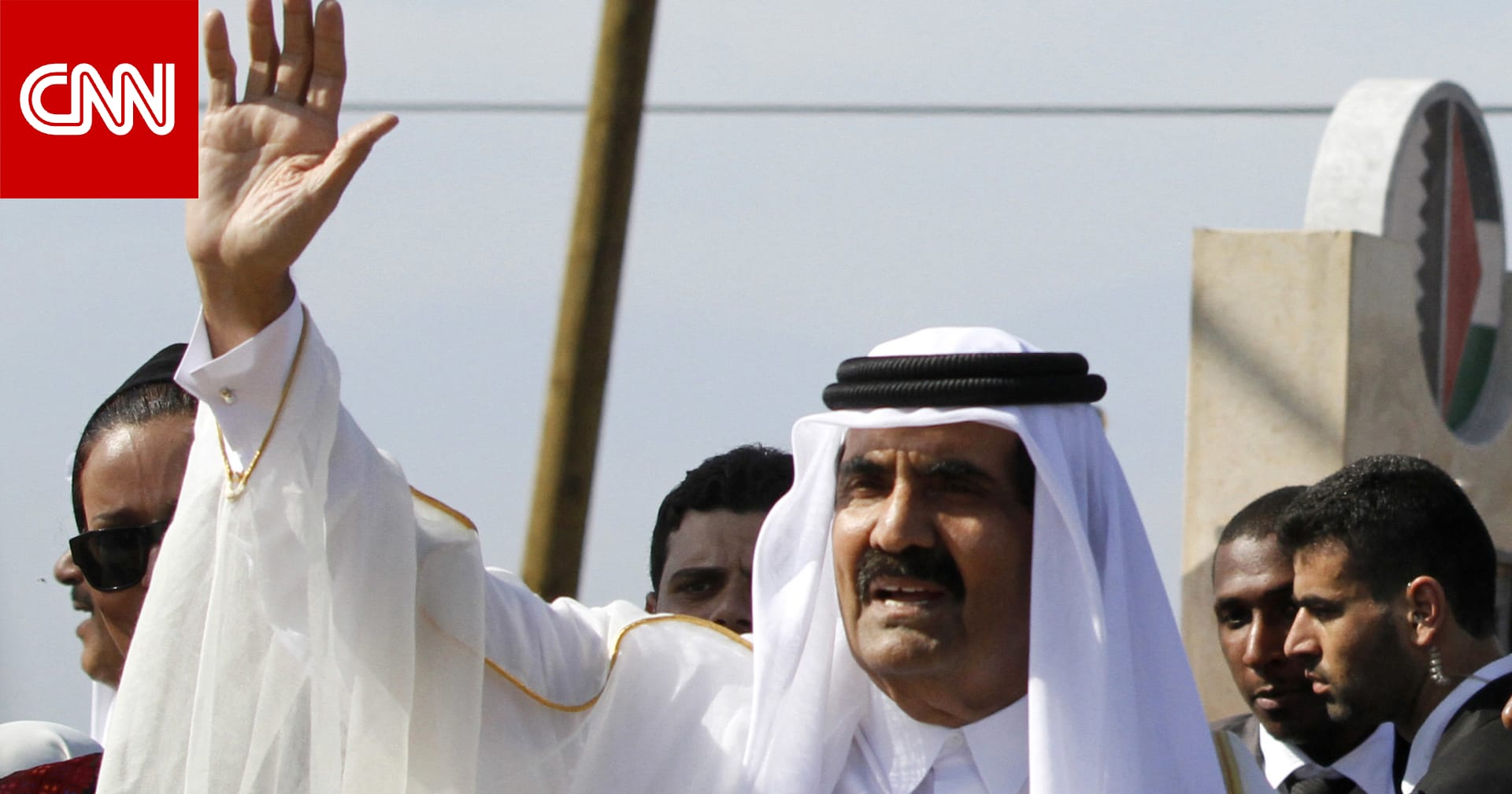
The former Emir of Qatar, Sheikh Hamad bin Khalifa Al Thani, passed away on Sunday at the age of 74, after an 18-year leadership journey during which, according to official information, Qatar witnessed the launch of its modern renaissance, which is being continued by his son, the current Emir, Sheikh Tamim bin Hamad Al Thani.
The Amiri Diwan said in a statement: "With hearts believing in God's decree and destiny, the Amiri Diwan mourns the great loss of the nation, may God forgive him, the Father Emir Sheikh Hamad bin Khalifa Al Thani, who passed away this morning on the 27th of Muharram 1448 AH, corresponding to July 12, 2026, at the age of 74."
"An Unprecedented Renaissance"
According to information from the Amiri Diwan, Sheikh Hamad bin Khalifa Al Thani is considered one of the historical leaders of Qatar and the builder of its modern renaissance, as the country achieved a high standing regionally and internationally under his rule, and a broad economic, social, and cultural renaissance was launched.
During that period, the GDP increased more than 24 times, per capita GDP rose about six times, and the added value of the hydrocarbon sector jumped from 11 billion Qatari riyals to 403 billion riyals.
Under his rule, the permanent constitution of the country was issued, and the 'Qatar National Vision 2030' was established, aiming to transform into a knowledge-based economy and build an advanced state that achieves sustainable development and ensures a decent life for its people generation after generation, according to official information.
Sheikh Hamad bin Khalifa Al Thani was born in January 1952 in Doha, where he grew up and studied, then joined the Royal Military Academy Sandhurst in Britain, graduating in 1971.
After returning to the country, he joined the armed forces and rose through the ranks to become a Major General, and Sheikh Hamad bin Khalifa Al Thani had a 'fundamental role in developing the Qatari armed forces in terms of personnel and equipment,' according to the same information.
On May 31, 1977, he was sworn in as heir apparent and appointed Minister of Defense, then on May 10, 1989, he became Chairman of the Supreme Council for Planning, responsible for formulating the economic and social policies of the state.
His Assuming Power
Sheikh Hamad bin Khalifa Al Thani assumed power on June 27, 1995, and, according to the Amiri Diwan, began implementing comprehensive reform and development plans that brought about a qualitative leap in various sectors.
Under his rule, the country witnessed a wide renaissance encompassing education, health, sports, culture, media, and infrastructure, along with a major boom in the economy and energy.
With the start of liquefied natural gas exports from the North Field in 1996, state revenues rose rapidly, making Qatar the world's largest exporter of LNG in 2006, before its production capacity reached 77 million tons per year in 2010.
In October 2001, the Supreme Council for Economic Affairs and Investment was established, and Sheikh Hamad bin Khalifa Al Thani assumed its chairmanship to oversee economic, energy, and investment affairs in general, in order to diversify domestic and foreign investments with the aim of developing Qatar's financial reserves and diversifying income sources.
One of the first decisions he made after assuming power was the establishment of 'Qatar Foundation for Education, Science and Community Development' in August 1995, to support the scientific and cultural renaissance in the country.
Under Sheikh Hamad bin Khalifa Al Thani, 'censorship of the local press was lifted in October 1995, and the Ministry of Information was abolished in 1998, opening broad horizons for freedom of opinion and expression and media prosperity. Al Jazeera channel was also established and launched in 1996,' according to the same information.
A 'Historic' Leadership
In 1996, Qatar, under the directives of Sheikh Hamad bin Khalifa Al Thani, began 'implementing democratic steps, including holding the first elections for the Qatar Chamber of Commerce and Industry in the same year, then the first municipal council elections were held in March 1999, in which women gained the right to run and vote for the first time in Qatar's history.'
On June 8, 2004, the first permanent constitution of Qatar was issued after a historic popular referendum on April 29, 2003, achieving the noble goals of completing the foundations of democratic governance, by adopting a permanent constitution that establishes the basic pillars of society, embodies popular participation in decision-making, and guarantees the rights and freedoms of the nation's citizens, according to information from the Amiri Diwan.
Under the new constitution, the people became the source of authority, and the system of government became based on the separation of powers, while remaining cooperative and complementary.
Under Sheikh Hamad's rule, the country witnessed 'broad economic, civilizational, and cultural openness, and became a destination for political, economic, cultural, and scientific conferences, and achieved a high regional and international standing, with Qatari diplomacy playing a pioneering role in resolving conflicts and containing crises in various regions of the world.'
Among the results of the ambitious and unconventional investments pursued by the country under Sheikh Hamad's rule was that 'Qatar became the first Arab and Islamic country to win the bid to host the 2022 FIFA World Cup, which was announced in December 2010,' according to the Amiri Diwan.
Sheikh Hamad bin Khalifa Al Thani received numerous medals from Arab and foreign countries, in recognition of his efforts to strengthen bilateral relations and develop areas of cooperation between states and peoples.
On June 25, 2013, Sheikh Hamad bin Khalifa Al Thani announced handing over power to his heir apparent, Sheikh Tamim bin Hamad Al Thani, the current Emir of Qatar.
With the passing of Sheikh Hamad bin Khalifa Al Thani, Qatar loses one of its historical leaders, whose name is associated with the major transformation phase in the country's history, the effects of which continue in the development path that the state pursues under the leadership of Sheikh Tamim.
Original source: Anadolu Agency
Comments (0)
Be the first to comment.