America expands strikes on Iran... and 'eye for an eye' principle raises war ceiling
The United States expanded its strikes inside Iran for the 12th consecutive night, while the ceiling of confrontation rose after both sides announced adoption of the 'eye for an eye' principle, and they exchanged threats to target nuclear facilities and energy infrastructure in the region.
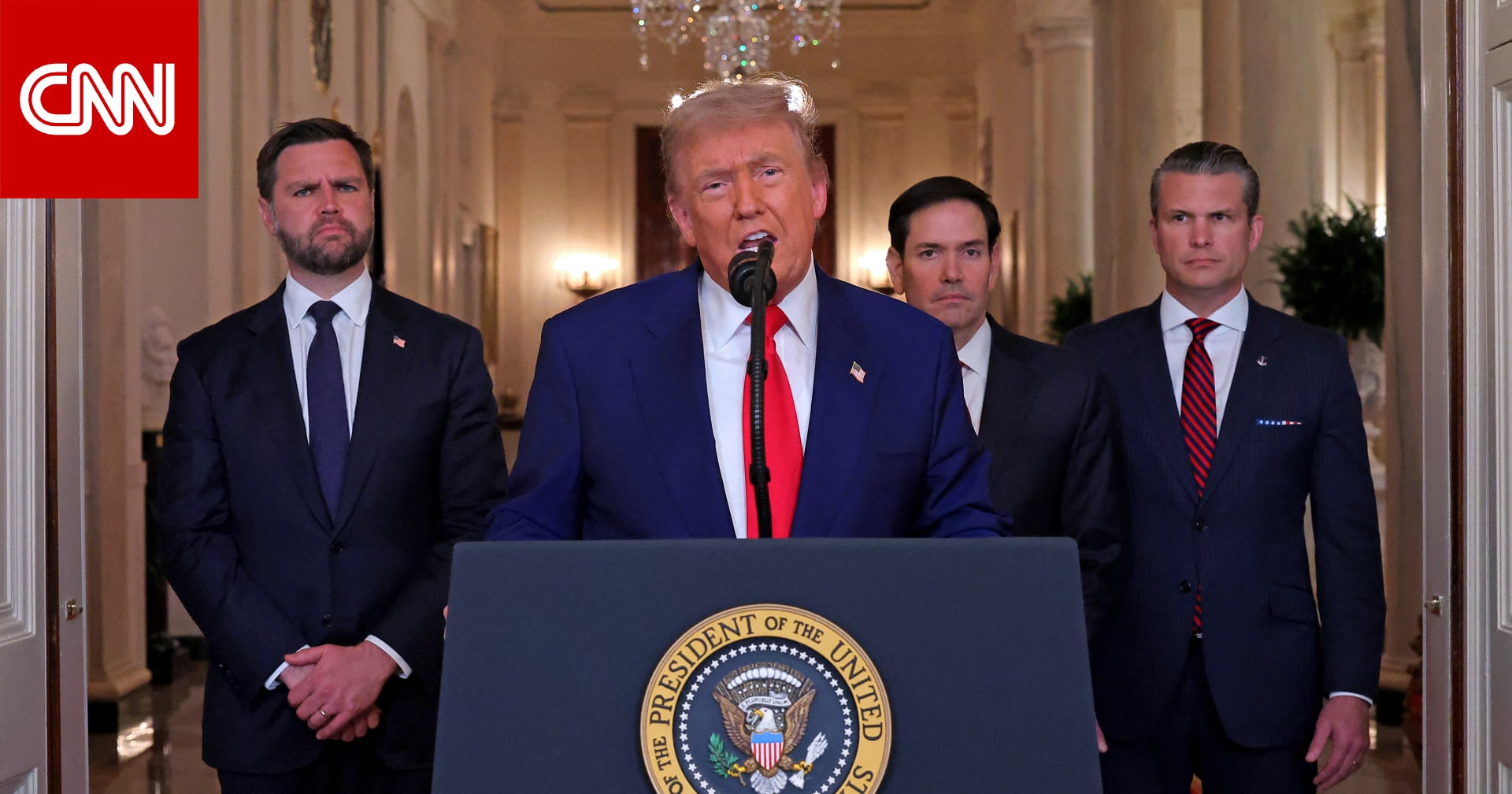
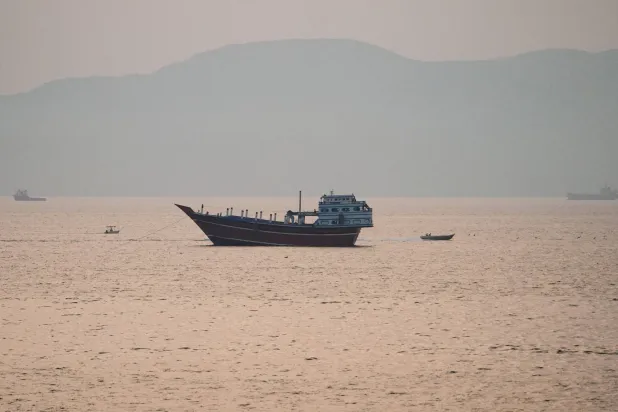
US President Donald Trump on Thursday threatened Iran and the Houthis in Yemen with 'major military punishment' after missile and drone attacks targeted oil tankers in the Red Sea.
Trump said in a post on his platform 'Truth Social' that the United States would hold Iran responsible, considering the Houthis as 'a subsidiary and/or proxies' of it, vowing to impose 'major military punishment' on Tehran and the group if they launched further attacks.
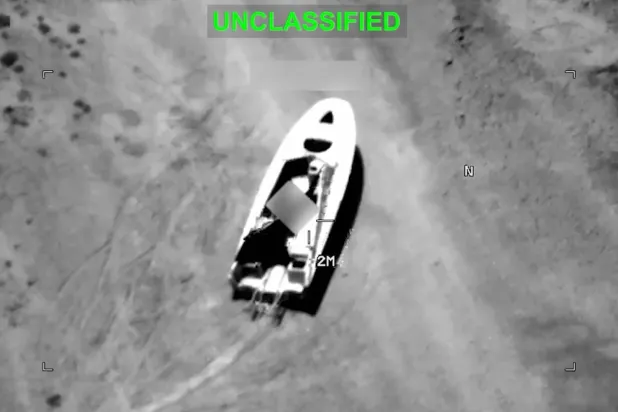
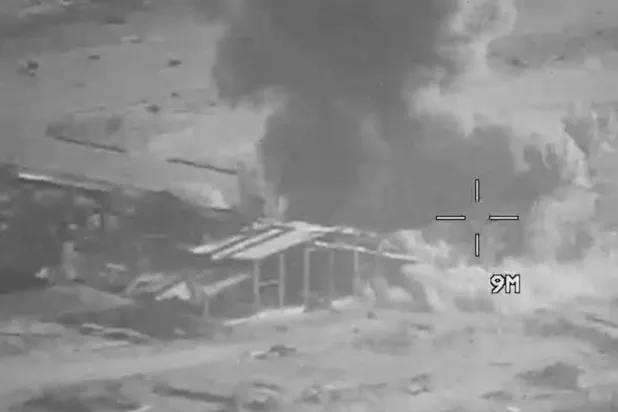
Trump's threat came as US forces continued to expand their strikes inside Iran, targeting military sites and infrastructure linked to missiles, drones, and coastal surveillance.
Iranian state media reported that US strikes overnight targeted sites near the cities of Ahvaz, Khalafiya (Rameshir), and Salehiyeh (Andimeshk) in western Iran, while two people were killed in a missile strike that hit a military base near the Shalamcheh border crossing with Iraq. The strikes also targeted sites in Bushehr province and Lark Island near the Strait of Hormuz.
US Central Command (CENTCOM) said after operations lasting five hours that its forces struck naval capabilities and missile and drone storage facilities, as well as coastal surveillance sites and air defense systems. It added that the strikes aimed to reduce Iran's ability to target civilian sailors and commercial ships in regional waters.
CENTCOM stated that US forces targeted dozens of Iranian military sites on land during July, coinciding with the resumption of the naval blockade on Iran. It said it diverted nine commercial ships and disabled another, as part of preventing ships from entering or leaving Iranian ports.
It added that more than 50,000 US military personnel are deployed across the Middle East and are on high alert.
The United States did not disclose details of the targets hit at each site, nor could the Iranian accounts of the scale of strikes and losses be independently verified.
An Iranian Health Ministry official said the US attacks have since the beginning of July killed 53 civilians and wounded 592 others, while the United States insists it does not target civilians.
In an indication of possible expansion of operations, the United States used a B-1 bomber to strike targets inside Iran for the first time since the resumption of fighting, according to Axios.
Despite the widening scope of US strikes, there were no signs of a change in Tehran's position on the Strait of Hormuz, as Iranian forces continue to attack US bases and facilities in the region.
Some US Defense Department officials told the site that Iranian military capabilities around the strait have become 'almost zero,' while other officials believed Iran remains capable of attacking ships in the region.
In response, the Revolutionary Guards announced on Thursday that they had attacked and 'destroyed' US military equipment in Jordan, including a radar of the THAAD missile defense system, a Patriot system, a C-RAM radar, and a helicopter hangar.
The Revolutionary Guards did not provide evidence to prove the extent of damage they said was inflicted on the targeted equipment, and its statement could not be independently verified.
Threat to oil and energy
The continuation of strikes coincided with a sharp escalation in mutual threats regarding infrastructure and navigation in the Strait of Hormuz, which has become central to the confrontation between Washington and Tehran.
Trump vowed to destroy a bridge or a power plant in Iran for every new attack on a ship in the strait, whether carried out by missile, rocket, drone, or any other weapon.
The Iranian Joint Chiefs of Staff, known as 'Khatam al-Anbiya Headquarters,' responded by warning that implementing the US threat would lead to targeting oil, gas, and electricity facilities and economic infrastructure in the region, and prevent the export of 'even a single drop of oil.'
The command said the Strait of Hormuz 'remains closed,' and that any ship allowed to pass must adhere to the designated route and arrangements previously announced by Tehran.
It warned that continued US threats could expand the war inside and outside the region.
Iranian chief negotiator Mohammad Baqer Qalibaf said no one would be able to sell oil in the region if Iran is prevented from exporting its oil.
Qalibaf, a Revolutionary Guards commander, added in a post on platform X: 'The equation of this war is clear: either everyone or no one. In a region where we do not sell oil, no one will sell oil.'
He continued: 'If our security is not guaranteed, no infrastructure will be secure, and the security of the Strait of Hormuz lies in the absence of US forces,' stressing that Tehran has repeatedly said the status of the strait 'will not return to what it was before the war.'
Iranian Foreign Minister Abbas Araghchi said his country's defense doctrine is based on the principle of 'eye for an eye,' warning that any aggression against Iran, including targeting its infrastructure, will be met with a strong and decisive response.
Araghchi added in a post on platform X that entities contributing to such attacks, whatever type of support they provide, will also be considered 'legitimate targets.'
Iranian media quoted the commander of the Revolutionary Guards' missile unit, Majid Mousavi, as saying that power outages in regional countries would be 'inevitable' if the United States targets Iranian infrastructure.
The commander of the Revolutionary Guards' naval force, Ali Azmaei, warned against using what he described as 'alternative routes' in the Strait of Hormuz, saying passage through them could have 'serious and irreversible consequences.'
A Revolutionary Guards spokesman said the southern route in the strait is mined, warning shipping companies against using it. This claim could not be independently verified.
Hint of change in nuclear doctrine
US Secretary of State Marco Rubio responded on Thursday with a sharper tone, saying Trump's policy toward Iran is based on the principle of 'an eye for an eye,' indicating the US administration's readiness to retaliate beyond the scale of Iranian attacks.
Rubio said on the sidelines of a meeting of Southeast Asian foreign ministers in Manila: 'The president's policy is head for eye. That, frankly, is what it will be.'
His remark came in response to Araghchi's description of Iran's defense doctrine as based on the principle of 'eye for an eye,' and amid escalating mutual threats to target energy and infrastructure facilities.
US Secretary of State Marco Rubio during a meeting with his counterparts from the Association of Southeast Asian Nations (ASEAN) in Manila (Reuters)
Rubio added that Iran will continue to 'pay the price' as long as it is not ready for a deal it abides by, saying the cost of confrontation 'rises every night.' He accused the Iranian leadership of breaking agreements or seeking to change their terms after conclusion.
Original source: Asharq Al-Awsat


Comments (0)
Be the first to comment.