America on Its Independence Day: How Does It Look?

The United States enters today, July 4, 2026, a historic moment, because it coincides with the same day in 1776, the day it declared victory in the war against the British, and thus its independence, passing through many stages and transformations that made it an empire filling the world and occupying people's minds.
Talking about America's quarter-millennium journey is a matter that lacks books of its own, but there is no harm in some deep questions that open doors to thinking about the future of the power that undoubtedly shaped the twentieth century, and whether it can actually retain its capability and invulnerability for the rest of the twenty-first century.
We can start with a question about what was known as 'Pax Americana,' or 'the American peace,' the era in which it dominated the world economically and militarily, as a cultural and scientific model, a way of life, and a dream that stirs minds... Does this peace still have a future on the horizon?
There seem to be deep disagreements among the minds of major American thinkers on this issue, especially since a large number of them tend to believe that the end of the American century is at hand, particularly with the rise of a multipolar world rather than a bipolar one.
But on the other hand, other opinions hold that the minds of Silicon Valley, where the largest artificial intelligence companies are located, are capable of preserving America's imperial capabilities for the rest of this century, as these companies and their magical leaps in the worlds and capitals of technology appear to be in a position of greater international presence and influence than traditional nation-states, opening pathways to talk about a new world order led by the American tech oligarchy.
On the first day of the new quarter-millennium, one wonders: Is the United States still the 'city upon a hill' and the nation with 'manifest destiny,' the one the world cannot do without?
Certainly, even now, it seems extremely difficult to find a country with such weight in capacity or power, as well as international presence, on all levels.
But this does not mean that there is no erosion of what has happened to its image. Much of the American dream has evaporated internally, which has reflected externally, and this erosion may deepen as competition among world nations takes a technological turn through the next frightening trio: 'artificial intelligences,' 'quantum computing,' and 'metal chips.'
What does that mean?
Perhaps it indicates that the second half of the twenty-first century will witness international conflicts, and perhaps global wars, with tools far removed from conventional and even nuclear weapons—hybrid weapons of cyber warfare, fake information, and intellectual control wars, which suggests that the traditional hard power that has long determined America's position around the world no longer tops the hierarchy of the new world order, opening the door wide to many tectonic changes in rising international paths.
A quarter millennium of American history, and the debate continues over whether America should remain entrenched behind two oceans or venture beyond its regional borders.
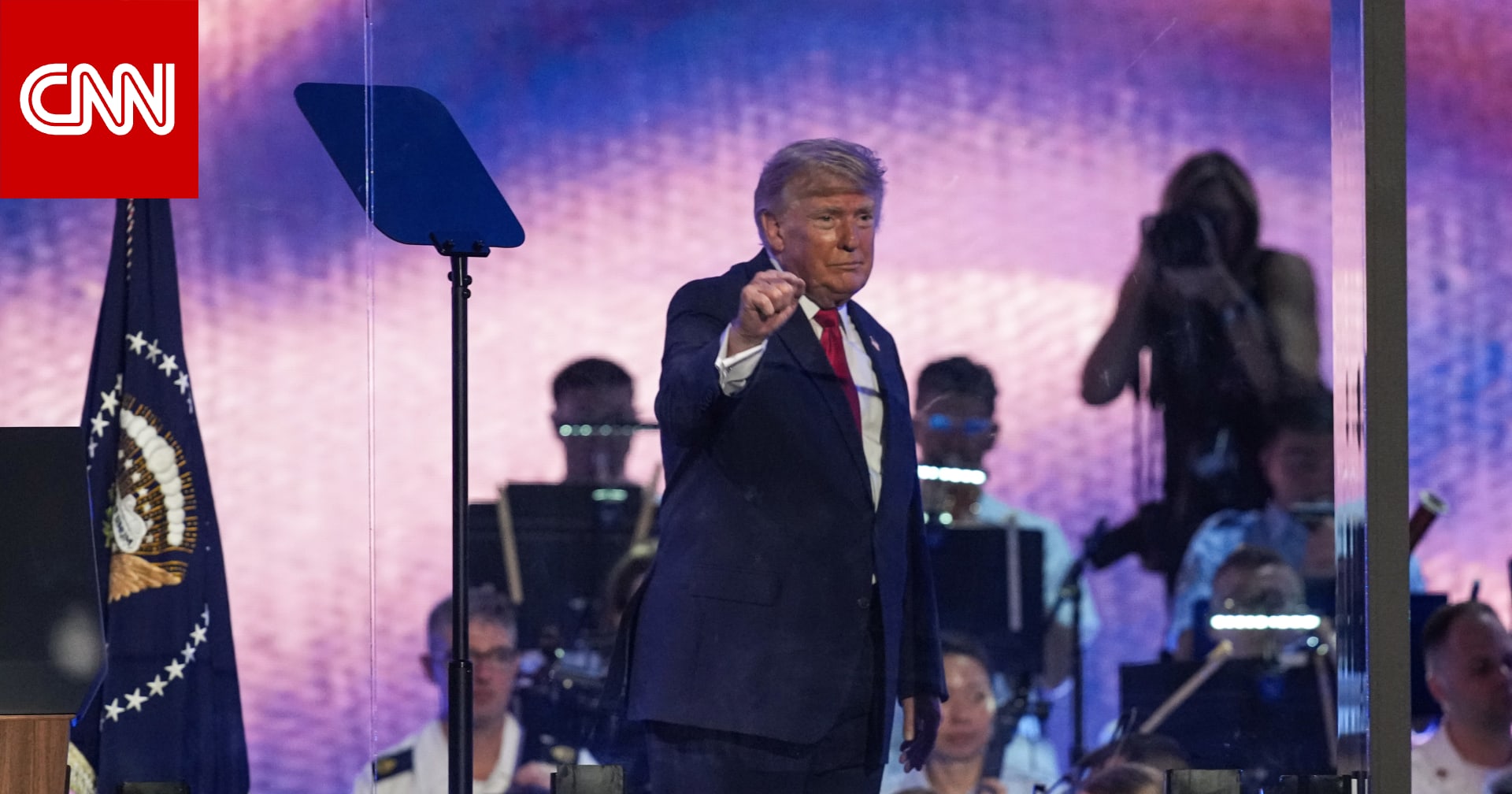
In his farewell address, the first president of the country, George Washington, advised caution regarding foreign wars. But today, there seems to be a division over whether President Trump should end a war with Iran or continue what he started, indicating two factions: one that prefers engagement overseas, and another that believes in the Monroe Doctrine, i.e., it is enough for the United States to defend the Western Hemisphere, where North and South America are considered a geopolitical domain that no world power should approach or challenge Washington in.
One of the most important questions posed on the threshold of the quarter millennium: What about the American societal alloy, and is the melting pot theory still alive and coming?
Certainly, there are many unrests occurring in events, especially after right-wing voices began to rise warning of 'the great replacement,' that European intellectual concept that flew across the Atlantic to make the land of immigration and immigrants a place of racial and ethnic conflict, which explains the growing fears of changing the demographic ratio of the white Anglo-Saxon man within the country.
What about the future of democracy inside America and the crisis of trust in party institutions? Then what is the role of media that has escaped the grip of institutions into the atmosphere of social media? Rather, what is the future of the American system amid crises of partisan polarization?
According to American historian of Scottish origin Niall Ferguson, republics do not last more than 250 years. Does that apply to America?
Original source: Asharq Al-Awsat


Comments (0)
Be the first to comment.