Huda Raouf | Where is the confrontation between Tehran and Washington heading?

In summary, it can be said that the region stands at a real crossroads. Either this crisis turns into an opportunity to reshape the rules of regional stability, or it continues on a path of gradual escalation that could spiral out of control at any moment. In either case, the question remains: do the players have the political will to avoid the worst?
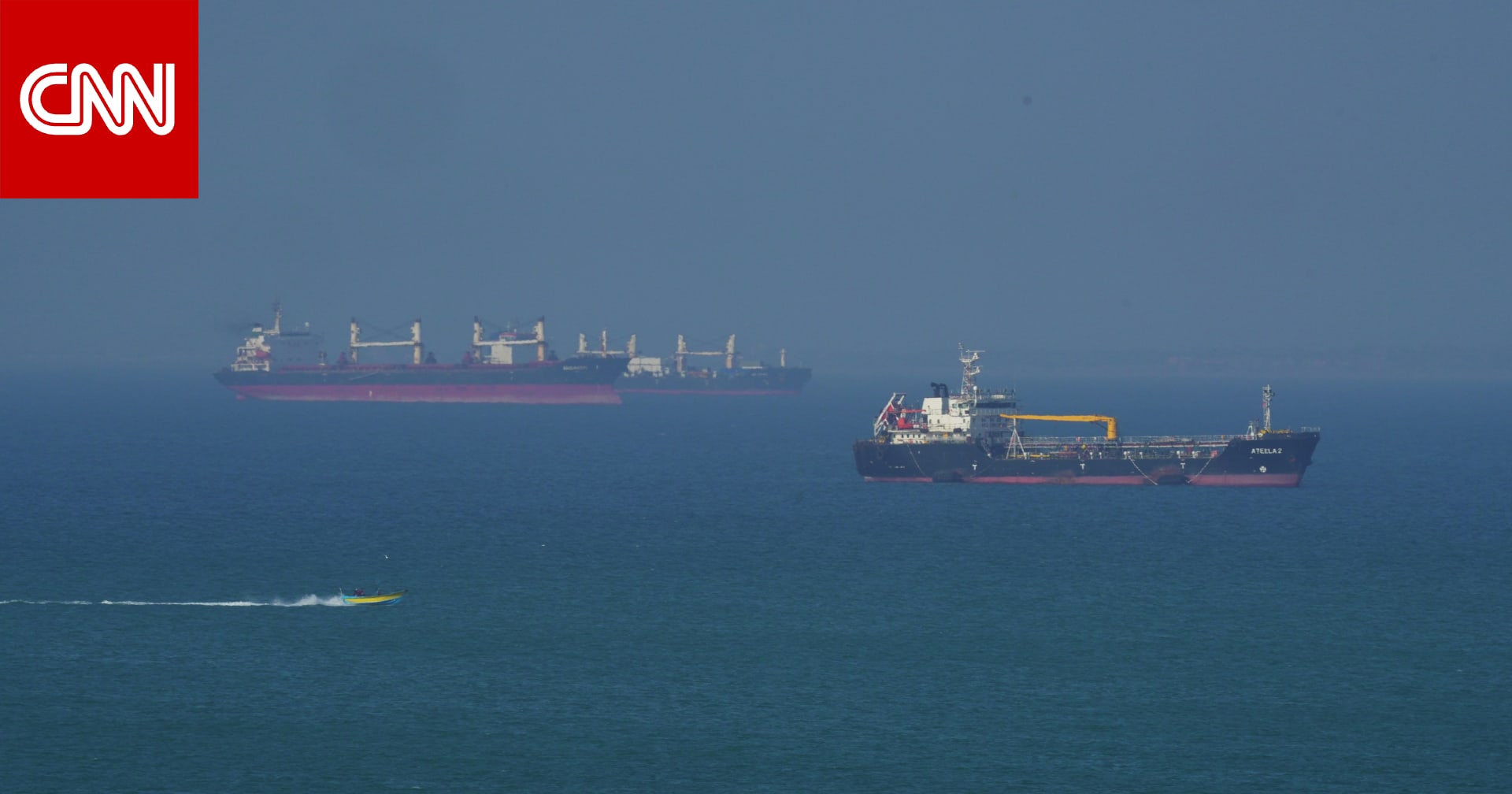
Amid rising tensions between Iran and the United States, the Gulf region once again finds itself on the brink of a dangerous test, where military calculations intersect with political bets, and mediation tracks intertwine with the logic of force. Recent developments, including the continued targeting of oil tankers and maritime infrastructure in the Arabian Gulf, reveal a complex equation that goes beyond mere tactical reactions, touching the core of the struggle for influence and the reshaping of engagement rules in the region.
What is worrying is not only the nature of the attacks, but also their timing, as they come at a time when Gulf Arab states have made clear efforts to act as mediators between Tehran and the administration of US President Donald Trump. These mediations, aimed at de-escalation and opening channels for dialogue, now seem to hit a wall of mistrust, and perhaps a deep divergence in each side's understanding of the current phase.
From Tehran's perspective, a return to the previous status quo in the maritime corridors, especially in the Strait of Hormuz, does not seem to be an option. Iran, which feels it has imposed new deterrence equations, seeks to establish a different reality, using naval pressure tools as an indirect negotiating means. Washington, meanwhile, views these moves as a direct threat to freedom of navigation and the global economy, prompting it to threaten harsher responses.
However, the real problem lies in the position of the Gulf states within this equation. On one hand, they find themselves directly targeted, whether through threats to their oil tankers or maritime security. On the other hand, they try to maintain a balancing role that prevents the region from sliding into a full-scale confrontation. Yet the continuation of attacks despite these mediations raises fundamental questions: Can trust be built between Iran and the Gulf states whose ships and internal targets are bombed, despite their mediation between Iran and Washington to sustain the ceasefire and eventually sign a memorandum of understanding?
Read more
Iran summons British ambassador over allegations of assault on journalist
Iran bets on Hormuz to change rules of confrontation with Washington
US strikes on Iran kill 3 members of the Revolutionary Guard
Security instructions to remove foreign coaches from Iranian football
Iranian messages appear multi-layered. On one hand, they assert the ability to affect global energy arteries, and on the other, they try to avoid sliding into open war. Targeting ships in this context is not just a military act but a precisely calculated political tool, allowing Iran to raise the pressure ceiling without crossing lines that might invite a comprehensive response.
In contrast, Washington faces a strategic dilemma. It has the military capability to escalate, but it also realizes that any broad confrontation in the Gulf could be costly and with unpredictable results. Past experiences in the region make the option of direct military involvement fraught with hesitation, especially in the absence of a clear vision for ending the conflict. The result is a state of controlled escalation, where each side tests the other's limits without reaching the breaking point. But this situation is inherently fragile, as any miscalculation could turn it into an open confrontation.
Economically, these developments cannot be separated from energy markets. Continued tension in maritime corridors threatens to disrupt oil flows, which could impact prices and global economic stability. Here, the interests of all parties converge: Iran, the United States, Gulf states, and indeed the entire world. In light of all this, relying solely on mediations no longer seems sufficient. What is needed is a more comprehensive approach that acknowledges the shift in power balances and seeks a new formula for managing Gulf maritime security, rather than trying to turn back the clock.
Overall, it can be said that the region stands at a real crossroads. Either this crisis turns into an opportunity to reshape the rules of regional stability, or it continues on a path of gradual escalation that could spiral out of control at any moment. In either case, the question remains: do the players have the political will to avoid the worst?
Original source: Independent Arabia



Comments (0)
Be the first to comment.