Who Is Dragging the Other Into a Long-Term War.. Iran or America?
Who Is Dragging the Other Into a Long-Term War.. Iran or America?
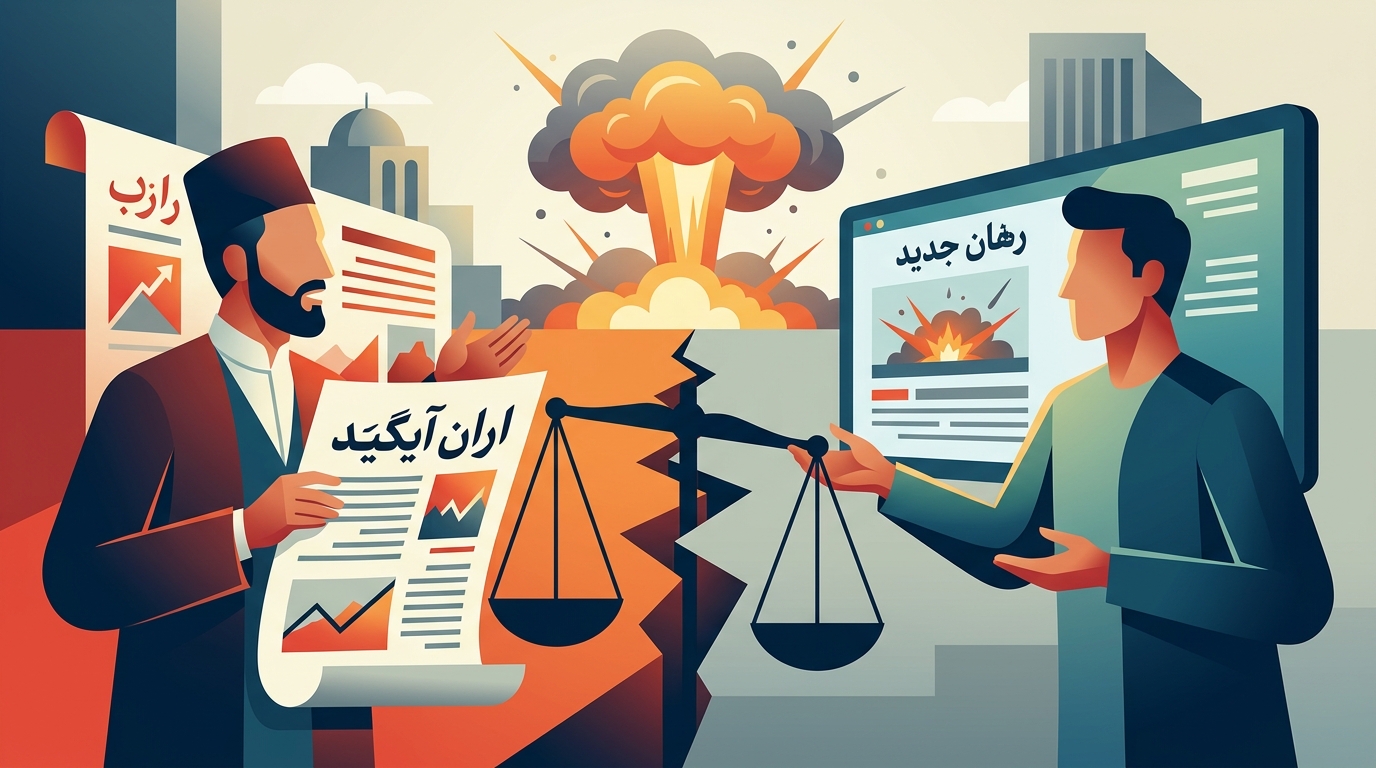
The region will remain the biggest influencer in the course of this war, and America will discover that it and Iran are dragging each other with equal strength and capability to prolong this war and multiply its impact. The question here is: how will America get out of this predicament? And who will ultimately tame the other?
A fundamental question in this war revolves around the mouth of the additional demands now being imposed by both sides of the war. So who is dragging the other toward a long-term war? Is it a fight for peace or a fight for control? Before the second war launched by America and Israel against Iran, the Strait of Hormuz was not within the circle of conflict. But the war's mouth expanded to swallow the world's most important waterways, as the Strait of Hormuz turned into one of the major variables in this war, and may surpass in importance the idea of preventing Iran from possessing a nuclear weapon in the coming phase. For America, the expansion of the conflict in this geopolitical manner multiplies its challenges and opportunities to exit this war, which is turning into an international issue rather than a bilateral conflict.
Returning to the memorandum of understanding that is currently being violated, we note that the current collapse of this memorandum was foreseeable. The level of fragility in the memorandum was indicated by the text mentioning "that Iran will make utmost efforts to ensure the safe passage of commercial ships through the strait without any fees for sixty days" — the expected duration of the memorandum, which widened the mouth of demands. The world's discovery that there is an Omani Hormuz and an Iranian Hormuz produced a new idea embodied in a fundamental question: who controls the strait? And it appeared to the world that Iran is ready to use force to push ships to use the Iranian Hormuz rather than the Omani Hormuz.
This war has the ability to expand and utilize data — whether geographic, economic, or geopolitical. The truth is that it has become difficult to manage this battle through side understandings. Days have proven that it has become difficult, and often impossible, to stop the war. The radical shift in this battle has transcended the idea of the other's strength or weakness. The geography surrounding Iran has also given it the ability to expand the battle and make it more impactful on the region around it. True, one cannot build a comparison of strength between America and Iran, but the equation that can break this comparison is the location of the battle, its geographic surroundings, and its direct impact. As forecasts indicate, this battle will not be decided by force — not because Iran is strong, but because of the complex network of ties between this battle and its geographic surroundings.
American political will faces a real weakness, especially since America is the stronger side in this war, the one expected to decide this battle within a short period. The challenges facing the world's largest power are strategic challenges to survive in this battle for a longer duration. From this standpoint, Washington will not be ready to deploy its forces or intervene on the ground. Moreover, America's concentration of its military efforts worldwide in a war with Iran will produce an inevitable weakness in American control over its global power centers.
The important truth that this war has proven is that Iran put forward the survival of its regime as a non-negotiable option and has moved according to this logic since the beginning of the war. Therefore, it is natural for the Iranian regime to shift toward a more hardline path, more clinging to the ideology that founded this regime, and more valuable and in control of Iran's interior. And although the regime suffers economically, the geography of this war and its geopolitical data greatly encourage Iran to drag America into a long-term war intertwined with the region surrounding Iran, and this is what the region must be wary of.
Politically, it has become easy to detect that Iranian intransigence against American intransigence still asserts itself, indicating that the chances of concessions by both sides to end this war diminish gradually, whether in political or even media discourse. On the other hand, America stands in a great challenge with itself; instead of just the Iranian nuclear issue, there is now the issue of the Strait of Hormuz, and no one can predict the new data that could join this list. The state of security uncertainty in the region will remain the biggest influencer in the course of this war, and America will discover that it and Iran are dragging each other with equal strength and capability to prolong this war and multiply its impact. Perhaps the final question is: how will America get out of this predicament? And who will ultimately tame the other? The answer may lie in opening greater opportunities for regional and international powers to manage this conflict and bring peace.
Original source: Al-Riyadh



Comments (0)
Be the first to comment.