Iraq's Housing Crisis: Can 2.3 Million Units Meet Growing Demand?
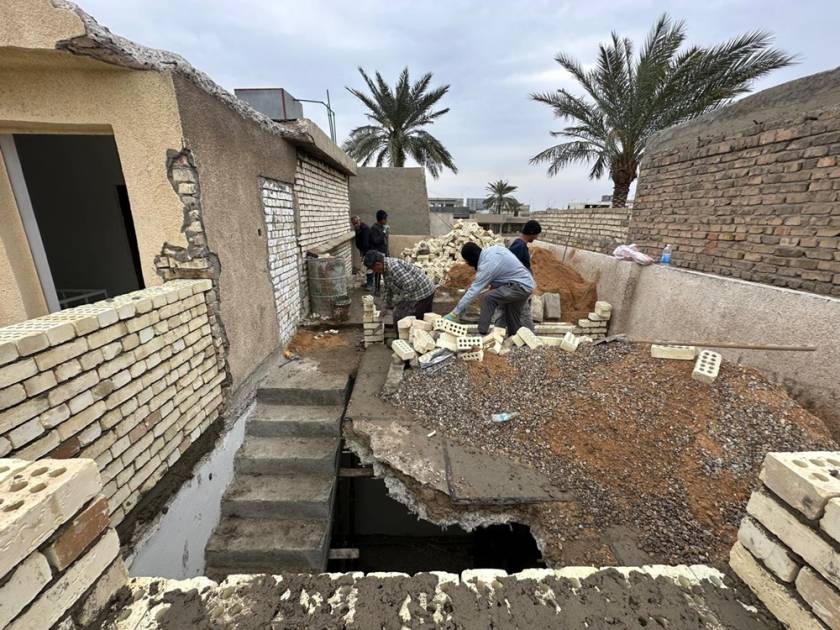
SummaryWhile the government asserts that new cities, the million-plot initiative, and the national housing strategy mark the beginning of a different phase in managing this file, experts believe that real success will be measured by the extent to which these plans can provide suitable housing at affordable prices, reduce the housing deficit, limit slums, and transform housing from a chronic crisis into a fundamental pillar of economic and social development in Iraq.
The housing file in Iraq has returned to the forefront of attention after the Ministry of Construction, Housing, and Municipalities announced that the country needs more than 2.3 million housing units to meet the current deficit, at a time when the government is talking about a new vision to address one of the most complex and impactful crises on the economic and social reality, by launching new residential cities, adopting the real estate developer system, approving the million-plot initiative, in addition to implementing the National Housing Strategy for 2025-2030.
This announcement comes amid a continuous rise in real estate and rental prices, increasing population numbers, and ongoing migration from rural to urban areas, making the housing crisis go beyond being a construction crisis to become a developmental challenge affecting the economy, labor market, social stability, and quality of life.
The Ministry of Construction and Housing indicates that the results of the general population census showed Iraq's need for between 2.3 and 2.4 million housing units, stressing that the government aims to reduce about half of this deficit in the coming years by implementing new housing projects and involving the private sector in urban development processes.
Ministry spokesperson Nabil al-Saffar said that the national housing policy, prepared in cooperation with international organizations, represents a roadmap to address the crisis, explaining that the government has abandoned the experiment of distributing unserviced land after it proved unsuccessful and contributed to the expansion of slums, shifting to a model that relies on equipping land with infrastructure and services before distributing it to citizens.
Al-Saffar stressed that 'the new projects will not be limited to the capital Baghdad, but will include all governorates, with a focus on establishing integrated residential communities outside crowded city centers, thereby reducing pressure on urban areas and providing a better environment for residents.'
Observers say that Iraq faces not only a construction crisis but also an urban and economic management crisis (Independent Arabia).
Government Plans
In parallel, the Ministry of Planning announced the preparation of a national housing strategy targeting middle and poor groups, in cooperation with the United Nations Human Settlements Programme, the International Labour Organization, and the European Union. It focuses on achieving balanced development in urban and rural areas, providing basic services and job opportunities to ensure the stability of residents in new areas.
The ministry indicates that the strategy includes a comprehensive review of residential complexes implemented in previous years, assessing the level of services provided and citizens' ability to purchase housing units, with the aim of building a more realistic housing policy that responds to the actual needs of the Iraqi market.
The government affirms that the million-plot initiative represents one of the most important axes of addressing the crisis, as it allocates land serviced with infrastructure instead of distributing land without services as was done previously.
The Council of Ministers approved the initiative as a national project, forming a supreme committee to set the general policy of the project, determine eligibility controls, create a beneficiary database, inventory land suitable for allocation, and prepare a financing model to ensure sustainable implementation.
Similarly, the Iraqi government confirms that the distribution of land among governorates will be based on population size and poverty rates, with the aim of achieving fairness in the distribution of opportunities, in addition to involving the private sector and real estate developers in implementing road, water, electricity, sewage, and other service networks before handing over land to citizens.
Despite the importance of these steps, specialists believe that the housing crisis in Iraq is not only linked to the number of units needed, but to a wide range of economic, demographic, and service factors that have accumulated over decades.
The continuous population increase raises the volume of demand for housing annually. Additionally, rising marriage rates, urban growth, and internal migration towards Baghdad and major governorates are all factors adding thousands of new families to the list of those seeking housing each year. This is in addition to the significant increase in land and real estate prices, which has made owning a home a distant dream for a large segment of youth and low-income earners, as well as the rise in construction material prices and implementation costs, which directly reflected on housing unit prices and rents.
Baghdad is the most affected governorate by the crisis due to population density and the concentration of government institutions, private sector, and services, leading to an unprecedented increase in land and rental prices, while other governorates have also begun to see rapid increases with the expansion of urban activity.
Official estimates indicate that hundreds of thousands of Iraqi families live in informal areas lacking basic services, while large numbers of families are forced to rent housing that consumes a large proportion of their monthly income, increasing economic pressures and affecting living standards.
Members of Parliament stress that the success of government initiatives depends on actual implementation, not just on announcing them.
Member of the Parliamentary Services Committee Muhammad Khalil said that Iraq has witnessed many projects and promises regarding the housing crisis in recent years, but most did not achieve the desired results, stressing that the success of the new initiative requires providing schools, health centers, roads, water and electricity networks before distributing land.
The Iraqi government abandoned the experiment of distributing unserviced land after it proved unsuccessful and contributed to the expansion of slums (Independent Arabia)
An urban and economic management crisis
Economic expert Majid al-Lami believes that announcing the need for 2.3 million housing units reflects the current deficit, but it is not the final number because housing demand renews annually due to rapid population growth.
He said, 'Iraq faces not only a construction crisis but also an urban and economic management crisis,' explaining that 'the imbalance in the real estate market, high land prices, real estate speculation, and weak urban planning have all contributed to deepening the crisis.'
He added, 'Building millions of housing units will not be enough if their prices remain out of reach for citizens,' stressing that 'the state is required to reform the mortgage market, provide long-term loans with low interest, and encourage the private sector to implement projects targeting middle and limited-income earners instead of focusing on luxury residential complexes.'
Read more
Protests in eastern Iraq against power outages
Arrest of the Director General of the Oil Products Distribution Company in Iraq
No Red Lines: Arrest Campaign Tests the Seriousness of Reform in Iraq
Original source: Independent Arabia



Comments (0)
Be the first to comment.