How the Ukraine War Shook Russia's Relations with Its Friends and Weakened Its Influence?
SummaryThe Ukrainian-Russian relations today remain governed by the ongoing war and its global geopolitical repercussions. While Ukraine seeks sovereignty, territorial integrity, and integration with European institutions, Russia is losing its partners and friends one after another, at a time when NATO expansion, energy routes, and access to the Black Sea remain pivotal strategic issues for it.
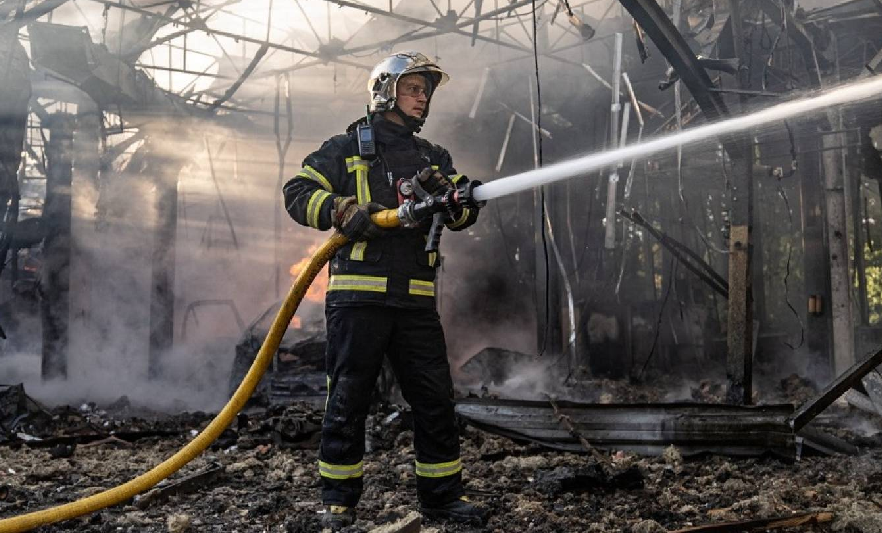
The Russian war against Ukraine has radically reshaped the geopolitical reality in Eastern Europe in general, and in the post-Soviet space in particular.
This war, ongoing for more than four and a half years, has undermined Russia's image as an invincible dominant superpower and forced its closest allies in Eastern Europe, the CIS countries, and the Collective Security Treaty Organization to distance themselves from Moscow. Neighboring countries, including those that were part of the Russian Empire or had strong historical ties with it, have begun actively pursuing independent foreign policies, fearing that they might end up in a situation similar to Ukraine's.
The war in Ukraine has led to a major shift in Russia's relations with the former Soviet republics. It is almost certain that Russia still prioritizes maintaining its influence in these countries, which is essential for its internal security and economic prosperity. However, since February 2022, Russia's overall influence in neighboring countries has declined, with some variations.
When Russian President Vladimir Putin decided to wage war on Ukraine, he hoped for a quick and decisive military victory within a short period (AFP)
When Russian President Vladimir Putin decided to launch war on Ukraine in 2022, he hoped for a quick and decisive military victory within a short period, and did not expect that this war would harm his country's relations with third countries that he spent decades building. But the calculations of the military operations room did not match the calculations of the international political arena, and as a result, Russia began to find itself more isolated than ever since the Bolshevik Revolution.
Backlash of Friends
Putin is suffering a decline in friendships almost everywhere, including inside and outside Europe. Hungarian Prime Minister Viktor Orbán, one of his few remaining friends on the old continent, recently stepped down after losing the election following 16 years in power. Serbian President Aleksandar Vučić, on the other hand, tried quietly and with difficulty to hedge and balance his country's relations by walking a middle line and 'reluctant non-alignment' since the start of the Russian attack on Ukraine, but he announced a different position that surprised Moscow during his recent meeting with Ukrainian President Volodymyr Zelensky on July 15 of this month.
During his visit to Kyiv to participate in the Southeast Europe-Ukraine Summit, Vučić said that Serbia supports Ukraine's sovereignty and territorial integrity and intends to deepen cooperation with Kyiv in a number of areas. According to the Serbian leader, Belgrade will continue to provide humanitarian aid to Kyiv and intends to increase its participation in the reconstruction of one Ukrainian city.
Aleksei Chepa, First Deputy Chairman of the International Affairs Committee of the Russian State Duma, said in response to the Serbian president's statements that Vučić recently made some strange remarks, and that 'these statements are far from what the people want. This is what his conscience should reproach him for. Of course, we hear everything, we see everything, and we draw the appropriate conclusions.' He noted that Russia was skeptical of Vučić's actions, and that his visit to Ukraine left a negative impression on Moscow, describing it as an attempt by Belgrade to polish its image before the West.
Hungarian Prime Minister Viktor Orbán, one of Putin's few remaining friends on the old continent, recently stepped down (AFP)
Serbia, one of Russia's closest partners in Europe, exported ammunition to Ukraine worth at least $908 million, according to the British Financial Times. Vučić also ended military contracts with Russian arms suppliers and then signed a deal worth €2.7 billion (about $3.09 billion) with France for the supply of fighter jets.
Moscow has long been an important partner for Belgrade, but what is happening in their relations now sets a precedent in the historical close ties between the two countries, which have seen fluctuations depending on the balance of power in each historical period. However, these relations today are much more influenced by current circumstances than by memories of the past.
The war in Ukraine has radically changed some aspects of Serbian-Russian relations, despite the lingering dispute over Kosovo's status due to Moscow's opposition to the region's independence. It is true that Belgrade is currently hesitant to join sanctions against Russia, and that nearly half of Serbs, 43 percent, justify Russia's invasion of Ukraine. However, Belgrade can no longer buy weapons and oil from Moscow. Russian officials are also unable to travel to Belgrade due to the European airspace ban on Russian airlines.
Serbia also condemned the war against Ukraine at the United Nations, supplied it with weapons through third countries, and strengthened security cooperation with the United States over the past two years. The Serbian defense industry does not pay much attention to choosing its clients, and profit is usually its only goal. However, in the case of ammunition supplies to Ukraine, it was a calculated political step through which Vučić's government was able to obtain significant rewards, especially from the United States. For example, the United States took a very reserved stance during the anti-government protests last year.
Notably, these deals were conducted through Turkey and the Czech Republic, primarily for domestic political reasons, to avoid angering the segment of the Serbian population sympathetic to Russia, and to avoid excessively provoking the Kremlin.
Vučić defends himself by saying these were purely commercial transactions, as Serbia has no control over who ultimately receives the ammunition. However, Serbian law and international standards require knowledge of the end users of defense industry products. Therefore, it is certain that the arrival of weapons in Ukraine did not escape the attention of the Serbian government.
Serbian President Aleksandar Vučić tried quietly and with difficulty to hedge and balance his country's relations by walking a middle line and 'reluctant non-alignment' since the start of the Russian attack on Ukraine (AFP)
Collective Security Treaty Organization and the Ukraine War
Original source: Independent Arabia
Comments (0)
Be the first to comment.