Iran Wants the Negotiations to Never End

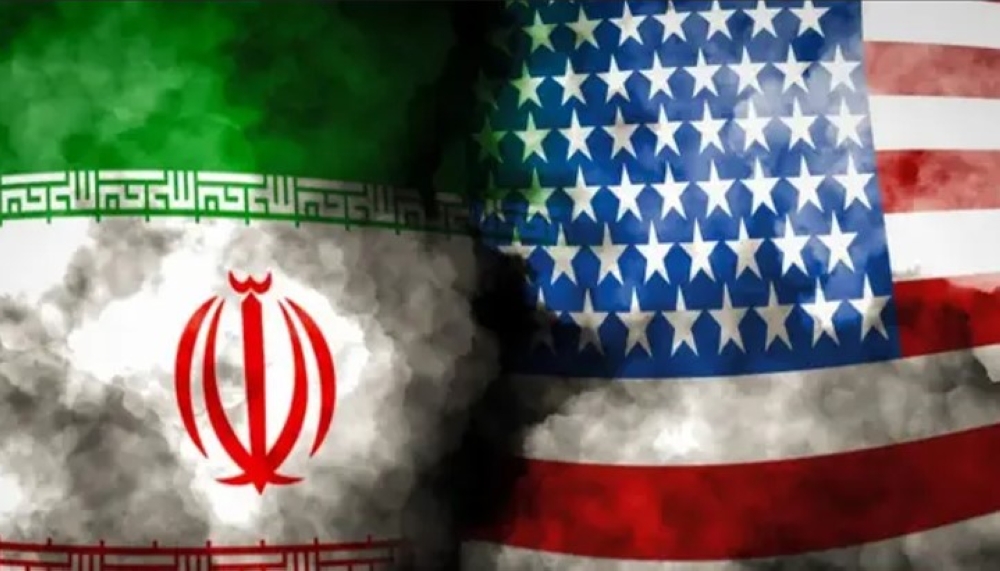
Whenever the United States and Iran approach the negotiating table, the same question resurfaces: Is it possible to reach a permanent agreement with the Islamic Republic of Iran, or does each round of negotiations become a new station in a long, never-ending conflict? The experience since the 1979 Islamic Revolution suggests that the relationship between the two sides has never known true stability, but rather has moved from one crisis to another, and from one negotiating round to a new, more complex one.
Today, escalation resumes and contacts between Washington and Tehran are renewed, mediated by a number of countries, most notably Oman, Qatar, Turkey, Pakistan, and Egypt, in an attempt to contain tensions and prevent the region from sliding into a broader confrontation. But the path does not seem easy; because each side enters the negotiations with goals completely different from the other.
Many experts believe that negotiating with Iran differs from any traditional negotiations, not only because of the files at hand, but also because of the nature of the regime itself, which combines religious, political, military, security, and even personal considerations. Therefore, any agreement is not limited to a single issue, but extends to a wide network of regional and international interests.
The late Israeli diplomat Yuri Lubrani, the last Israeli ambassador to Iran before the Islamic Revolution, was among those who most warned against underestimating Iranians' negotiating abilities. He described Iranians as 'a nation of carpet weavers and chess players,' referring to their long patience and ability to think several steps ahead. He believed that Tehran does not treat negotiations as a fast track to an agreement, but as a means to improve its political position and buy time, even describing its style of managing negotiations as 'a masterpiece in deceiving the world.' Whether one agrees with this assessment or not, it reflects the prevailing impression among many diplomats who have dealt with Iran over the past decades.
Perhaps the most distinctive feature of Iranian policy is its ability to combine multiple tracks simultaneously. It negotiates, but at the same time maintains multiple leverage points, whether through its regional influence, security and military files, or its ability to affect navigation and energy flows in the Gulf. Hence, observers believe that Tehran always ensures it never enters any negotiations devoid of means of pressure.
The importance of intermediary states is evident at this stage. These states do not merely transmit messages between the two sides, but play a larger role in bringing positions closer, opening undisclosed communication channels, and easing tensions when negotiations reach a deadlock. Turkey has gained extensive experience in this field in recent years, benefiting from the role of its security and diplomatic agencies in managing complex regional crises, while Pakistan has strengthened its presence by hosting meetings and helping the parties keep dialogue alive despite major differences.
These states view mediation not only as a diplomatic work, but also as an opportunity to enhance their regional and international standing. Every success in narrowing differences grants them greater political weight and increases their ability to influence other files in the region.
As for Iran, it realizes that time may be one of its most important strengths. The longer the negotiations extend, the more pressure mounts on the other parties, whether due to security concerns, energy market fluctuations, or domestic political calculations. Therefore, a number of analysts believe that the Iranian leadership does not see time as a burden, but rather as a card that can be invested to obtain better terms.
In contrast, the US administration faces different pressures. It is required to demonstrate its ability to prevent military escalation, while at the same time not making concessions that might seem too large in the eyes of the American public. Moreover, any field developments in the Middle East could directly affect US domestic politics, especially with approaching electoral deadlines; this makes Washington's maneuvering room narrower.
The difficulty of negotiations is not limited to nuclear issues alone, but also includes the future of economic sanctions, Iran's regional role, the security of navigation in the Gulf, and relations with US allies in the region. Hence, reaching a comprehensive agreement requires addressing interconnected files, each with its own calculations.
At the same time, Iran faces internal challenges that cannot be ignored. The economy has been suffering from sanctions for years, foreign investment remains limited, inflation and rising prices pressure citizens, while the state needs significant resources for reconstruction and to compensate for losses incurred in the recent war. Therefore, Tehran needs to ease economic pressures, but it seeks to do so without appearing to have made concessions that affect its status or influence.
In contrast, decision-makers in Washington realize that any agreement without clear guarantees could turn into a temporary truce rather than a permanent solution. That is why negotiations continue with a great deal of caution, as each side tries to test the other's intentions before moving to larger steps.
The fundamental question remains: Can diplomacy end this long conflict? So far, there is no decisive answer. History shows that US-Iran relations have gone through several phases of rapprochement and tension, and that previous agreements did not prevent the return of crises.
Therefore, the current stage appears as a new test of diplomacy's ability to achieve a real breakthrough. Success will depend not only on what is said inside the negotiation halls, but also on the political, security, and economic developments outside. In the end, the biggest challenge may not be signing a new agreement, but the ability to sustain it and turn it into lasting stability in a region where temporary settlements often turn into new crises after a short time.
Source: Asharq Al-Awsat
Sponsored Content
Sponsored Content
Disclaimer: All published articles represent only the views of their authors.
Original source: Al Arabiya


Comments (0)
Be the first to comment.