Lebanon and Israel hold talks in Rome to implement 'framework agreement'

Lebanon and Israel resumed talks on Tuesday in Rome, with Beirut hoping to make progress toward ensuring an Israeli withdrawal from southern Lebanon under a US-brokered agreement, despite low expectations for rapid progress.
Israeli Foreign Minister Gideon Saar said he expects the talks with Lebanon in Rome to help advance the withdrawal of his country's forces from two 'pilot zones' in southern Lebanon.
Saar told reporters at a press conference in Jerusalem: 'We are ready to move forward on these two pilot zones. I hope, and I believe, that this round of discussions in Rome will push toward achieving that.'
Diplomatic efforts, led by the United States, emerged since Hezbollah and Israel returned to war on March 2 amid the wider regional conflict, and the efforts proceeded despite strong objections from Hezbollah, which believes that Iranian pressure on Washington is the only way to ensure an end to the war and an Israeli withdrawal.
0 seconds of 0 secondsVolume 90%
Press shift question mark to access a list of keyboard shortcuts
00:00
00:00
00:00
Iran requested that ending the war in Lebanon be part of its interim agreement with the United States, which was signed last month, but renewed fighting between the US and Iran destabilized the agreement last week, according to Reuters.
0 seconds of 0 secondsVolume 90%
Press shift question mark to access a list of keyboard shortcuts
00:00
00:00
00:00
The Israeli army occupies what it describes as a 'buffer zone' extending about 10 kilometers inside Lebanese territory along the entire Israeli border.
Israeli officials say this zone is necessary to protect communities in northern Israel from Hezbollah attacks.
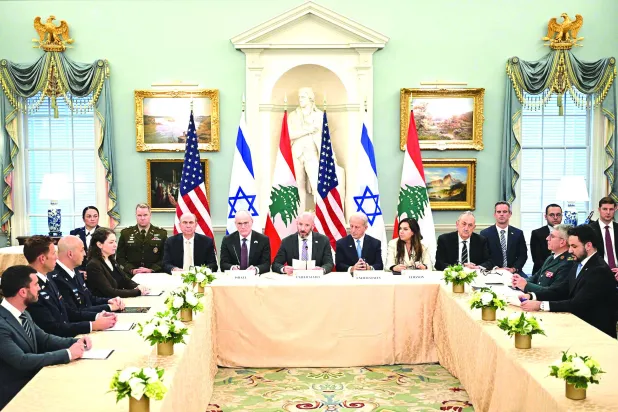
A meeting in Washington on June 26 resulted in an agreement calling for an end to the conflict in Lebanon, the disarmament of armed groups—a clear reference to Hezbollah—the deployment of Lebanese forces in the south, and a gradual withdrawal of Israeli forces.
0 seconds of 0 secondsVolume 90%
Press shift question mark to access a list of keyboard shortcuts
00:00
00:00
00:00
But deadly Israeli strikes continued, and Hezbollah rejected the agreement as well as efforts to disarm it. Israel said its forces would remain in southern Lebanon as long as Hezbollah remains armed.
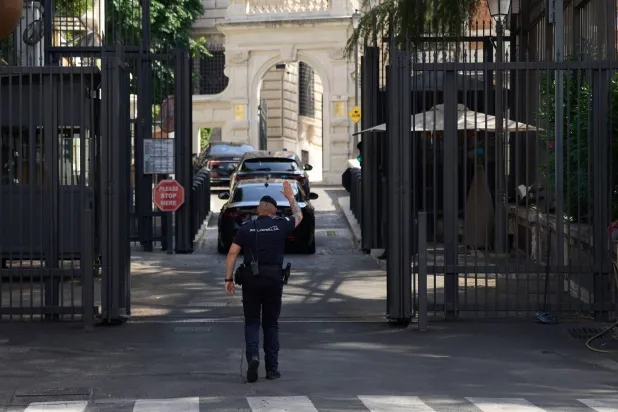
Lebanese officials told Reuters that Lebanese and Israeli officials will meet at the US Embassy in Rome on Tuesday and Wednesday to determine how to implement the framework agreement.
One official said moving the talks to Rome would make it easier for the two countries' delegations to consult with their governments for guidance while negotiating.
Italian Foreign Minister Antonio Tajani said on Monday that his country offered to host the talks to continue working toward a real ceasefire in Lebanon.
Tajani said before an EU meeting in Brussels on Monday: 'We are also very pleased that Rome is the venue for these meetings. In this way, our capital becomes a capital of peace.'
Pilot zones on the negotiating table
Lebanese President Joseph Aoun, in remarks published by his office on Monday, expressed hope that the Rome meeting would result in concrete and practical steps on the ground to implement the agreement and begin the Israeli withdrawal, so that the Lebanese army can deploy in the south.
One Lebanese official said the Lebanese delegation in Tuesday's talks will seek a gradual and sequential withdrawal of Israeli forces from 'zone after zone,' referring to the 'pilot zone' project under which Hezbollah would be disarmed, Israeli forces would withdraw, and Lebanese forces would deploy zone by zone in the south.
0 seconds of 0 secondsVolume 90%
Press shift question mark to access a list of keyboard shortcuts
00:00
00:00
00:00
The June 26 agreement stated that two zones were identified as a starting point. A US official said last week that US Central Command is coordinating with Lebanon and Israel to begin work on the pilot zones.
Sources told Reuters that a US military delegation was in Lebanon early this week to discuss the plan in detail with the Lebanese army.
0 seconds of 0 secondsVolume 90%
Press shift question mark to access a list of keyboard shortcuts
00:00
00:00
00:00
The Israeli army forced residents of southern Lebanon to leave their homes and blew up entire villages. It said it is destroying infrastructure used by Hezbollah, including underground tunnels.
The Lebanese Health Ministry said the Israeli campaign has killed more than 4,000 Lebanese and displaced more than one million people since March.
These figures do not specify the number of fighters among the dead, and Hezbollah has not disclosed its death toll either. Reuters reported on May 3 that several thousand Hezbollah fighters had been killed.
Hezbollah has killed at least 32 Israeli soldiers and four Israeli civilians, most of them in southern Lebanon, since the latest fighting erupted.
Original source: Asharq Al-Awsat


Comments (0)
Be the first to comment.