The Kremlin: European accusations against Russia of cyberattacks are baseless
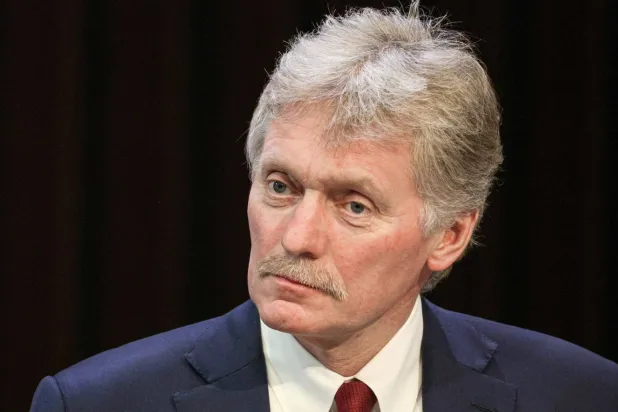
The Kremlin on Tuesday denounced 'baseless' accusations by the European Union and Britain that Russia was behind cyberattacks in Europe.
Among the ten military parades presided over by French President Emmanuel Macron since his arrival at the Élysée Palace in the spring of 2017, the one witnessed on the Champs-Élysées yesterday was the largest by all standards: first, in terms of the guests of honor invited to the official platform, who were practically all leaders of countries participating in the summit of the 'Coalition of the Willing' dedicated to providing support for Ukraine and preparing to send military units that would be deployed on Ukrainian territory, and guaranteeing its security by land, sea, and air after the fighting stops or after the two sides reach a peace agreement.
At least 35 heads of state and government attended the parade (Germany, Britain, Spain, Ukraine, Denmark, Sweden, Canada... in addition to the President of the European Council, the President of the European Commission, and the NATO Secretary General).
Airbus A400M aircraft during the military parade in Paris (Reuters)
Paris made sure that the parade, held annually on the occasion of the French National Day, would transcend France's borders to make it European, even international, through the participation of elements from coalition countries, either through infantry units or through the participation of European warplanes. This scenario was intended to be a precursor to the European defense that Europeans are striving for, but which is still in its infancy today.
It is worth noting that the military gathering that crowded the Champs-Élysées and adjacent avenues and streets is the largest ever, with about 6,700 infantry soldiers, 98 warplanes including German and British planes, 31 helicopters, and 315 vehicles, all amid a large public attendance. Élysée sources preceded the event by confirming that the goal of the exceptional military gathering was to highlight the strengthening of France's strategic military capabilities and the state of strategic vigilance in Europe.
Exceptional military parade
Despite the above, the primary beneficiary, aside from Macron, is Ukrainian President Volodymyr Zelenskyy, who was on the honorary platform alongside other leaders; he will not return empty-handed from the French capital.
On the one hand, the 'Coalition of the Willing', launched by Paris and London last February and composed mainly of European countries, pledged to continue providing military support to Ukraine, including deploying forces on the ground once a ceasefire is reached, to deter Russia from launching any subsequent attacks.
Its new addition is the coalition's decision to begin conducting military exercises in the coming months as part of preparations to deploy a pre-planned multinational support force. According to Macron, the exercises will prove that the coalition is 'ready and credible by land, sea, and air', and that the coalition now possesses a multinational force ready for deployment to support Ukraine. He had already stressed in his speech on Monday to the armed forces that Paris 'has demonstrated its ability to launch coalitions' such as the Coalition of the Willing or the naval mission in the Strait of Hormuz.
However, both coalitions remain hypothetical, and the conditions for their launch have not yet been met. Regarding the Coalition of the Willing, there are two main obstacles: first, Russia rejects any deployment of European-NATO forces on Ukrainian territory. Second, many coalition countries, led by Germany, tie their contribution to obtaining American guarantees to support and assist the deployed forces in case Russia targets them.
Many positive initiatives have been launched by the coalition towards Ukraine, not least the joint declaration of 11 European countries launching the 'Ballistic Missile Countermeasures Coalition' in response to a request from Zelenskyy. The latter believes that the biggest threat his country faces is Russian ballistic missiles and the shortage that Ukrainian forces suffer regarding Patriot missiles, which alone can counter the Russian missile threat.
However, the new coalition was placed within a broader framework: 'providing protection for Europe, which requires a comprehensive solution consisting of establishing an integrated missile defense system, aimed at deterring and countering future missile threats through collective effort, technological openness, and trust-based industrial cooperation.'
Soldiers of the French Foreign Legion during the military parade (Reuters)
In addition to the above, Paris allocated a symbolic gesture to Zelenskyy, as two Ukrainian pilots participated in a flyover over Paris in two Mirage 2000 aircraft, which will later be transferred to Kyiv as part of a previous agreement to deliver six aircraft of this type. Macron announced yesterday, at the conclusion of the Coalition of the Willing summit, that his country will deliver 15 Rafale aircraft to Ukraine, the latest produced by Dassault Aviation factories. The joint statement by the French and Ukrainian presidents, distributed by the Élysée Palace on Tuesday afternoon, revealed a broad defense deal between the two sides, unprecedented in its scope.
French defense deal for Ukraine
The statement said that Kyiv requested the purchase of 16 Rafale aircraft with their weapons (out of 100 aircraft agreed upon last year), and the deal will be financed through the €90 billion loan pledged by the European Union to Ukraine.
President Emmanuel Macron and leaders of the Coalition of the Willing in a group photo on the Champs-Élysées on the occasion of the military parade on Tuesday (AFP)
The statement added that the two countries 'agreed to give top priority to projects aimed at enhancing the capabilities of the air force, air defense, and ballistic missile defense in Ukraine.' Both sides hope to deliver the first four Rafale aircraft after a training phase for Ukrainian pilots that could begin this year. The statement specifies the types of weapons these fighters will be equipped with, along with sufficient quantities of munitions.
Moreover, Kyiv will be granted a license to produce advanced bombs and missiles of the SCALP type. Furthermore, Kyiv will receive four SAMP/T air defense systems produced by French-Italian companies, which are close to the American Patriot missiles.
US President Donald Trump alongside British Prime Minister Keir Starmer and French President Emmanuel Macron as they attended the G7 summit in Évian, eastern France (AFP)
Paris and Rome will also allow Ukraine to produce Aster air defense missiles. These decisions came after the US President announced, on the occasion of the recent NATO summit, enabling Ukraine to produce Patriot missiles, the only ones it possesses capable of downing Russian ballistic missiles. In the same context, according to the joint statement, Ukraine will receive 7 advanced radars, and Paris agrees to lend two air defense systems to Ukrainian forces, to be retrieved after the ordered systems are delivered.
Given Kyiv's need for air defense systems with all their components, Paris and Rome have agreed to provide numerous facilitations to Ukraine, which will use the first installment of the large European loan to finance these defense purchases.
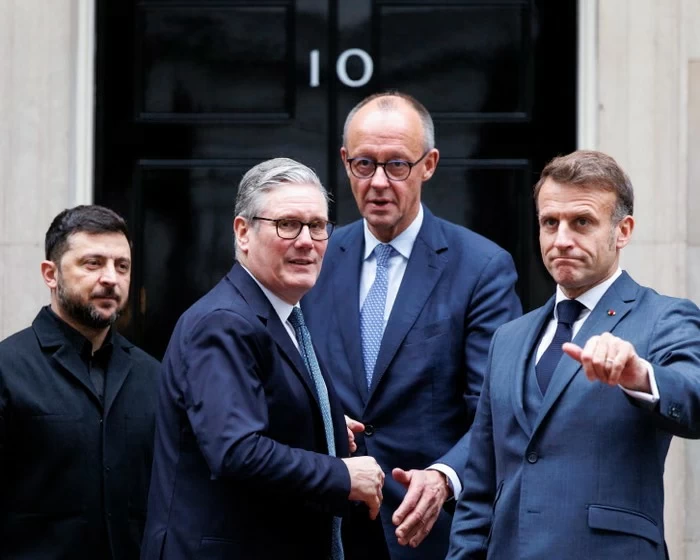
The French President and the British Prime Minister during the Coalition of the Willing summit to support Ukraine in Paris on Monday (AFP)
Finally, France commits to 'supporting the development of Ukrainian interceptor missiles against ballistic missiles, particularly the Freya project, by supporting industrial cooperation with French companies and providing technical expertise from the French Directorate General of Armaments.'
Original source: Asharq Al-Awsat



Comments (0)
Be the first to comment.