Washington and Tehran Exchange Fiercest Strikes Since April Ceasefire
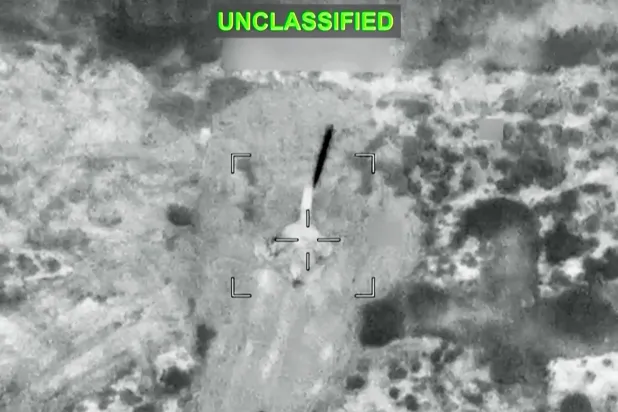
The United States and Iran exchanged a new wave of missile and drone strikes overnight Sunday-Monday, in the most violent direct confrontation between them since the ceasefire declaration on April 8, as the scope of US bombing inside Iran expanded and Iran's response extended to several countries in the region.
The US military began at 00:30 Tehran time a series of raids lasting about five hours, which US Central Command (CENTCOM) said targeted dozens of sites in multiple areas with precision munitions, aimed at reducing Iran's ability to attack international navigation in the Strait of Hormuz.
CENTCOM said its forces struck military air defense systems, coastal radar sites, missile capabilities, drones, and small boats. US forces used fighters, warships, and one-way attack drones, along with one-way attack maritime drones for the first time.
The US command added that the strikes were carried out on orders from President Donald Trump to 'hold Iranian forces accountable,' stressing that it would continue to reduce Tehran's ability to attack civilian sailors and commercial vessels transiting the strait.
The new strikes were an extension of previous US rounds over the past week. CENTCOM said its forces struck 140 Iranian military targets on Saturday night alone, and more than 300 targets over three nights, in waves that hit missile sites, drones, ammunition storage facilities, communication networks, naval capabilities, and coastal surveillance positions.
From Coast to Inland
Iranian state media reported that the US raids covered a wide range of southern, western, and central provinces, including Hormozgan, Khuzestan, Markazi, and Sistan and Baluchestan, after explosions rocked areas near the Strait of Hormuz and others deep inside the country.
In Hormozgan province, local media reported strikes targeting Qeshm Island, Bandar Abbas, and the area around the Strait of Hormuz. Reports indicated 15 violent explosions west of Bandar Abbas, several explosions near Tahru'i village in Sirik, and two projectiles hitting Abu Musa Island.
Local sources said areas in Qeshm were hit by new strikes, while Iranian officials reported that several projectiles struck military targets on the island. A communications tower near Tahru'i village in Sirik was also hit, according to Iranian state television.
On Farur Island, east of Qeshm, an employee of Hamrah-e Aval, Iran's largest mobile network operator, was killed and two others injured during the attacks, according to Iranian media. Reports said the victim was performing a field mission when the attack occurred.
In Khuzestan province, the strikes targeted areas around Ahvaz, Behbahan, Dezful, Omidiyeh, and Mahshahr, in addition to Salehiyeh (Andimeshk), Abadan, and the outskirts of Fallahiyeh. Valiollah Hayati, the deputy for security and police affairs in the province, said sites in Behbahan and Dezful were attacked at 1:40 a.m., before the strikes spread to other areas.
In Mahshahr, a strike hit a water pumping station, killing the facility's security guard and injuring four others, according to Iranian state radio and television. Other reports said raids targeted sites around the city, causing violent explosions.
Fire also broke out in a hangar at the fifth air base, inside Omidiyeh airport in the southwest of the country.
In Markazi province, IRNA reported that a strike targeted an area outside the city of Khondab, located near the heavy water facilities in Arak, without Iranian authorities specifying the nature of the affected site or the extent of damage.
A raid also targeted a military facility in Nain, central Iran, killing one person and wounding seven others, according to a local official quoted by IRNA.
In Sistan and Baluchestan province, Iranian media reported explosions heard in Chabahar, without authorities immediately announcing the targeted sites or the nature of damage.
Ship Ignites Round
The new round came after the United States accused Iran of targeting the container ship GFS Galaxy, which flies the flag of Cyprus, while transiting the Strait of Hormuz off the coast of Oman.
CENTCOM said the attack caused major damage to the ship's engine room and sparked a fire on board. The Sultanate of Oman announced the rescue of 23 crew members, while one person remained missing.
Iran had announced the closure of the Strait of Hormuz 'until further notice,' after targeting a ship it said was moving through an unauthorized route. It later said it disabled a second ship.
A newly established Iranian authority for managing transit traffic confirmed that passage through the strait is currently impossible due to what it described as 'illegal movements' by US forces, adding that permits will resume once stability and calm return.
In contrast, CENTCOM said Iran does not control the strait and that navigation continues. It added that US forces are positioned and ready to ensure freedom of navigation for commercial ships, despite what it described as Iranian 'aggression, harassment, threats, and arbitrary declarations.'
The Joint Maritime Information Center, led by the US Navy, said the expanded southern route along the Omani coast remains available for two-way traffic, despite the security threat level remaining high.
US officials reported that about 20 ships were escorted through the strait in the past 24 hours, but ship tracking sites showed limited traffic.
Iranian Regional Response
The Islamic Revolutionary Guard Corps (IRGC) responded with a wave of attacks targeting US military facilities in Bahrain, Kuwait, Oman, and Jordan, using missiles and drones.
The IRGC said it targeted US military facilities in Bahrain and Kuwait, destroyed radar systems in Oman, and bombed fuel tanks and ammunition depots at Prince Hassan Air Base in Jordan.
The Jordanian army announced that its air defenses intercepted and shot down four missiles launched from Iran, with no casualties or material damage.
In Bahrain, rocket sirens sounded three times, while the Interior Ministry said defense systems dealt with aerial threats. No immediate reports of losses.
In Kuwait, the armed forces announced they repelled 'hostile aerial targets' within the airspace. Kuwait had said on Sunday that three border posts in the north of the country and an offshore oil platform were attacked, without accusing any specific party.
In Oman, the IRGC said it targeted support and refueling platforms linked to US aircraft carriers, and also spoke of destroying radar systems. Muscat had summoned an Iranian diplomat to protest previous drone attacks inside its territory.
Iranian attacks also extended to Qatar early on, where Tehran said it struck a fighter jet maintenance center and a command facility, while Doha earlier announced that three people, including a child, were injured by shrapnel from interception operations.
Original source: Asharq Al-Awsat




Comments (0)
Be the first to comment.