Distributed 12 Million Compulsory Copies: How Hitler Wrote the Most Controversial Book?
Follow Okaz channel on WhatsApp
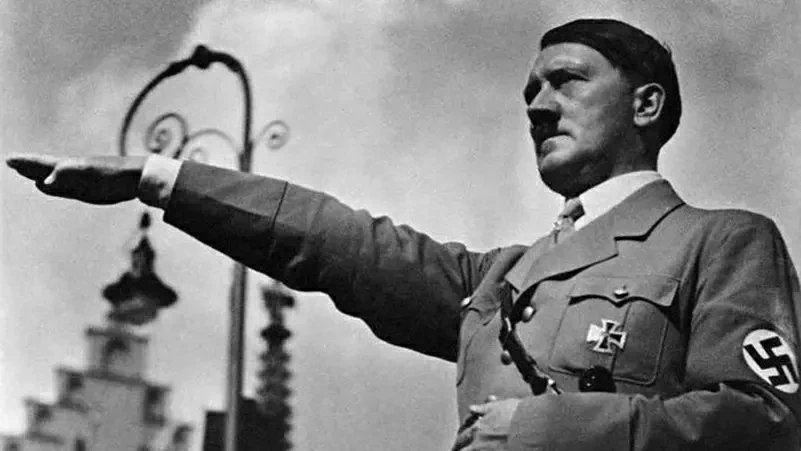
On this day in 1925, exactly 101 years ago, German bookstores awoke to the release of a book that would change the course of modern history, turning into one of the most terrifying and controversial propaganda tools of the 20th century. It is the book "Mein Kampf" by Nazi leader Adolf Hitler.
The book, whose sales later exceeded 12 million copies, did not start as an ordinary literary work; it was born behind prison bars, with an original title so strange and shocking that the publisher immediately rejected it.
The story began from a prison cell.
The idea for the book was born out of political failure. In November 1923, Hitler led a failed coup attempt known as the "Beer Hall Putsch," exploiting the dire economic conditions, massive inflation that Germany experienced after World War I, and the harshness of the Treaty of Versailles.
The attempt failed, and Hitler was arrested, but the public trial gave him widespread fame. He was sentenced to five years in prison at Landsberg Prison. There, during his imprisonment in 1924, he began dictating his ideas and autobiography to his close aide Rudolf Hess, who took on the task of writing the manuscript and formulating Nazi ideology.
When Hitler finished drafting his manuscript, he chose a long and strange title, dripping with aggression: "Four Years of Struggle Against Lies, Stupidity, and Cowardice."
The title shocked the publisher, who found it too long and complex, and likely to repel readers. After discussions with Hitler, he was persuaded to shorten the title to the name that later shook the world: "Mein Kampf."
Sales Leap
In the early years, the book received little attention, and its ownership was limited to extremists among Nazi Party supporters. But the major shift came in 1933, when Hitler became Chancellor of Germany, turning the book into something akin to a national obligation.
Wedding gifts: German authorities began giving a free copy of "Mein Kampf" to every newlywed couple, and it was handed to them compulsorily.
Schools and factories: Teachers from the Hitler Youth organization encouraged children to read the book, and it was distributed free to state employees and factory owners as a symbol of loyalty to the regime.
The book's spread did not stop at Germany's borders; it was translated into English in 1933, and Hitler made sure to gift luxurious copies to his allies, such as Italian leader Benito Mussolini and Spanish General Francisco Franco.
After Hitler's suicide in 1945 and the end of World War II, the publishing rights of the book transferred to the German state of Bavaria, which banned its printing for 70 years. At the end of 2015, the legal protection of copyright expired, and the book entered the public domain, reopening historical and intellectual debates about how a book written inside a prison cell could move armies and contribute to the destruction of an entire continent.
Original source: Okaz






Comments (0)
Be the first to comment.